SART data shows the majority of transferred embryos today have been genetically screened first — a shift that’s added a significant new line item to many patients’ IVF bills.
Preimplantation genetic testing for aneuploidy, or PGT-A, checks embryos for the correct number of chromosomes before transfer. Here’s what it actually costs and who it makes the most financial sense for.
What PGT-A Actually Costs
| Cost Component | Low End | Typical | High End |
|---|---|---|---|
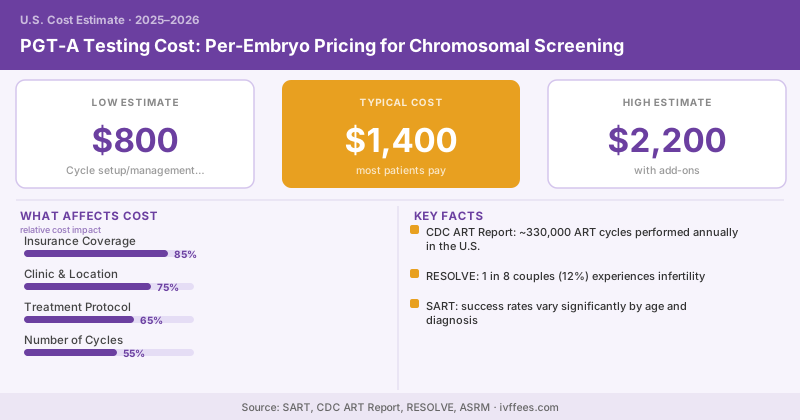
| Cycle setup/management fee | $800 | $1,400 | $2,200 |
| Per-embryo biopsy & analysis | $200 | $300 | $400 |
| Total for 4 embryos | $1,600 | $2,600 | $3,800 |
| Total for 8 embryos | $2,400 | $3,800 | $5,400 |
The per-embryo fee scales with how many embryos you have to test, which means patients who produce a large number of embryos in one retrieval end up paying considerably more for full-batch testing than patients with just a couple of embryos.
Why the Setup Fee Exists Regardless of Embryo Count
Genetic testing labs charge a flat management fee to cover the lab work required to set up testing for your specific cycle — building a reference profile, coordinating biopsy sample shipping from your clinic’s embryology lab, and preparing results reporting. This fee applies whether you’re testing two embryos or ten, which is why per-embryo cost effectively drops as your embryo count rises.
Who Actually Benefits Most From PGT-A
Aneuploidy rates — the rate of embryos with an incorrect chromosome count — rise substantially with maternal age. Widely cited SART and ASRM data shows aneuploidy affecting a relatively small share of embryos from patients in their 20s, rising to a majority of embryos from patients in their early-to-mid 40s. This age-related pattern is the core argument for PGT-A: transferring only chromosomally normal embryos can reduce the number of failed transfers and miscarriages for patients where aneuploidy rates are already elevated.
While PGT-A adds $2,000–$6,000 to a single cycle, some patients — particularly those over 35 or with a history of recurrent pregnancy loss — end up needing fewer total frozen embryo transfers because they’re not attempting transfers with embryos that were never going to implant. Ask your RE to estimate your age-adjusted aneuploidy rate to help judge whether the added upfront cost is likely to reduce your total spend across multiple transfer attempts.
It’s Not a Guarantee, and It Doesn’t Test Everything
PGT-A screens specifically for chromosome number abnormalities — it doesn’t test for every genetic condition, and a “normal” result doesn’t guarantee implantation or a live birth. Some chromosomally normal embryos still fail to implant or result in miscarriage for reasons unrelated to chromosome count, and false positive or “mosaic” results (a mix of normal and abnormal cells) add another layer of complexity that your RE and a genetic counselor should walk through with you if it comes up.
Don’t let a “mosaic” or borderline PGT-A result lead you to discard an embryo without a genetic counseling consultation first. Research over the past several years has shown some mosaic embryos can still result in healthy pregnancies, and reflexive discarding of these embryos may mean losing a viable option. Ask your clinic to connect you with a genetic counselor before making a final decision on any ambiguous result.
Is It Worth It for You?
For patients under 35 with no history of pregnancy loss and a good embryo yield, some REs question whether PGT-A’s added cost and the biopsy procedure itself (a small but real additional manipulation of the embryo) provide a meaningful net benefit. For patients over 35, with recurrent miscarriage, or with a history of multiple failed transfers, the calculus usually shifts toward PGT-A being worthwhile. This is a genuinely individual decision — walk through your specific numbers with your RE rather than defaulting to “yes” or “no” based on general trends alone.
The Bottom Line
Budget $2,000–$6,000 for PGT-A testing depending on your embryo count, on top of your base IVF or frozen transfer costs. It’s most clearly worth the added expense for patients over 35 or with a history of pregnancy loss, and a conversation with your RE about your specific aneuploidy risk is the best way to judge whether it’s the right call for your cycle.