People often lump PGT-M in with routine embryo chromosome screening. It’s not the same test — or the same price, and the difference matters if you’re carrying a known genetic mutation and considering IVF specifically to avoid passing it on.
What Makes PGT-M Different (and More Expensive)
| Cost Component | Low End | Typical | High End |
|---|---|---|---|
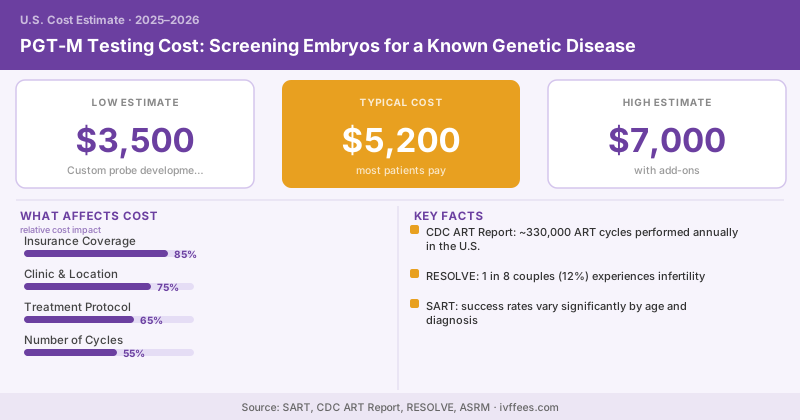
| Custom probe development (one-time) | $3,500 | $5,200 | $7,000 |
| Per-embryo testing (during IVF cycle) | $250 | $375 | $500 |
| Total for probe + 5 embryos tested | $4,750 | $7,075 | $9,500 |
| Genetic counseling consultation | $200 | $400 | $600 |
Unlike PGT-A, which is a standardized test applied the same way to every patient, PGT-M requires a lab to build a custom genetic probe specific to your family’s exact mutation before any embryo testing can happen — and that upfront development cost is the main reason PGT-M runs more expensive overall than PGT-A.
Why Probe Development Takes Months, Not Days
Building an accurate PGT-M probe typically requires genetic samples not just from you (and your partner, if applicable), but often from an affected or unaffected family member as well, to help the lab distinguish the disease-causing mutation from normal genetic variation nearby on the same chromosome. This process commonly takes 6 to 12 weeks from sample submission to a validated, ready-to-use probe — timing that needs to be built into your overall IVF schedule well before your retrieval cycle begins.
Because probe development can take up to three months, many patients begin this process well before they’re otherwise ready to start an IVF cycle, simply to avoid delaying treatment once they are ready. If you know you’ll want PGT-M, contact a genetics lab and your fertility clinic as early as possible — even if you’re not starting medications for several more months.
Who Actually Needs PGT-M
PGT-M is used by patients who are known carriers of, or affected by, a specific single-gene genetic condition — cystic fibrosis, BRCA mutations, Huntington’s disease, sickle cell disease, and many other conditions where a specific mutation has already been identified through genetic testing in the family. This is distinct from PGT-A, which screens generally for chromosome number regardless of any known family history. A genetic counselor typically confirms the specific mutation and its inheritance pattern before probe development even begins.
Insurance Coverage Is Inconsistent But Not Nonexistent
Because PGT-M addresses a specific, often serious, diagnosed genetic condition rather than general infertility, some insurers treat it more favorably than routine fertility-related genetic testing, covering probe development and per-embryo testing under a genetic testing benefit rather than an infertility exclusion. This isn’t universal, and coverage often depends heavily on documentation from a genetic counselor establishing medical necessity — get any coverage confirmation in writing before assuming your plan pays for this testing.
Don’t skip formal genetic counseling before starting PGT-M, even if you already know your family’s specific mutation. A genetic counselor helps confirm inheritance patterns, identifies whether other at-risk conditions should be tested simultaneously, and ensures the probe is built correctly the first time — a mistake here can mean re-doing probe development, adding months and thousands of dollars to your timeline.
Combining PGT-M With PGT-A
Many labs offer combined PGT-M and PGT-A testing on the same embryo biopsy, checking both for the specific familial mutation and for overall chromosomal normalcy, for a modest additional per-embryo fee rather than two entirely separate procedures. If you’re already committing to a custom PGT-M probe, ask your clinic whether combined testing makes sense for your situation — it’s often a small incremental cost for meaningfully more information per embryo.
The Bottom Line
Budget $3,500–$7,000 for one-time PGT-M probe development, plus $250–$500 per embryo tested during your actual IVF cycle. Start the process early — probe development alone can take up to three months — and work with a genetic counselor throughout to make sure the investment in this testing pays off with an accurate, reliable result.