You’ve transferred good embryos. Multiple times. And nothing sticks. Recurrent implantation failure is one of the most emotionally and financially draining situations in fertility care — partly because the workup spawns a long menu of tests and add-ons, many of which cost real money while the evidence behind them is still thin.
There’s no single agreed definition, but most clinics flag RIF after two or three failed transfers of good-quality embryos. ASRM has repeatedly cautioned that many IVF “add-ons” marketed for implantation failure lack strong evidence of benefit. So the real challenge isn’t finding things to spend money on — it’s spending wisely. Here’s the cost map.
The Two Buckets: Real Causes vs. Add-Ons
A smart RIF workup splits into investigating genuine causes (which can change your treatment) and add-ons (which often can’t, or whose benefit is unproven). Knowing which is which protects your budget.
| Test or Add-On | Low | Typical | High |
|---|---|---|---|
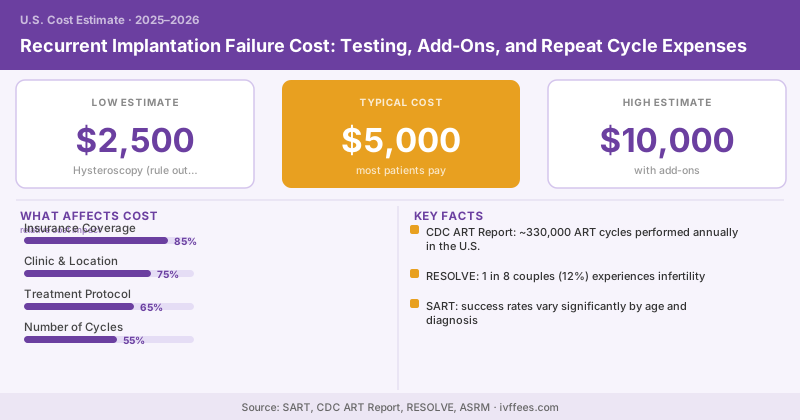
| Hysteroscopy (rule out cavity issues) | $2,500 | $5,000 | $10,000 |
| ERA (endometrial receptivity test) | $600 | $1,000 | $2,000 |
| PGT-A (genetic testing of embryos) | $1,500 | $4,000 | $7,000 |
| Immune/thrombophilia panel | $500 | $1,500 | $3,500 |
| Endometrial biopsy (infection/inflammation) | $300 | $700 | $1,500 |
| Each repeat IVF/FET cycle | $4,000 | $12,000 | $25,000 |
Evidence-Based Steps Worth Paying For
Some investigations genuinely change management. A hysteroscopy to rule out polyps, fibroids, scarring, or a septum is widely supported — fixing a structural problem can be the whole solution. Screening for chronic endometrial infection (chronic endometritis) is reasonable, since it’s treatable with antibiotics. And PGT-A to confirm you’re transferring chromosomally normal embryos addresses one of the most common reasons transfers fail: embryo aneuploidy.
These steps target fixable causes, which is the test of whether a workup expense is worth it.
Before spending on experimental immune therapies or unproven add-ons, make sure the basics are covered: a normal uterine cavity (hysteroscopy), good embryo quality (often PGT-A), and no chronic infection. ASRM has warned that many flashy add-ons lack solid evidence. The most common real reason embryos don’t implant is that the embryo itself is abnormal — not an exotic immune problem.
The Expensive Maybes
Then there’s the add-on menu, where costs pile up and evidence thins out. The ERA test claims to find a displaced “window of implantation”; it’s most defensible specifically for RIF patients, though large trials have questioned whether it improves outcomes for most people. Immune therapies — intralipids, steroids, IVIG, blood thinners — are heavily marketed for RIF but remain controversial and largely unproven for routine use.
Each add-on layered onto an IVF or frozen embryo transfer cycle adds cost without guaranteed benefit. It’s easy to spend $5,000–$10,000 on extras across a single workup.
Be especially cautious with immune treatments (IVIG, intralipids, steroids) sold as the answer to implantation failure. Major guidelines do not endorse them for routine RIF because high-quality evidence of benefit is lacking, and some carry real risks and high costs. If a clinic leads with these before ruling out cavity, embryo, and infection issues, get a second opinion.
The Repeat-Cycle Math
The biggest cost in RIF usually isn’t the tests — it’s the repeated cycles. Each additional egg retrieval or transfer adds thousands. This is where strategy matters: spending a few hundred dollars on a hysteroscopy that finds a polyp can save you a $15,000 wasted cycle. Investing in PGT-A so you only transfer euploid embryos can reduce the number of failed transfers you pay for.
In other words, targeted testing can be cheaper than blindly repeating cycles and hoping.
Insurance and RIF
Diagnostic procedures like hysteroscopy and infection screening are often covered under medical/surgical benefits. ERA, PGT-A, and immune therapies are frequently out of pocket, especially outside mandate states. Given how quickly repeat cycles and add-ons accumulate, reviewing IVF financing options early — and getting a clear, prioritized workup plan — keeps spending under control. A complete fertility testing panel for both partners is also worth revisiting if it’s been a while.
Frequently Asked Questions
How many failed transfers define recurrent implantation failure? There’s no universal definition, but most clinics consider two to three failed transfers of good-quality embryos as the threshold to launch a focused RIF workup.
Is PGT-A worth it for implantation failure? Often, because embryo chromosomal abnormality is one of the most common reasons transfers fail, especially with maternal age. Confirming euploid embryos can reduce the number of failed (and paid-for) transfers, though it adds upfront cost.
Do immune treatments improve implantation? The evidence is weak and the practice is controversial. Major guidelines don’t endorse immune therapies for routine RIF, so most specialists reserve them for specific, documented conditions rather than offering them to everyone.
Bottom Line
Recurrent implantation failure can cost $2,000 to $10,000 in tests and add-ons on top of expensive repeat cycles. The way to control it is to prioritize evidence-based steps — hysteroscopy, embryo quality/PGT-A, infection screening — before paying for unproven immune therapies and add-ons. Spending smartly on the right tests often costs less than blindly repeating cycles, so push your RE for a prioritized, evidence-based plan.