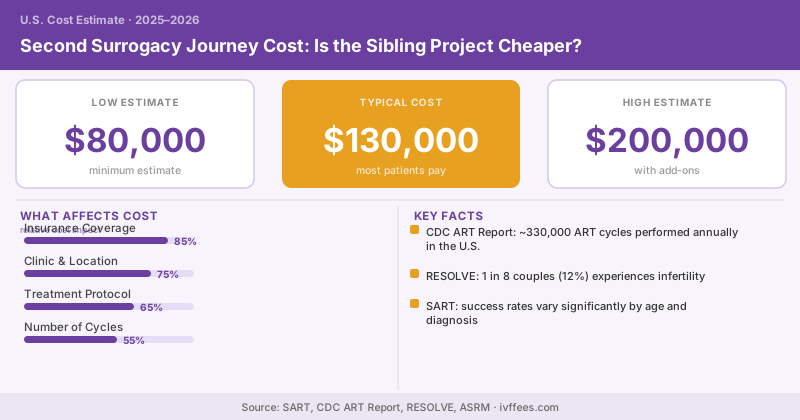
You’ve done it once. Now you want a sibling. The good news: a second surrogacy journey often costs less than the first — sometimes $40,000 to $60,000 less — but only if a few things break in your favor. The biggest one is whether you still have frozen embryos waiting in storage.
Let’s walk through exactly what changes the second time around and what stays stubbornly the same.
The Frozen Embryo Advantage
If your first IVF cycle produced extra embryos and you froze them, you skip the single most expensive medical step the second time. No egg retrieval, no fresh stimulation cycle, no donor compensation (if you used a donor). You go straight to a frozen embryo transfer into your carrier — a fraction of the cost of creating embryos from scratch.
This is why fertility specialists routinely advise banking embryos during a first IVF cycle. Those frozen blastocysts are essentially a discounted down payment on a future sibling.
Cost Comparison: First vs. Second Journey
| Cost Component | First Journey | Second (with frozen embryos) |
|---|---|---|
| IVF cycle / egg retrieval | $15,000–$35,000 | $0 (already done) |
| Frozen embryo transfer | $3,000–$5,000 | $3,000–$5,000 |
| Carrier compensation | $40,000–$80,000 | $45,000–$90,000 |
| Agency fee | $15,000–$45,000 | $10,000–$30,000 |
| Legal fees | $6,000–$20,000 | $5,000–$15,000 |
| Escrow & misc. | $6,000–$25,000 | $6,000–$20,000 |
| Estimated total | $100,000–$200,000 | $60,000–$160,000 |
The carrier compensation line, notice, often goes up the second time — more on that below.
What Actually Gets Cheaper
A few things reliably drop:
- No new IVF cycle if you have frozen embryos — saves $15,000–$35,000
- Lower agency fees if you return to the same agency, which often discounts repeat clients
- Faster legal work since your attorney already knows your case and may reuse templates
- Shorter matching time if your original carrier returns
That last point is the dream scenario. A carrier who carried your first child and wants to do it again eliminates the entire match process and the screening costs that come with a new carrier.
A second surrogacy journey is usually cheaper — primarily because frozen embryos let you skip a $15,000–$35,000 IVF cycle, and repeat agencies often discount returning clients. The wild card is carrier compensation, which tends to rise for experienced carriers and over time. Budget $60,000–$160,000 for a sibling journey.
What Gets More Expensive
Here’s the counterintuitive part. Carrier compensation often climbs the second time for two reasons. First, an experienced carrier — including your original one — commands higher compensation than a first-timer; proven healthy pregnancies are valued. Second, surrogacy costs broadly have risen year over year as demand grows, so simply waiting a couple of years means higher market rates. RESOLVE has noted that overall U.S. surrogacy costs have trended upward over the past decade.
Don’t assume your original carrier will return at her first-journey rate. Experienced carriers typically earn more, and market rates rise annually. Also confirm your frozen embryos are still viable and stored properly — storage lapses, clinic transfers, or thaw failures can force you back to a full IVF cycle, erasing the second-journey savings entirely. Verify embryo status before budgeting.
If You Don’t Have Frozen Embryos
No frozen embryos means a second journey costs nearly as much as the first, because you’re recreating embryos from scratch. In that case, factor in a full new IVF cost, and if you used a donor, new donor egg IVF expenses too. This is the scenario where second journeys lose their discount.
Planning the Sibling Project
A few smart moves:
- Verify embryo storage status before anything else
- Ask your agency about returning-client discounts
- Reconnect with your original carrier early if you’d like her back
- Re-confirm carrier insurance, since policies and exclusions change year to year
For financing the gap, revisit surrogacy financing options and the current surrogate compensation landscape. A repeat gestational carrier journey is one of the better-value scenarios in third-party reproduction — when the embryos are already in the bank.
Frequently Asked Questions
Is a second surrogacy journey always cheaper? Only if you have viable frozen embryos. Skipping the IVF cycle is the main saving. Without frozen embryos, you recreate everything and the second journey costs nearly the same as the first.
Will my original carrier cost the same as last time? Probably not. Experienced carriers earn more, and overall market rates rise each year. Expect her compensation to be higher than your first journey, even if everything else goes smoothly.
How long are frozen embryos good for a sibling journey? Properly stored embryos can remain viable for many years, and successful pregnancies from embryos frozen a decade or more are well documented. Confirm storage continuity and request a viability assessment from your clinic before you build your budget.