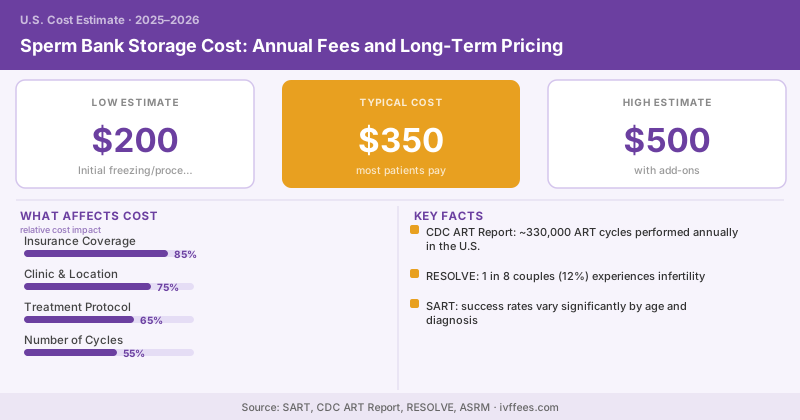
$150 to $500 a year — that’s the going rate to keep sperm frozen at a US sperm bank, a modest recurring cost compared to almost every other fertility-related expense.
Whether you’re banking before cancer treatment, before a vasectomy, or simply as a precaution before starting a family later, here’s what the actual bill looks like over time.
What Sperm Storage Costs
| Cost Component | Low End | Typical | High End |
|---|---|---|---|
| Initial freezing/processing (per sample) | $200 | $350 | $500 |
| Annual storage fee | $150 | $300 | $500 |
| Multi-year plan (per year, 5–10 yr) | $100 | $200 | $350 |
| Shipping to another facility | $150 | $300 | $600 |
Most patients bank multiple samples in a single visit (or a few visits over several days) to ensure enough viable specimens for multiple future attempts at IUI or IVF — each sample typically stored in several individual vials.
Why Long-Term Storage Doesn’t Get More Expensive Over Time
Unlike some medical storage that increases in cost as facilities upgrade or reassess long-term contracts, sperm storage pricing tends to stay flat or even decrease per year when you commit to a multi-year plan upfront. Banks have strong incentive to lock in predictable long-term revenue, so a 10-year prepaid plan often works out to a meaningfully lower effective annual rate than paying year to year.
Frozen sperm has an excellent track record for long-term viability — documented pregnancies have resulted from sperm stored for well over 20 years using standard cryopreservation methods, according to case reports published in reproductive medicine journals. There’s no known biological expiration date once a sample is properly frozen and maintained.
Many sperm banks offer expedited scheduling and reduced processing fees for patients about to start chemotherapy or radiation, recognizing the time pressure involved. Organizations like Livestrong Fertility also partner with banks and clinics to offer discounted or sometimes free storage for a limited period for cancer patients — ask your oncology team about these programs before assuming full retail pricing applies to you.
Why Some Patients Bank Before a Vasectomy
Even a planned, voluntary vasectomy is sometimes preceded by sperm banking, particularly for men who want a safety net in case of a future change in family plans. Vasectomy reversal is possible but not always successful and can cost several thousand dollars with no guarantee of restored fertility — banking beforehand, for a few hundred dollars a year in storage, is a comparatively cheap form of insurance for men who aren’t entirely certain a vasectomy is permanent for their situation.
Just like embryo storage, sperm storage bills typically arrive by mail or email once a year — and if your contact information changes, it’s easy to miss a payment notice for years. Some banks will attempt outreach through multiple channels before taking action on an unpaid account, but don’t rely on that. Set a personal reminder to confirm your account status and contact details at least once a year.
Combining Storage Locations to Save
If you’ve banked sperm at more than one facility over the years — perhaps once before a vasectomy and again years later before a cancer diagnosis — consolidating everything into a single storage account can eliminate a duplicate annual fee. Shipping between facilities costs $150–$600 depending on distance and sample volume, but that one-time fee often pays for itself within a year or two if you’re currently paying two separate annual bills.
The Bottom Line
Budget $150–$500 a year for ongoing sperm storage, plus a one-time $200–$500 initial processing fee. It’s one of the more affordable recurring costs in fertility medicine, and multi-year prepaid plans can lower your effective annual rate further if you’re confident you’ll want the option preserved for years to come.