Your sperm count is fine, but only 15% of them are actually swimming forward. The World Health Organization’s reference floor for progressive motility is 30%. So your sperm are there — they just can’t get where they need to go. What does fixing that cost?
Poor sperm motility, called asthenozoospermia, is one of the most common semen abnormalities and a frequent contributor to the 40–50% of infertility cases linked to male factor, per the American Urological Association. The cost of treating it depends entirely on the cause and severity. Here’s the range.
Treatment Costs by Approach
| Approach | Low | Typical | High |
|---|---|---|---|
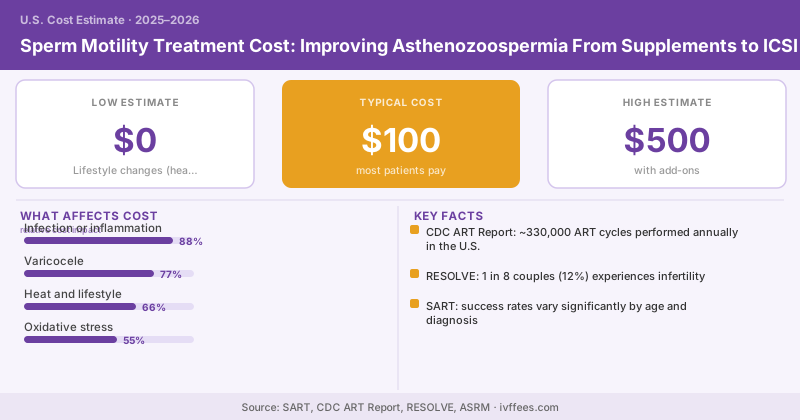
| Lifestyle changes (heat, smoking, weight) | $0 | $100 | $500 |
| Antioxidant/motility supplements | $30 | $60 | $120/mo |
| Treat infection (antibiotics) | $20 | $100 | $400 |
| Varicocele repair (if present) | $4,000 | $8,000 | $15,000 |
| IUI with washed sperm | $300 | $1,000 | $4,000 |
| IVF with ICSI | $15,000 | $20,000 | $30,000 |
Sperm motility treatment ranges from free lifestyle fixes to $20,000+ IVF with ICSI. ICSI is the great equalizer here — because the embryologist injects a single sperm directly into the egg, motility becomes almost irrelevant. But cheaper causes (infection, heat, a varicocele) are worth ruling out first.
Find the Cause First
Motility problems have fixable causes more often than people expect. A full male fertility workup sorts them out:
Infection or inflammation. Genital tract infections can impair motility. Antibiotics may resolve it for under $400.
Varicocele. Enlarged scrotal veins raise testicular temperature and oxidative stress, hurting motility. Repairing a varicocele improves motility in many men.
Heat and lifestyle. Hot tubs, laptops on the lap, tight underwear, smoking, and obesity all drag motility down. Some of this reverses for free within one sperm cycle.
Oxidative stress. High levels of reactive oxygen species damage sperm. Antioxidant supplements show modest benefit for some men and are cheap to try.
Anti-sperm antibodies. These can clump sperm and impair movement, which is a more specialized finding.
When ICSI Becomes the Answer
Here’s the key insight for severe motility problems: with IVF and ICSI, an embryologist selects and injects one viable sperm directly into each egg. The sperm doesn’t have to swim anywhere. That makes ICSI extraordinarily effective for motility issues — even men with very low motility can father biological children this way. The catch is cost: a full cycle runs $15,000–$30,000.
For milder cases, IUI with washed, concentrated sperm gives the swimmers a head start by placing them directly in the uterus, at a fraction of IVF cost.
A motility result can be falsely low if the sample sat too long before analysis or got cold in transit. Before committing to expensive treatment, confirm a poor motility finding with a repeat semen analysis done with proper, prompt lab handling — ideally produced on-site at the lab.
The Cost-Smart Path
For most couples, the smart sequence is: rule out and treat infection or a varicocele, fix lifestyle factors, retest after a sperm cycle, then move to IUI or IVF with ICSI based on how severe the remaining problem is. Severe asthenozoospermia usually heads straight to ICSI, while mild cases may resolve enough for cheaper options.
Frequently Asked Questions
Can supplements actually improve sperm motility? Antioxidant supplements (with ingredients like CoQ10, L-carnitine, zinc, and selenium) show modest motility improvements in some studies, especially in men with high oxidative stress. They’re inexpensive to try alongside lifestyle changes, but they won’t fix severe motility problems on their own.
If my motility is very low, do I have to do IVF? Not always. Mild to moderate cases sometimes succeed with IUI or after treating an underlying cause. But for severe asthenozoospermia, IVF with ICSI is usually the most reliable route because motility stops mattering once the sperm is injected directly.
Does insurance cover motility treatment? Treating an underlying medical cause — an infection or a varicocele — is more likely to be covered than IUI or IVF. Assisted reproduction coverage depends on your state and employer plan. Verify benefits before scheduling anything expensive.