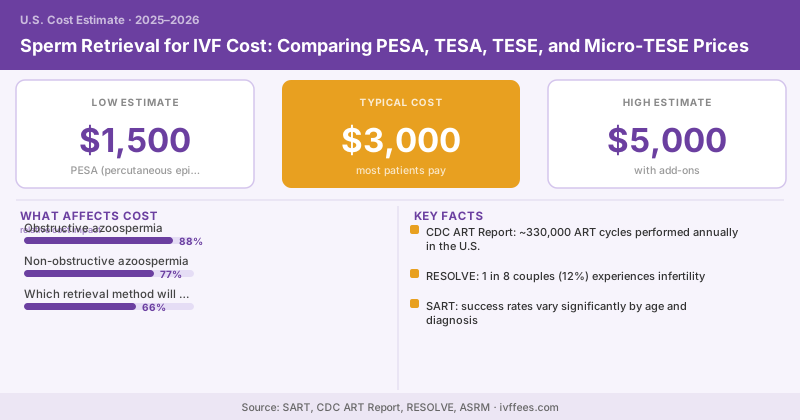
What does it cost to surgically retrieve sperm when there’s none in the ejaculate? The honest answer is anywhere from $2,000 to $16,000 — and the four-fold spread comes down to which technique you need.
When a man has azoospermia or can’t ejaculate usable sperm, retrieving it directly from the testicle or epididymis lets a couple still pursue IVF with ICSI. Male factor drives 40–50% of infertility per the American Urological Association, so these procedures are common. Let’s break down what each one costs and when it’s used.
The Four Retrieval Methods and Their Costs
| Method | What it does | Low | Typical | High |
|---|---|---|---|---|
| PESA (percutaneous epididymal aspiration) | Needle draws sperm from epididymis | $1,500 | $3,000 | $5,000 |
| TESA (testicular aspiration) | Needle pulls sperm from testicle | $2,000 | $3,500 | $6,000 |
| TESE (testicular sperm extraction) | Small biopsy of testicular tissue | $3,000 | $5,000 | $8,000 |
| Micro-TESE (microdissection) | Microscope-guided tissue search | $6,000 | $10,000 | $16,000 |
Sperm retrieval ranges from $2,000 (simple needle aspiration) to $16,000 (micro-TESE). The cheaper methods work when production is normal and the problem is a blockage; the expensive microdissection method is reserved for non-obstructive azoospermia where sperm must be hunted for. All of these are paired with IVF.
Matching the Method to the Diagnosis
The cost difference isn’t about quality — it’s about what your problem requires.
Obstructive azoospermia. Sperm production is normal, but a blockage (from a vasectomy, infection, or congenital absence of the vas) stops it from coming out. Here the simpler, cheaper PESA or TESA usually retrieves plenty of sperm.
Non-obstructive azoospermia. Production itself is impaired, so sperm exist only in scattered pockets — if at all. This is where micro-TESE earns its higher price, finding sperm in 40–60% of these tough cases versus 20–30% for conventional TESE.
A proper azoospermia evaluation — including a hormone panel and genetic testing — tells your surgeon which type you have, and therefore which method (and cost) applies. Skipping that workup risks paying for the wrong procedure.
Costs Beyond the Surgery
The retrieval fee is just one line item. You’ll also pay for:
- Anesthesia — local for PESA/TESA, general for micro-TESE ($500–$3,000)
- Andrology lab processing — finding and preparing the sperm ($500–$2,000)
- Cryopreservation — freezing extra sperm for future cycles ($300–$1,200 plus annual storage)
- The IVF cycle itself — retrieval only makes sense with IVF, which adds $15,000–$30,000
A “successful” retrieval that finds sperm doesn’t guarantee a baby — the sperm still has to fertilize an egg and produce a viable embryo. Make sure your clinic coordinates the retrieval timing with the female partner’s egg collection, or you’ll pay for freezing and thawing that could have been avoided.
Fresh vs Frozen: A Cost Decision
You can retrieve sperm the same day as egg collection (fresh) or in advance and freeze it (frozen). Fresh avoids freeze-thaw losses but demands tight scheduling between two procedures. Frozen offers flexibility and lets a single retrieval supply multiple IVF attempts — often the better value if enough sperm is banked. Discuss which fits your case, because it changes both cost and logistics.
Frequently Asked Questions
Which retrieval method will I need? That’s determined by your diagnosis, not your preference. Obstructive cases (like post-vasectomy) usually need only PESA or TESA. Non-obstructive azoospermia typically requires micro-TESE. A semen analysis, hormone panel, and sometimes genetic testing point your urologist to the right one.
Does insurance cover surgical sperm retrieval? Coverage varies widely. States with fertility mandates may cover retrieval when tied to a covered IVF cycle; many men pay out of pocket. The andrology lab fee and cryopreservation are often billed separately, so get an itemized quote.
Can one retrieval be used for multiple IVF cycles? Often yes. If enough sperm is recovered and frozen, a single procedure can supply several future IVF attempts — a big cost advantage over repeating surgery. This is most reliable with obstructive cases where sperm is plentiful.