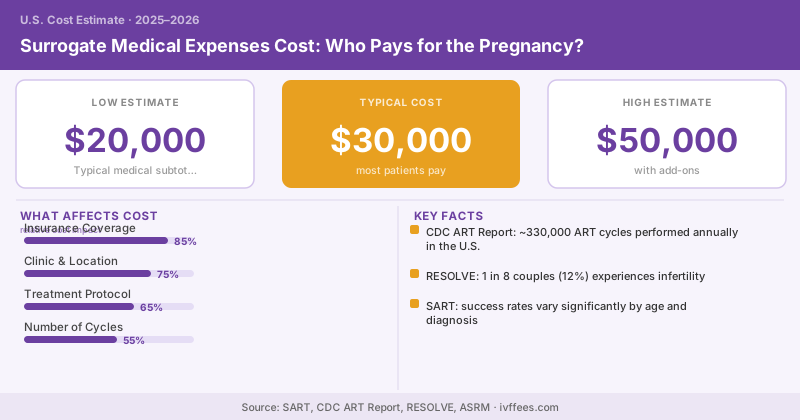
The single most underestimated line in a surrogacy budget isn’t the carrier’s paycheck — it’s her medical care. Intended parents focus on surrogate compensation and agency fees, then get blindsided by $20,000 to $50,000 (or more) in pregnancy and delivery costs they didn’t fully plan for. Medical expenses are where surrogacy budgets quietly blow up.
Here’s exactly who pays for what, and where the costs hide.
Compensation vs. Medical Expenses
First, a clean distinction. The carrier’s compensation is what she earns for her time and commitment. Her medical expenses are the cost of the actual healthcare — doctor visits, ultrasounds, labs, the hospital stay, the delivery. These are separate budgets, and intended parents are responsible for both.
You don’t pay the carrier’s medical bills as a salary; you pay the providers and the insurance gaps that her policy doesn’t cover.
What’s Included in Surrogate Medical Expenses
| Medical Cost | Low | Typical | High |
|---|---|---|---|
| Prenatal care (full pregnancy) | $2,000 | $5,000 | $10,000 |
| Vaginal delivery (out-of-pocket/uncovered) | $3,000 | $8,000 | $18,000 |
| C-section premium | $0 | $5,000 | $12,000 |
| Surrogate-friendly health insurance | $0 | $12,000 | $30,000 |
| Lost-wage / bed-rest reimbursement | $0 | $2,000 | $8,000 |
| Pharmacy & supplements | $200 | $600 | $1,500 |
| Complication / NICU contingency | $0 | varies | $50,000+ |
| Typical medical subtotal | $20,000 | $30,000 | $50,000+ |
The biggest variable, by far, is insurance.
The Insurance Question That Decides Everything
This is where journeys go right or wrong. Many U.S. health plans explicitly exclude “surrogate pregnancies.” If your carrier’s policy has that exclusion, her insurer won’t pay a dime toward the pregnancy, and you’re on the hook for the full obstetric and delivery bill — easily $30,000 to $60,000 at hospital list rates.
If her policy is surrogacy-friendly (no exclusion), it covers the pregnancy like any other, and you mainly pay deductibles, copays, and coinsurance. The difference between these two scenarios can be $40,000.
Surrogate medical expenses run $20,000 to $50,000+ on top of compensation, and the carrier’s health insurance is the swing factor. A surrogacy-friendly policy covers the pregnancy; a policy that excludes surrogate pregnancies leaves you paying the full medical bill. Always verify the insurance exclusion clause before matching — it’s the most consequential cost decision in the journey.
Surrogate-Friendly Insurance Options
If your carrier’s existing plan excludes surrogacy, you have options, each with a cost:
- Purchase a separate surrogacy maternity policy — $12,000 to $30,000+ in premiums
- Enroll the carrier in a marketplace plan without exclusions during open enrollment
- Self-fund the medical care as a worst-case fallback (highest risk)
A reproductive attorney or insurance specialist should review the policy language before you sign the surrogacy agreement. The clause that says “surrogate pregnancies excluded” is the most expensive sentence in surrogacy.
Never assume a carrier’s insurance covers surrogacy just because she’s currently insured. Have the actual policy document reviewed by a surrogacy insurance specialist before matching is finalized. A retroactively discovered exclusion can add $30,000 to $60,000 to your costs after you’re already committed — when you have the least leverage to change course.
Complications and the Contingency Fund
Pregnancy carries medical risk, and complications cost money. Preterm labor, extended bed rest, a NICU stay, or an emergency C-section can each add thousands. Multiples (twins) increase nearly every cost category. RESOLVE and reproductive specialists advise building a contingency reserve — many recommend 10% to 20% of the total budget — specifically for medical surprises.
How It Fits the Total Budget
Medical expenses are one of the four pillars of a gestational carrier budget, alongside compensation, agency fees, and surrogacy legal fees. On a $130,000 journey, medical can be $25,000 to $35,000 of it — a quarter of everything. Because it’s so large and so variable, it’s the line most worth financing carefully; surrogacy financing options can cover insurance premiums and delivery costs that lump in late.
Frequently Asked Questions
Do I pay the surrogate’s medical bills directly? You pay the providers and the insurance gaps — deductibles, copays, uncovered services, and any surrogacy-specific insurance premium. You don’t hand the carrier cash for medical care; bills are paid through escrow to the medical providers or insurer per the agreement.
What if her insurance excludes surrogacy? Then you either buy a surrogacy-friendly policy ($12,000–$30,000+), enroll her in a non-excluding marketplace plan, or self-fund the care. Discovering an exclusion late is the most expensive mistake in surrogacy, so verify the policy before matching.
How big should my medical contingency fund be? Many specialists suggest setting aside 10% to 20% of your total budget for medical surprises — complications, bed rest, NICU, or a C-section. It’s far cheaper to over-reserve than to scramble for funds mid-pregnancy on top of your base surrogacy cost.