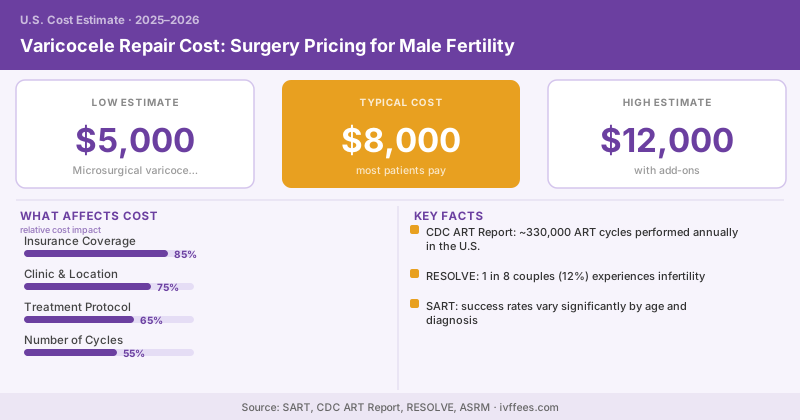
Varicoceles show up in about 15% of all men — but roughly 35 to 40% of men evaluated for infertility have one, according to figures cited by the Urology Care Foundation. That gap is a big part of why varicocele repair has become one of the more common surgical interventions in male fertility treatment.
What Varicocele Repair Costs
| Repair Method | Low End | Typical | High End |
|---|---|---|---|
| Microsurgical varicocelectomy | $5,000 | $8,000 | $12,000 |
| Laparoscopic repair | $4,500 | $7,500 | $11,000 |
| Percutaneous embolization (radiology) | $4,000 | $6,500 | $9,500 |
| Consultation & pre-op workup | $300 | $600 | $1,000 |
Microsurgical varicocelectomy — performed under an operating microscope through a small groin incision — is generally considered the gold standard technique, with the lowest recurrence rate among the available options, and that surgical precision is part of why it typically sits at the higher end of the price range.
What a Varicocele Actually Is
A varicocele is an enlargement of the veins within the scrotum, similar to varicose veins elsewhere in the body, most commonly occurring on the left side due to how that particular vein connects into the venous system. The enlarged veins can raise the temperature around the testicle and disrupt normal sperm production, which is the mechanism believed to link varicoceles to reduced fertility in some men.
Why Technique Affects Both Price and Outcome
Microsurgical repair uses an operating microscope to precisely identify and tie off the affected veins while preserving the testicular artery and lymphatic vessels, which is associated with the lowest recurrence and complication rates among repair techniques according to urology outcomes research. Laparoscopic repair and percutaneous embolization (a non-surgical approach performed by an interventional radiologist, threading a catheter through blood vessels to block the affected veins) are generally less expensive but carry somewhat higher recurrence rates in some studies, which is a trade-off worth discussing directly with your urologist rather than choosing based on price alone.
Varicoceles are graded I through III based on size and whether they’re detectable by physical exam alone or require ultrasound confirmation. Not every varicocele needs repair — smaller, asymptomatic varicoceles with normal semen parameters may simply be monitored. Ask your urologist to explain your specific grade and whether your semen analysis results support moving forward with repair.
Does It Actually Improve Fertility?
Research findings have been mixed but generally supportive for men with a clinically significant varicocele and abnormal semen parameters. Multiple studies have shown improvements in sperm concentration, motility, and morphology following successful repair in a meaningful share of patients, and some research has found improved natural pregnancy rates for couples following repair compared to no treatment. It’s not a guarantee for every man, and outcomes are generally better for men with a larger varicocele and more clearly abnormal baseline semen parameters than for men with mild, asymptomatic varicoceles.
Recovery from varicocele repair typically takes one to two weeks before returning to normal activity, and improvement in semen parameters, if it happens, generally isn’t visible for two to three months after surgery — sperm production takes roughly that long to reflect the surgical change. Don’t expect or test for improvement immediately after the procedure; give it the full recommended window before drawing conclusions.
Does Insurance Cover It?
Varicocele repair is often covered by insurance when it’s medically indicated for pain or documented infertility, since it’s classified as a urological surgical procedure rather than a fertility treatment specifically — a meaningful distinction, since fertility treatment exclusions common in many insurance plans typically don’t apply to this surgery the way they do to IVF. Confirm your specific plan’s coverage and any prior authorization requirements before scheduling.
The Bottom Line
Budget $4,000–$12,000 for varicocele repair depending on technique and facility, with microsurgical repair generally commanding the highest price but also the best outcomes data. Given how common varicoceles are among men evaluated for infertility, and that insurance often covers this procedure even when it excludes fertility treatment broadly, it’s worth a direct conversation with a urologist before assuming IVF or testicular sperm extraction is your only path forward.