You got a vasectomy a decade ago, life changed, and now you want kids again. The quote from the urologist’s office is $11,500 — and it’s almost never covered by insurance. That sticker shock is real, but so are your options.
About 500,000 men get vasectomies each year in the U.S., and the American Urological Association estimates roughly 6% eventually seek a reversal. So you’re far from alone. Here’s what the procedure actually costs and what you’re paying for.
What a Vasectomy Reversal Costs
There are two surgical techniques, and which one you need isn’t decided until the surgeon is operating. A simple vasovasostomy reconnects the cut ends of the vas deferens. A vasoepididymostomy is the harder version — the surgeon connects the vas directly to the epididymis because of a blockage or pressure damage. The second one costs more because it’s far more technically demanding microsurgery.
| Component | Low | Typical | High |
|---|---|---|---|
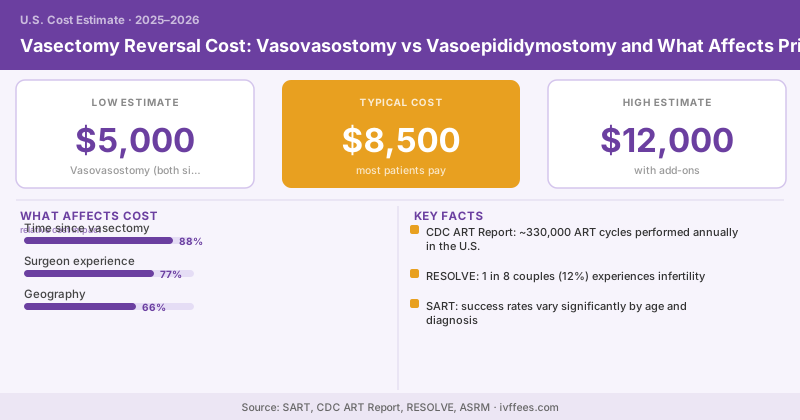
| Vasovasostomy (both sides) | $5,000 | $8,500 | $12,000 |
| Vasoepididymostomy (complex) | $8,000 | $12,000 | $15,000 |
| Anesthesia | $500 | $1,200 | $2,500 |
| Facility/OR fee | $1,000 | $2,500 | $5,000 |
| Pre-op semen testing | $50 | $150 | $400 |
Many practices bundle the surgeon fee, anesthesia, and facility into one global price. Always ask whether the quote is all-inclusive — a $7,000 “surgeon fee” can balloon once the OR and anesthesia get added separately.
A vasectomy reversal typically costs $8,000–$12,000 all-in and is rarely covered by insurance. Success depends heavily on how long it’s been since your vasectomy — reversals done within 3 years have patency rates above 95%, while those after 15 years drop significantly.
What Drives Your Price
Time since vasectomy. The longer it’s been, the more likely you’ll need the complex vasoepididymostomy on one or both sides, which raises the cost and lowers success odds.
Surgeon experience. A fellowship-trained microsurgeon who does these weekly will charge more than a general urologist — and the outcome data justify it. This is one place where cheaper is genuinely riskier.
Geography. Major metros and academic centers run high. Some surgeons travel or run flat-fee clinics in lower-cost states that come in under $6,000.
Reversal vs Sperm Retrieval Plus IVF
This is the real financial decision. Instead of a reversal, a surgeon can pull sperm directly with a TESA or TESE procedure and use it for IVF with ICSI. Sperm retrieval plus a full IVF cycle often totals $20,000–$30,000.
For couples who want one or two kids and where the female partner has no fertility issues, a reversal is usually the cheaper path per child — you can conceive naturally, repeatedly, after one surgery. If the female partner is over 38, has her own diagnosed factors, or you want to bank embryos, retrieval plus IVF may make more sense despite the higher upfront cost. A thorough male fertility evaluation and a frank talk about the female partner’s timeline should drive this call.
Don’t choose a reversal based on price alone. If your partner is over 40 or has diminished ovarian reserve, the months spent attempting natural conception after a reversal can cost you the window for IVF entirely. Get both partners evaluated before committing.
Hidden Costs to Plan For
A reversal isn’t guaranteed. Patency (return of sperm to the ejaculate) doesn’t equal pregnancy. Some men need a repeat reversal, or end up doing retrieval plus IVF anyway. Budget for the possibility that this isn’t a single-payment fix. Post-op semen analysis at 6–8 weeks and again at 3 months adds another $100–$400, and you’ll want it to confirm the procedure worked.
Frequently Asked Questions
Does insurance ever cover a vasectomy reversal? Almost never. Insurers classify it as an elective procedure, just like the original vasectomy was elective. A handful of plans cover it if there’s a documented medical reason beyond fertility, but for the vast majority of men it’s fully out of pocket. HSA and FSA funds can usually be applied.
How long after the reversal can we try to conceive? Sperm typically returns to the ejaculate within 3 to 6 months for a vasovasostomy, and can take up to 12–15 months for a vasoepididymostomy. Your surgeon will order a semen analysis to confirm sperm are present before you spend months trying.
Is a reversal cheaper than IVF in the long run? For most couples wanting more than one child and without a female fertility factor, yes. One reversal surgery can enable multiple natural pregnancies, while each IVF cycle is a separate large expense. Run the math on how many children you want before deciding.