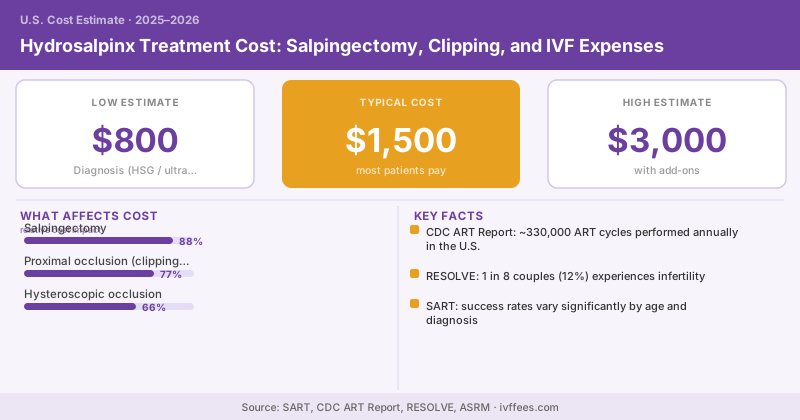
Here’s a treatment that pays for itself: spending $5,000 to $15,000 to remove a damaged fallopian tube can nearly double your IVF success rate. That’s the unusual economics of hydrosalpinx — a fluid-filled, blocked tube that actively sabotages pregnancy if you leave it alone.
Studies summarized by ASRM have shown that untreated hydrosalpinx can roughly halve IVF success rates, because the toxic fluid leaks back into the uterus and harms embryo implantation. Treating it first is one of the few fertility expenses where the math is genuinely clear-cut.
What Hydrosalpinx Is and Why It Hurts IVF
A hydrosalpinx is a fallopian tube blocked at the far end and swollen with fluid — often the result of past pelvic infection, endometriosis, or prior surgery. The problem isn’t just that the tube doesn’t work. The accumulated fluid can flow backward into the uterine cavity, creating a hostile environment that washes embryos out or poisons implantation.
That’s why simply doing IVF — which bypasses the tubes — isn’t enough if a hydrosalpinx is present. The fluid still reaches the uterus where the embryo is placed.
| Procedure | Low | Typical | High |
|---|---|---|---|
| Diagnosis (HSG / ultrasound) | $800 | $1,500 | $3,000 |
| Laparoscopic salpingectomy (tube removal) | $5,000 | $9,000 | $15,000 |
| Proximal tubal occlusion (clipping) | $4,000 | $8,000 | $13,000 |
| Hysteroscopic tubal occlusion (Essure-style) | $3,000 | $6,000 | $10,000 |
| Aspiration of fluid (temporary) | $500 | $1,200 | $2,500 |
| IVF cycle (after treatment) | $12,000 | $17,000 | $25,000 |
The Three Treatment Approaches
Salpingectomy — removing the affected tube — is the gold standard. It eliminates the fluid source entirely. Done laparoscopically, it runs $5,000 to $15,000.
Proximal occlusion (clipping) — clipping the tube near the uterus so fluid can’t reach the cavity — is an alternative when removal is risky due to adhesions. It protects the uterus while leaving the tube in place.
Hysteroscopic occlusion — placing a device to block the tube from inside the uterus — avoids abdominal surgery but is used less now. Aspiration simply drains the fluid; it’s the cheapest but the fluid usually returns, so it’s a temporary measure at best.
Don’t start IVF with an untreated hydrosalpinx. The research is unusually consistent: leaving it in place can cut your IVF success rate roughly in half. Spending $5,000–$15,000 on salpingectomy before your IVF cycle isn’t an optional add-on — for most patients it’s the single most cost-effective thing you can do to protect a $17,000 cycle.
The Ovarian Reserve Concern
There’s one real worry with salpingectomy: the fallopian tube shares blood supply with the ovary, and aggressive removal could theoretically reduce ovarian reserve. This is why surgeons aim to remove the tube carefully, staying close to the tube and away from ovarian vessels. For women with already-low reserve, proximal clipping is sometimes chosen instead to minimize any impact before egg retrieval.
A hydrosalpinx can be missed on a basic ultrasound and only show clearly on an HSG or during stimulation when it fills with fluid. If your fertility testing suggests tubal disease — or you’ve had pelvic infections — make sure your RE has confirmed whether a hydrosalpinx is present before transfer. An undiagnosed one can silently sink an otherwise good cycle.
Timing It With Your IVF Cycle
The surgery is done before the embryo transfer, not during. Many patients have the salpingectomy, recover for a few weeks, then proceed with stimulation and retrieval — or do a freeze-all and a later frozen embryo transfer once healed. The recovery from laparoscopic tube removal is typically quick, around a week or two.
Insurance Coverage
Salpingectomy and tubal occlusion are usually covered under surgical/gynecological benefits because they treat a disease state (the diseased tube), even on plans that exclude fertility treatment. This is a meaningful win — the surgery that protects your IVF success may be covered while the IVF itself isn’t. Confirm the coding with your clinic, and if the IVF portion is out of pocket, look into IVF financing options for the rest.
Frequently Asked Questions
Can I do IVF without removing the hydrosalpinx? You can, but most specialists strongly advise against it. The fluid lowers implantation rates substantially, so transferring an embryo into a uterus exposed to hydrosalpinx fluid wastes good embryos and money.
Does removing the tube affect my hormones or periods? No. The ovaries — not the tubes — produce hormones and release eggs. Removing a non-functional fallopian tube doesn’t change your cycle or hormone levels; it just removes a barrier to successful implantation.
Is clipping as effective as removing the tube? For protecting the uterus from fluid, yes — proximal occlusion blocks the fluid from reaching the cavity. Surgeons choose removal versus clipping based on adhesions, anatomy, and the goal of preserving ovarian blood supply.
Bottom Line
Hydrosalpinx treatment — usually salpingectomy at $5,000 to $15,000 — is one of the rare fertility expenses with a clear payoff: it can roughly double your IVF success by stopping toxic fluid from reaching the uterus. Treat it before transferring embryos, confirm whether your insurance covers the surgical portion, and work with your RE to time the procedure ahead of your IVF cycle.