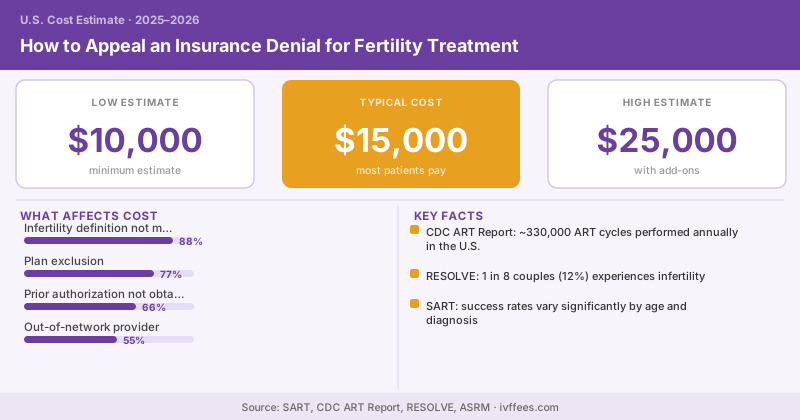
40 to 50 percent of internal insurance appeals succeed. That’s not a rumor — that’s what patient advocacy data consistently shows for fertility treatment denials specifically. If you’ve been denied and you haven’t appealed, you may be paying out of pocket for treatment that was always going to get covered if you pushed back.
Insurance denials for fertility treatment are common. They’re also frequently wrong. Here’s how to fight them effectively.
Why Fertility Claims Get Denied
Before you can appeal effectively, understand why you were denied. The denial letter must legally tell you. Common reasons:
“Experimental” or “not medically necessary” — IVF has been performed since 1978. Calling it experimental is increasingly difficult to defend, but some insurers still use this language for certain protocols (e.g., preimplantation genetic testing, endometrial receptivity testing).
Infertility definition not met — Many plans define infertility as 12 months of unprotected intercourse without pregnancy. If you haven’t hit that threshold (or if your plan doesn’t recognize same-sex couples’ situations), this is a common denial reason.
Plan exclusion — The plan explicitly excludes fertility treatment. This is harder to appeal on medical necessity grounds but may still be challengeable if your state has a mandate that applies to your plan.
Prior authorization not obtained — If you started treatment without prior auth, the denial may be procedural rather than substantive. This can sometimes be resolved retroactively.
Out-of-network provider — If your fertility clinic isn’t in the plan’s network and you didn’t get an out-of-network exception.
Step 1: Internal Appeal
Every insurer is required to have a formal internal appeal process under the ACA. You have 180 days from the date of the denial to file an internal appeal (many plans allow longer — check your specific plan documents).
What to include in your appeal packet:
A letter from your reproductive endocrinologist (RE) — This is the most critical document. It should include:
- Your specific diagnosis (with ICD-10 codes)
- Why the requested treatment is medically indicated
- The clinical rationale — not just “patient wants IVF” but “patient has X diagnosis and Y treatment has been unsuccessful, therefore IVF is the appropriate next step per ASRM guidelines”
- Relevant peer-reviewed literature supporting the treatment (your RE can provide this)
Your personal appeal letter — Write a clear, factual statement of your situation. Don’t be emotional; be clinical. Explain how the denial reason is incorrect based on your specific facts.
Any prior authorization correspondence — Include copies of everything you’ve already submitted and any verbal approvals (document date, time, representative name).
Medical records — Include relevant portions of your treatment history, test results, and any prior treatments attempted.
ASRM practice guidelines — The American Society for Reproductive Medicine publishes clinical practice guidelines. If the denial cites “not medically necessary,” the ASRM guideline supporting your treatment is powerful counter-evidence.
Ask your RE to request a peer-to-peer review — a direct call between your doctor and the insurer’s medical reviewer. Many denials get reversed at this step before a formal appeal is even filed. Insurers are required to make this available, and physician-to-physician conversations often resolve medical necessity disputes faster than the paper appeal process.
Step 2: External Review
If your internal appeal is denied, you have the right to an independent external review under the ACA. This is separate from the insurer’s process — a neutral, independent organization reviews the denial.
Key facts about external review:
- Available for most employer-sponsored plans and individual plans under the ACA’s external review provisions
- Binding on the insurer — if the external reviewer sides with you, the insurer must cover the treatment
- Free to you — no cost to file an external review request
- Deadline: Usually 4 months from the final internal appeal denial, or 60 days if it involves urgent care
- Success rates: Data from state insurance departments shows external reviews overturn insurer denials approximately 40% of the time overall, with higher rates for fertility cases in states with active mandates
To request external review, contact your insurer and ask for the external review process or contact your state’s insurance commissioner. The insurer is required to provide you with information about how to access external review.
Some self-insured employer plans are exempt from state external review requirements because they’re governed by federal ERISA law. If your plan is self-insured, you may only have access to federal external review procedures. Ask HR whether your plan is subject to state or federal external review requirements.
Step 3: State Insurance Commissioner
If you live in a state with a fertility insurance mandate and your insurer is denying coverage that the mandate requires, you can file a complaint with your state insurance commissioner (also called the Department of Insurance).
This is different from an appeal — it’s a complaint about whether the insurer is complying with state law. Insurance commissioners can investigate, fine insurers, and require coverage compliance.
Find your state’s insurance commissioner at: naic.org (National Association of Insurance Commissioners directory) or search “[your state] department of insurance.”
When filing: clearly identify the mandate your plan is subject to, the coverage that mandate requires, and how the denial violates it. Attach your denial letter.
Step 4: Contact RESOLVE and Consider Legal Counsel
RESOLVE: The National Infertility Association has an insurance advocacy program specifically designed to help patients navigate insurance disputes. Their resources at resolve.org include:
- State-specific insurance advocates
- Template appeal letters
- Patient navigator support
- Information about insurance commissioner complaints
For complex denials — particularly self-insured plan situations or cases involving significant dollar amounts — consulting a patient rights attorney or a healthcare attorney who specializes in insurance disputes may be worth the cost.
What Not to Do
Don’t accept a denial at face value. Insurance companies issue denials knowing a large percentage of people won’t appeal. The appeal process exists precisely because denials aren’t always final.
Don’t miss deadlines. The 180-day internal appeal window and subsequent external review deadlines are real. Calendar them the day you receive a denial.
Don’t start treatment before getting approval in writing. Starting treatment after a denial and then appealing retroactively is much harder than appealing before treatment begins.
Don’t submit an appeal without your RE’s involvement. A letter from you explaining why you need IVF is far less effective than a letter from your RE citing diagnosis codes, ASRM guidelines, and clinical rationale.
Sample Appeal Letter Framework
Your appeal letter should follow this structure:
- Opening: Identify the denial (date, claim/authorization number, denial reason as stated)
- Patient information: Name, member ID, plan information
- Factual summary: Your diagnosis, treatment history, what was requested
- Why the denial is incorrect: Address the specific denial reason with clinical evidence
- Request: Request coverage for [specific treatment] under [specific plan benefit or state mandate]
- Supporting documentation: List all attachments
Keep it professional, factual, and under two pages. The RE’s letter carries the clinical weight; your letter provides context and frames the request.
External review success rate data from Kaiser Family Foundation health insurance appeal studies. ACA external review rights under PHSA Section 2719. Appeal process requirements under ACA Section 2719. RESOLVE insurance advocacy resources at resolve.org.