Denver is home to CCRM — Colorado Center for Reproductive Medicine — one of the most recognized fertility brands in the world. That makes Denver something of a fertility destination, drawing patients from Wyoming, Montana, Utah, and beyond who travel specifically for access to a nationally ranked program.
It also means Denver has a two-tier pricing market: CCRM charges premium rates that reflect its national reputation, while independent Denver-area clinics run closer to national average pricing. Here’s how to navigate both.
What IVF Actually Costs in Denver
Denver-area base IVF procedure fees range from $12,000 to $19,000 depending on the clinic. CCRM tends toward the top of that range; other well-regarded Denver programs often run $2,000–$5,000 cheaper.
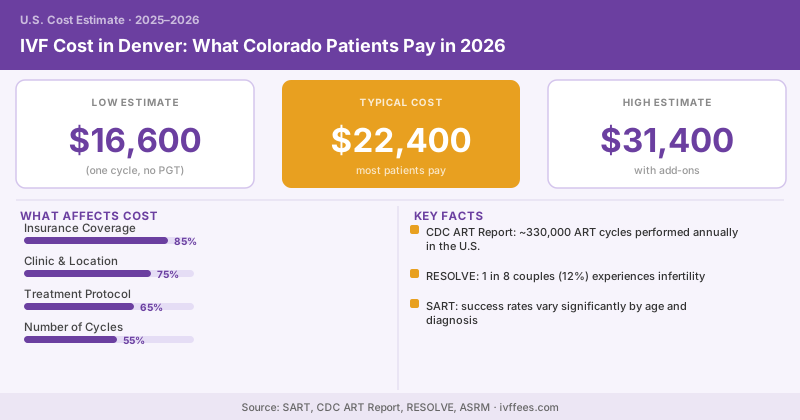
Add fertility medications ($3,500–$6,500) and monitoring, and an all-in first cycle for uninsured Denver patients runs $16,000 to $26,000.
| Cost Component | Low End | Typical | High End |
|---|---|---|---|
| Base IVF procedure (Denver) | $11,500 | $15,000 | $20,000 |
| Fertility medications | $3,500 | $5,000 | $7,000 |
| Monitoring & labs | $1,000 | $1,500 | $2,500 |
| Anesthesia | $600 | $900 | $1,400 |
| PGT-A genetic testing (optional) | $3,500 | $5,000 | $7,500 |
| Frozen embryo transfer (if needed) | $3,000 | $4,500 | $6,500 |
| Total (one cycle, no PGT) | $16,600 | $22,400 | $31,400 |
Colorado Has No IVF Insurance Mandate
Colorado does not require health insurers to cover IVF. The state has no fertility insurance mandate, which means the overwhelming majority of Colorado patients pay out of pocket for treatment.
Some exceptions: Colorado residents working for large employers that have voluntarily added fertility benefits — particularly technology companies, healthcare systems, and financial firms with Colorado operations — may have meaningful coverage. Colorado’s growing tech and startup economy has brought employers with competitive benefits packages, and fertility coverage has become a talent retention tool.
RESOLVE data shows that even without a state mandate, approximately 30–40% of patients at major Denver clinics have some form of insurance assistance — largely through voluntary employer benefits. If you’re at a larger employer, check before assuming you’re on your own.
Colorado’s tech sector has imported employer fertility benefits from Silicon Valley and Seattle. Companies like DISH Network, Lockheed Martin, and numerous healthcare employers with Colorado presence have fertility benefits. The Colorado Department of Labor’s employee benefits disclosure rules mean your HR department must provide benefits documentation on request — ask specifically about “fertility” and “infertility treatment.”
CCRM: Denver’s National Reputation and What It Costs
CCRM was founded in Lone Tree, Colorado (south Denver metro) and grew into a nationally recognized brand on the basis of its success rates, genetic testing programs, and research output. It now operates clinics in multiple cities, but Denver remains its flagship.
What CCRM is known for:
- Comprehensive genetic testing programs — CCRM was an early adopter of PGT-A and still runs one of the most comprehensive preimplantation testing platforms nationally
- High success rates — CCRM’s SART-reported outcomes have consistently ranked among the top nationally for multiple age groups
- Complex case expertise — recurrent implantation failure, recurrent pregnancy loss, and poor ovarian reserve patients are often referred to CCRM from other clinics
What CCRM costs: base IVF fees at CCRM Denver typically run $17,000–$22,000 for the base procedure, plus medications. Comprehensive packages including genetic testing can reach $30,000–$35,000 for a single cycle. That’s a premium, but for patients who’ve had multiple failed cycles elsewhere or have complex diagnoses, the CCRM reputation for expertise may justify the cost difference.
Other Denver-Area IVF Clinics
For patients who don’t need or want CCRM’s comprehensive (and expensive) approach:
- Rocky Mountain Fertility Center — Parker, CO (south Denver suburbs); strong SART outcomes at lower prices than CCRM
- Conceptions Reproductive Associates — multiple Colorado locations including Denver metro and Littleton; competitive pricing, good volume
- Colorado Reproductive Endocrinology — Denver; smaller practice with personalized care model
- University of Colorado Fertility and Reproductive Endocrinology — academic program; strong for complex diagnoses and research participation
- Vios Fertility (Denver location) — national network with Denver presence
Why Patients Travel to Denver for IVF
Denver functions as a regional hub for the Mountain West and Great Plains. Patients from these states regularly travel to Denver for IVF care:
- Wyoming — no major fertility clinics; Cheyenne to Denver is 1.5 hours
- Montana — limited fertility care; Billings patients often fly to Denver
- New Mexico — Albuquerque has some options, but Denver’s programs are more comprehensive
- Utah — Salt Lake City has its own programs, but Denver’s access to CCRM draws complex cases
- Nebraska and Kansas — Omaha and Kansas City have options, but Denver draws patients seeking CCRM or academic care
For out-of-state patients doing monitoring locally and traveling to Denver for retrieval and transfer, CCRM and other Denver clinics have established protocols. Your OB-GYN or a local radiology clinic can often handle monitoring ultrasounds, with results transmitted to Denver.
Reducing IVF Costs in Denver
Compare CCRM against local programs. CCRM’s reputation is real, but for straightforward cases — patients under 35 with no complex history — the outcome difference between CCRM and a well-regarded local clinic may not justify the $3,000–$5,000 price premium. Review SART data specifically.
Colorado Springs is cheaper. Colorado Springs, 1 hour south of Denver, has fertility clinics that run $1,500–$3,000 cheaper per cycle than equivalent Denver programs. Not a dramatic difference, but meaningful over multiple cycles.
Altitude and your protocol. Denver is at 5,280 feet. Some reproductive endocrinologists adjust stimulation protocols slightly for altitude, and some patients report different medication response patterns. If you’re traveling from sea level to Denver for treatment, discuss this with your RE.
Specialty pharmacy comparison. Colorado patients are well-served by national fertility specialty pharmacies — MDR, Koala Meds, FertilityRx. With no insurance subsidy on medications for most patients, pharmacy shopping is high-leverage.
HSA/FSA timing. Colorado has a state income tax, which means pre-tax contributions to HSAs and FSAs provide both federal and state tax savings. If you’re planning a cycle, maximize contributions before the cycle starts — the combined federal and state tax savings on $5,000 in HSA contributions is meaningful.
According to SART’s most recent national data, the average live birth rate per egg retrieval for women under 35 is approximately 49% nationally. CCRM’s published outcomes often exceed this benchmark — but patients with diminished ovarian reserve, advanced age, or complex histories should have realistic expectations regardless of clinic reputation. Ask any clinic for their specific success rates for your age and diagnosis before committing.
The Bottom Line for Denver Patients
Uninsured IVF in Denver runs $16,000–$26,000 per cycle depending on the clinic. CCRM commands a premium that may be worth it for complex cases or patients who’ve had prior failures. Local programs run closer to the national average and are appropriate for most first-line IVF patients.
Colorado has no state insurance mandate — check your employer’s voluntary benefits before assuming you’re uninsured. And for out-of-state Mountain West patients, Denver is a legitimate destination for fertility care.
Cost data based on Denver-area clinic fee schedules, CCRM published fee information, SART 2022 data, and RESOLVE analysis. Individual costs vary by clinic, protocol, and voluntary employer coverage.