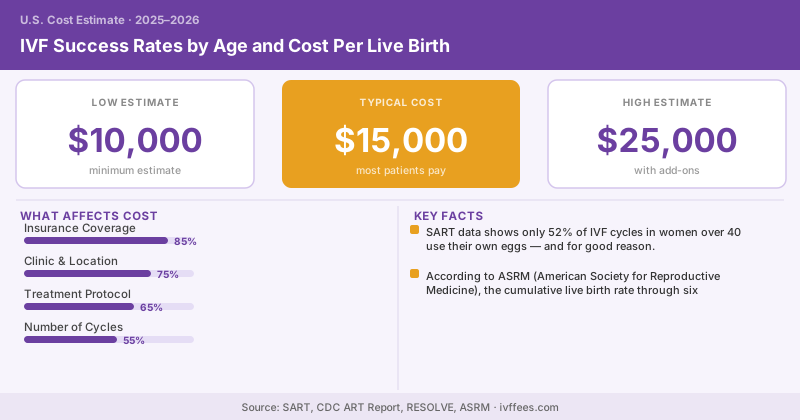
SART data shows only 52% of IVF cycles in women over 40 use their own eggs — and for good reason. The success rates tell a story that most clinics don’t lead with when they’re quoting you a price.
Understanding IVF costs without understanding success rates is like buying a lottery ticket without knowing the odds. The sticker price for one cycle is only half the picture. The real financial question is: what does it cost to actually bring a baby home? That number changes dramatically depending on your age.
Success Rates by Age: The CDC Numbers
The CDC’s Assisted Reproductive Technology (ART) report is the most comprehensive source of real-world IVF outcomes in the United States. The 2021 report — the most recent with complete data — showed the following live birth rates per egg retrieval cycle using a patient’s own eggs:
- Under 35: approximately 46–52% live birth rate per retrieval
- 35–37: approximately 35–40%
- 38–40: approximately 22–28%
- 41–42: approximately 12–16%
- Over 42: approximately 4–7%
These numbers are per cycle. That means a 40-year-old with a 25% success rate has a 75% chance of that cycle not resulting in a live birth.
| Age Group | Live Birth Rate/Cycle | Avg Cycles Needed | Est. Total Cost |
|---|---|---|---|
| Under 35 | ~49% | 1.5–2 | $20,000–$35,000 |
| 35–37 | ~38% | 2–3 | $25,000–$50,000 |
| 38–40 | ~25% | 3–4 | $35,000–$65,000 |
| 41–42 | ~14% | 4–6 | $50,000–$90,000 |
| Over 42 (own eggs) | ~5% | 8–12+ | $80,000–$150,000+ |
| Over 42 (donor eggs) | ~45–50% | 1.5–2 | $60,000–$100,000 |
Why Age Matters So Much
The core issue is egg quality, not quantity. As women age, the chromosomal integrity of eggs declines. By the early 40s, a significant portion of retrieved eggs carry chromosomal abnormalities that will prevent healthy embryo development. This is why live birth rates drop so sharply — it’s not that IVF stops working mechanically, it’s that the raw material becomes increasingly difficult to work with.
This is also why many reproductive endocrinologists recommend PGT-A genetic testing for women over 37. Testing embryos for chromosomal normalcy lets clinics transfer only euploid (chromosomally normal) embryos — which have substantially higher implantation rates regardless of the patient’s age. The tradeoff is cost: PGT-A adds $3,000–$6,000 to a cycle.
Calculating Your Real Cost Per Live Birth
Here’s the math that matters. If a 39-year-old has a 25% chance per cycle, and each cycle costs $20,000 all-in, her expected cost to achieve a live birth is:
$20,000 ÷ 0.25 = $80,000 expected cost
That’s not a guaranteed number — she might succeed on cycle one, or she might not succeed at all. But it’s the honest financial planning number. Compare this to a 32-year-old:
$20,000 ÷ 0.50 = $40,000 expected cost
Same procedure. Same clinic. Roughly double the financial exposure based on age alone.
- Get your clinic’s live birth rate for your age group (ask for their SART data, not just “success rate”)
- Estimate your all-in cost per cycle (base + meds + testing)
- Divide the cost by the success rate (as a decimal)
- That’s your expected cost per live birth
Example: $22,000 ÷ 0.35 = $62,857 expected cost
The Donor Egg Inflection Point
For women in their mid-40s using their own eggs, the numbers become financially brutal. A 44-year-old with a 5% success rate faces an expected cost of $400,000+ to achieve a live birth with own eggs — if she gets there at all.
This is precisely why donor eggs become the economically rational choice for many women over 42. With a young donor’s eggs, success rates jump to 45–55% per transfer regardless of the recipient’s age. The total cost of donor egg IVF — typically $35,000–$55,000 all-in — is lower than the expected cost of pursuing own-egg IVF past 43 for most patients.
According to ASRM (American Society for Reproductive Medicine), the cumulative live birth rate through six donor egg cycles exceeds 95%. For own eggs at 44, that number is closer to 30–35% cumulative across six cycles.
When to Stop vs. When to Keep Going
One of the most difficult decisions in fertility treatment is knowing when to stop. There’s no universal answer, but the data can help. Factors that suggest considering alternatives:
- Two or more failed cycles with chromosomally normal embryos
- Repeated embryo quality issues despite good stimulation response
- Low AMH suggesting severely diminished ovarian reserve
- Age-adjusted expected cost exceeding what your family can absorb financially or emotionally
Reproductive endocrinologists can model your specific situation using ovarian reserve markers and prior cycle data. Ask your RE for an honest estimate of your cumulative success probability over multiple cycles — not just the per-cycle number.
Some clinics advertise inflated success rates by including biochemical pregnancies, early miscarriages, or only reporting rates for their best patients. Always ask for “live birth rate per retrieval” using CDC/SART-reported data for your age group. That’s the only number that counts.
Insurance, Multi-Cycle, and Shared-Risk Programs
Because success rates are probabilistic, several financing structures try to de-risk the expense:
Multi-cycle packages: Some clinics offer 2- or 3-cycle bundles at a discount. This makes sense statistically if your success rate is low enough that multiple cycles are likely.
Shared-risk (refund) programs: You pay a higher upfront premium, and if you don’t take home a baby after a set number of cycles, you get a partial or full refund. These can be worth it for women with lower success rates — though clinics screen applicants carefully.
Insurance mandates: 20 states now require some form of fertility treatment coverage. Check your state’s mandate and your specific plan.
The bottom line: understand your age-specific odds before you commit to a financial plan. The people who navigate IVF costs best are the ones who go in with realistic numbers — not just hope.