Endometriosis affects approximately 1 in 10 women of reproductive age — and according to ACOG, it’s found in 30–50% of women with infertility. It’s not just a painful condition. It creates a specific set of challenges for IVF: the inflammatory environment may affect egg quality, implantation may be impaired, and the surgical history that often precedes IVF can complicate anatomy and ovarian reserve.
The result: IVF with endometriosis almost always costs more than standard IVF. Here’s why.
The Core Problem with Endometriosis and IVF
Endometriosis complicates IVF in three main ways:
1. Egg quality. The inflammatory cytokines and oxidative stress associated with endometriosis may affect follicular development and oocyte quality. Some studies suggest reduced fertilization and blastocyst rates in women with endometriosis compared to matched controls without the disease.
2. Implantation. The endometriotic environment can affect the uterine lining’s receptivity. For women with significant uterine disease or adenomyosis (endometriosis within the uterine muscle), implantation rates may be reduced.
3. Surgical history. If you’ve had prior laparoscopic surgery — endometrioma removal, adhesiolysis, salpingectomy — you may have reduced ovarian reserve and potentially altered anatomy that affects egg retrieval.
| Cost Component | Low | Typical | High |
|---|---|---|---|
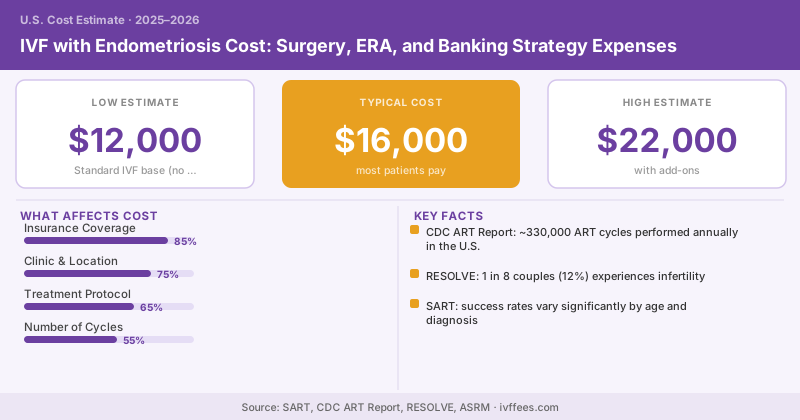
| Standard IVF base (no endo add-ons) | $12,000 | $16,000 | $22,000 |
| Laparoscopy before IVF (if needed) | $5,000 | $12,000 | $25,000 |
| ERA (Endometrial Receptivity Analysis) | $600 | $1,000 | $2,000 |
| Freeze-all strategy (FET added to retrieval) | $3,000 | $5,000 | $8,000 |
| Extra stimulation/monitoring (poor response) | $1,000 | $3,000 | $8,000 |
| Total with endo-specific add-ons | $15,000 | $25,000 | $50,000 |
The Surgery-Before-IVF Decision
For women with stage III–IV endometriosis and significant pelvic disease, the first cost question is whether to surgically treat endometriosis before starting IVF.
The evidence for surgery is strongest when:
- Endometrioma(s) are large (>4 cm) and potentially affecting ovarian access for retrieval
- Significant pelvic distortion or adhesions affect anatomy
- Deep infiltrating endometriosis creates symptoms or potential implantation impediment
The evidence is weaker for:
- Minimal or mild endometriosis without pelvic distortion
- Small endometriomas (<3 cm) that don’t impair access
The concern: endometrioma removal carries real risk of reducing ovarian reserve. The surgery removes endometriotic tissue but can inadvertently remove normal ovarian cortex containing primordial follicles. This risk is higher with repeat surgeries.
ASRM’s current guidance: surgical treatment of endometriomas before IVF is not recommended unless there are specific anatomical or access concerns.
ERA Testing for Endometriosis Patients
The Endometrial Receptivity Analysis (ERA) test involves an endometrial biopsy analyzed by RNA sequencing to determine whether your endometrium is receptive to implantation on a standard stimulated transfer protocol — or whether you have a displaced “window of implantation.”
Some REs recommend ERA routinely for endometriosis patients based on the hypothesis that endometriosis affects endometrial receptivity and may displace the implantation window.
ERA costs $600 to $2,000. The test adds 1–3 months to your timeline (you do the test cycle, wait for results, then plan your transfer).
The evidence: ERA is most clearly supported for patients with recurrent implantation failure (2+ failed transfers with good embryos). Whether routine ERA improves outcomes in endometriosis patients without prior failed transfers is debated.
Many REs recommend a “freeze-all” strategy for endometriosis patients — retrieve eggs, create and freeze embryos, then do a frozen embryo transfer in a subsequent cycle when the inflammatory effects of ovarian stimulation have resolved. Some evidence suggests the uterine environment may be more receptive in a hormone-treated FET cycle than in a fresh transfer cycle for women with endometriosis.
The Embryo Banking Strategy
For women with endometriosis who respond poorly to stimulation (which is common with reduced ovarian reserve from prior surgery or ongoing disease), an embryo banking strategy may be recommended: accumulate embryos from multiple retrieval cycles before testing and transferring.
This strategy substantially increases total cost because each retrieval adds $12,000 to $18,000 in medications and procedure fees. But if your per-cycle blastocyst yield is low (1–2 per retrieval), banking over 2–3 cycles before PGT-A testing gives you a larger pool of euploid embryos to work with.
The Adenomyosis Complication
Adenomyosis — endometriosis within the uterine muscle wall — can affect IVF outcomes in ways that endometriosis alone doesn’t. Some evidence suggests that severe adenomyosis significantly reduces implantation rates. Treatment options are limited (GnRH agonist suppression before transfer, in severe cases), and IVF with a gestational carrier may be considered for women with severe adenomyosis and repeated IVF failures.
ACOG and ASRM note that endometriosis-related infertility is one of the most heterogeneous conditions in reproductive medicine — outcomes vary enormously depending on stage, location, prior surgery history, and ovarian reserve. Your IVF cost will be shaped by where you sit in that spectrum. Get a clear assessment of your specific situation before accepting a generic treatment plan.
What Insurance Covers for Endometriosis-Related IVF
Laparoscopic surgery for endometriosis is typically covered under surgical benefits (not IVF benefits). ERA testing is sometimes covered, sometimes not. The IVF itself is covered in mandate states.
If you’re in a non-mandate state, endometriosis treatment that leads to IVF is often covered as a gynecological/surgical condition even when IVF itself isn’t — specifically the diagnostic and operative aspects.
Bottom Line
IVF with endometriosis costs $15,000 to $50,000 per attempt once you factor in the potential for pre-IVF surgery, ERA testing, freeze-all FET cycles, and reduced ovarian reserve requiring more stimulation. The additional costs are driven by your specific stage and history — not every endometriosis patient needs every add-on. Work with a RE who specializes in endometriosis-associated infertility to build a cost-effective plan tailored to your case.