When a man has almost no sperm — or none at all — a genetic test can answer two critical questions before anyone spends a dollar on surgery: is there a hidden cause, and will treatment even work? For severe male infertility, genetic testing isn’t optional. It’s the test that can save you from a futile $10,000 procedure.
Male factor contributes to roughly 40–50% of infertility cases per the American Urological Association, and a genetic abnormality underlies a meaningful share of the most severe cases. Here’s what the key tests cost and reveal.
The Genetic Tests and Their Costs
| Test | What it detects | Low | Typical | High |
|---|---|---|---|---|
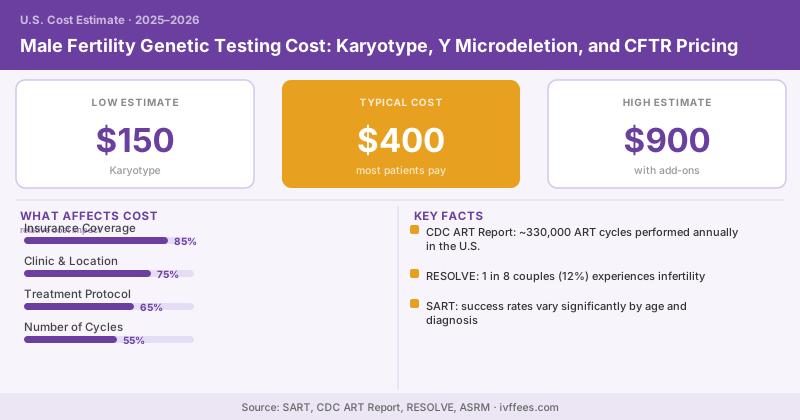
| Karyotype | Chromosomal abnormalities (e.g. Klinefelter) | $150 | $400 | $900 |
| Y chromosome microdeletion | Missing genes for sperm production | $200 | $400 | $800 |
| CFTR (cystic fibrosis) mutation | Congenital absence of vas deferens | $200 | $500 | $1,200 |
| Combined genetic panel | All of the above | $400 | $1,000 | $2,500 |
Male fertility genetic testing costs $200–$2,000+ depending on which tests you need. For severe oligospermia or azoospermia, it’s essential — Y microdeletion results can predict whether sperm retrieval will succeed, and CFTR testing protects future children from cystic fibrosis risk. Spending a few hundred here can prevent a far more expensive mistake.
What Each Test Tells You
Karyotype. Looks at the full set of chromosomes. The most common finding in infertile men is Klinefelter syndrome (47,XXY), present in a notable fraction of men with non-obstructive azoospermia. Knowing this shapes the treatment plan and counseling.
Y chromosome microdeletion. Examines the AZF (azoospermia factor) regions of the Y chromosome that control sperm production. This one is powerfully predictive: a complete AZFa or AZFb deletion means micro-TESE is almost certain to find no sperm, while an AZFc deletion still gives reasonable retrieval odds. That single result can stop you from paying for a doomed surgery.
CFTR mutation testing. Men with congenital bilateral absence of the vas deferens (CBAVD) — a cause of obstructive azoospermia — usually carry cystic fibrosis gene mutations. Testing matters not just for diagnosis but because if the female partner is also a carrier, their child could have cystic fibrosis. That changes the conversation about IVF and embryo genetic testing.
Why Order It Before Surgery, Not After
Here’s the cost logic. If you have non-obstructive azoospermia, a $400 Y microdeletion test can tell you whether a $10,000 micro-TESE has a realistic chance of finding sperm. Ordering the cheap test first is simply smart sequencing — it can spare you the surgery’s cost and the emotional toll of a negative result. A comprehensive male evaluation typically slots genetic testing in right after an abnormal semen analysis confirms severe deficits.
Genetic findings carry implications for your children, not just your treatment. A Y chromosome microdeletion is passed to all sons, who will inherit the same fertility problem. CFTR mutations raise cystic fibrosis risk if both partners are carriers. Genetic counseling should accompany these tests — don’t treat them as just another lab.
Who Needs Genetic Testing
You likely need it if you have:
- Non-obstructive azoospermia or severe oligospermia (under ~5 million/mL)
- Suspected congenital absence of the vas deferens
- A family history of cystic fibrosis or genetic disorders
- Findings suggestive of Klinefelter syndrome (small testes, high FSH)
Men with mild abnormalities and normal hormones generally don’t need it. Your reproductive urologist decides based on your semen analysis and hormone results.
Frequently Asked Questions
Is genetic testing covered by insurance? It’s more likely to be covered than elective fertility procedures because it diagnoses recognized genetic conditions and informs medical decisions. Coverage still varies, so get prior authorization. Cash prices are often a few hundred dollars per test.
Do both partners need genetic testing? For CFTR specifically, yes — if the man is a cystic fibrosis carrier, testing the female partner determines the risk to a child. For karyotype and Y microdeletion, the testing is focused on the man, though female-side genetic screening is part of a complete couple’s workup.
Will a genetic abnormality mean I can’t have children? Not necessarily. Many men with Klinefelter syndrome or AZFc deletions can still have sperm retrieved via micro-TESE and father children through IVF with ICSI. The testing guides realistic expectations and whether to consider donor sperm — it doesn’t automatically close the door.