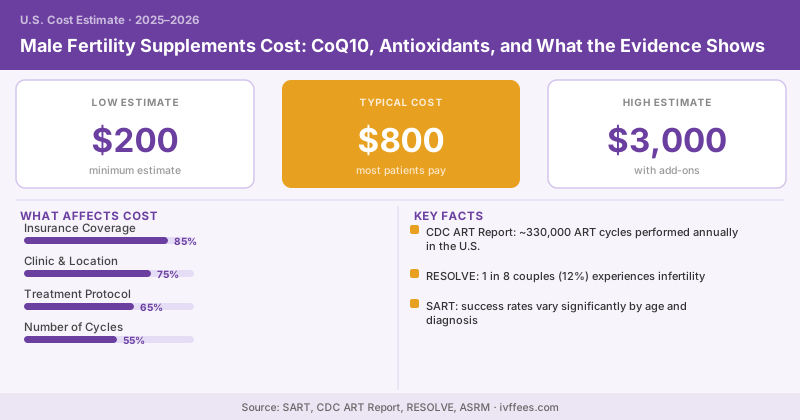
Walk into any fertility supplement aisle and you’ll find products claiming to boost sperm count, motility, and morphology — for $60, $90, sometimes $150 a month. Some of these claims are supported by actual randomized trial data. Most aren’t. Knowing which supplements have evidence behind them — and at what dose — can save you from spending $1,200 a year on products that do nothing.
The honest summary: antioxidant supplementation has the most consistent evidence for improving semen analysis parameters, but effect sizes are modest and the field lacks large definitive trials. Here’s what we know.
Why Oxidative Stress Matters for Sperm
Sperm are unusually vulnerable to oxidative damage. Their cell membranes are rich in polyunsaturated fatty acids, which are easily peroxidized by reactive oxygen species (ROS). High ROS levels damage sperm DNA, reduce motility, and impair the acrosome reaction needed for fertilization.
Oxidative stress is associated with male infertility in 30–80% of infertile men, per ASRM data. Sources include smoking, obesity, varicocele, infection, environmental toxins, and idiopathic causes. Antioxidant supplementation theoretically combats this damage — and some trials support the theory in practice.
Supplement-by-Supplement Evidence and Cost
CoQ10 (Coenzyme Q10)
CoQ10 is both an antioxidant and a mitochondrial cofactor critical to sperm energy production (motility). It’s the most-studied male fertility supplement.
A 2018 systematic review in JAMA found that CoQ10 supplementation in infertile men improved sperm concentration, motility, and morphology compared to placebo. Effect sizes were modest but statistically significant. Doses used in trials: typically 200–600 mg/day for 3–6 months.
- Standard CoQ10 (ubiquinone): $25–$60/month at 400–600 mg
- Ubiquinol (reduced form, better absorbed): $40–$90/month
- Who it’s most likely to help: Men with idiopathic oligoasthenoteratospermia, or those with elevated sperm DNA fragmentation
Vitamin C (Ascorbic Acid)
Vitamin C is water-soluble and one of the primary antioxidants in seminal plasma. Deficiency is associated with increased sperm agglutination and DNA damage. Small trials have shown improvements in motility and DNA fragmentation with supplementation.
- Dose: 500–1,000 mg/day
- Cost: $5–$15/month (generic vitamin C is inexpensive)
- Evidence level: Moderate (several small RCTs, limited large trials)
Vitamin E (Tocopherol)
Often combined with vitamin C in trials (they work synergistically). Vitamin E is fat-soluble and concentrates in sperm cell membranes, protecting lipid peroxidation.
- Dose: 200–400 IU/day (as mixed tocopherols)
- Cost: $10–$25/month
- Evidence level: Moderate; frequently studied alongside vitamin C
Zinc
Zinc is concentrated in the prostate and seminal vesicles and plays a role in sperm production, testosterone synthesis, and DNA integrity. Zinc deficiency is associated with reduced sperm count and motility.
- Dose: 25–66 mg/day (don’t exceed 40 mg/day long-term without monitoring — high zinc can impair copper absorption)
- Cost: $5–$15/month
- Evidence level: Moderate; several trials show improvements particularly in men with sub-normal baseline zinc levels
Selenium
Selenium is incorporated into selenoproteins that protect sperm from oxidative damage and support normal sperm structure. A 2011 RCT found that selenium plus vitamin E improved sperm motility and morphology in infertile men.
- Dose: 100–200 mcg/day (stay below 400 mcg — toxicity possible at high doses)
- Cost: $5–$15/month
- Evidence level: Moderate
Folic Acid + Zinc Combination
Early observational studies suggested combined folic acid + zinc could improve sperm count. A 2020 RCT funded by the NIH (Dietary Antioxidants and Male Fertility, published in JAMA) found that folic acid, zinc, or the combination did NOT improve semen parameters or live birth rates in male partners of couples undergoing assisted reproduction. This was a large, well-designed trial (2,370 men) that significantly dampened enthusiasm for folic acid/zinc combinations.
- The takeaway: skip the expensive “male fertility” blends that lead with folic acid/zinc as their primary ingredients
L-Carnitine and Acetyl-L-Carnitine
Carnitines are critical for sperm motility — they support fatty acid oxidation in the mitochondria. Several trials have shown improvements in motility and sperm parameters, particularly in men with asthenospermia (low motility).
- Dose: 1,000–3,000 mg L-carnitine or 500–1,000 mg acetyl-L-carnitine daily
- Cost: $15–$40/month
- Evidence level: Moderate; best evidence in low-motility cases
Lycopene
Found in tomatoes, lycopene is a carotenoid with antioxidant properties. A 2019 UK trial (LECAROS) using pharmaceutical-grade lycopene (2 mg/day for 12 weeks) found improvements in sperm velocity and percentage with normal morphology.
- Cost: $10–$25/month
- Evidence level: Emerging; the LECAROS results are promising but haven’t been replicated at scale yet
| Supplement | Daily Dose | Monthly Cost | Evidence Strength |
|---|---|---|---|
| CoQ10 (ubiquinol) | 200–600 mg | $40 – $90 | Strong (several RCTs) |
| Vitamin C | 500–1,000 mg | $5 – $15 | Moderate |
| Vitamin E | 200–400 IU | $10 – $25 | Moderate |
| Zinc | 25–40 mg | $5 – $15 | Moderate |
| Selenium | 100–200 mcg | $5 – $15 | Moderate |
| L-Carnitine | 1,000–3,000 mg | $15 – $40 | Moderate (asthenospermia) |
| Lycopene | 2–7 mg | $10 – $25 | Emerging |
| Folic acid alone | 400–5,000 mcg | $5 – $10 | Weak (JAMA 2020 RCT negative) |
Pre-Formulated Male Fertility Blends: Worth It?
Products like Proxeed, FertilityBlend for Men, Beli for Men, and others range from $50–$120/month. Most combine CoQ10, carnitine, zinc, selenium, vitamin E/C, and sometimes additional ingredients.
They’re convenient, and some are formulated in doses close to what clinical trials used. The premium over buying individual supplements separately is real — you’ll often pay 30–60% more for the bundle. But if you want a single supplement with clinically reasonable doses, they’re a defensible option.
For men with moderate male factor, a reasonable evidence-based protocol at minimal cost:
- CoQ10 (ubiquinol): 400 mg/day (~$60/month)
- Vitamin C: 1,000 mg/day (~$10/month)
- Vitamin E: 400 IU/day (~$12/month)
- Selenium: 200 mcg/day (~$8/month)
Total: roughly $90–$100/month. Commit for at least 3 months (one full sperm production cycle) before evaluating with a repeat semen analysis.
What Supplements Can’t Fix
Supplements address oxidative stress — one component of male infertility. They’re unlikely to meaningfully help men with:
- Genetic causes of low sperm count (Klinefelter syndrome, Y-chromosome deletions)
- Obstructive or non-obstructive azoospermia (zero sperm — supplements won’t restore production)
- Severe hormonal deficiencies requiring medical treatment
- Structural blockages requiring surgical intervention
If your semen analysis shows severe oligospermia or azoospermia, supplements are not the answer — a urological and hormonal workup is. Supplements are most appropriate for men with mild to moderate parameter abnormalities and elevated oxidative stress markers.
Don’t delay the clinical workup in favor of a “supplements first” approach. If you’ve been trying to conceive for 12 months (or 6 months if your partner is over 35), get a complete male fertility evaluation done simultaneously. The 3-month supplement trial can happen alongside the diagnostic process — not instead of it.
Lifestyle Changes: Free and Often More Impactful
Before spending $90/month on supplements, consider what’s free:
- Quitting smoking: Smoking is associated with 13–17% reductions in sperm count and motility per multiple meta-analyses. This is dose-dependent and partially reversible.
- Avoiding hot tubs and saunas: Scrotal hyperthermia directly impairs spermatogenesis. Effects appear within months of elimination.
- Weight loss: Obesity elevates scrotal temperature and increases estrogen conversion. Losing 10–15% body weight in obese men has been shown to meaningfully improve sperm parameters.
- Reducing alcohol: Heavy drinking is associated with reduced count and motility; even moderate reduction shows measurable benefit.
A man who quits smoking, normalizes his weight, and avoids heat exposure may see more improvement in his semen analysis parameters than any supplement stack can offer — and it costs nothing.