Male factor infertility contributes to about 50% of all infertility cases — yet it’s consistently undertested. Many couples go through months of female-side evaluation before a thorough male workup is completed. That’s backwards.
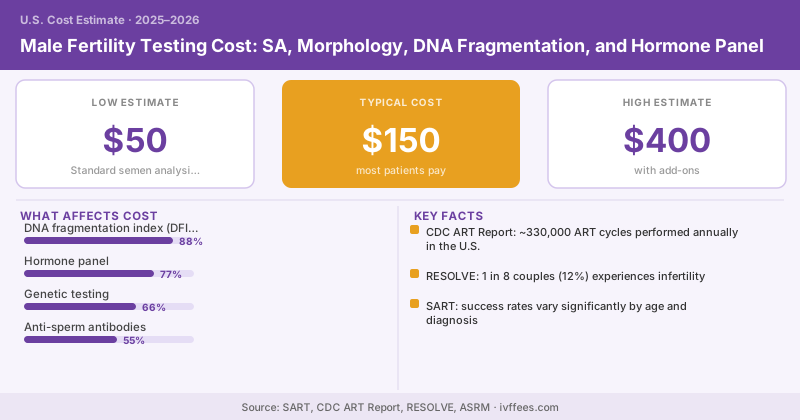
A comprehensive male fertility evaluation is also one of the most cost-efficient things you can do early in the process. A semen analysis costs $50 to $200. If it identifies a severe male factor issue, it changes everything about what treatment path makes sense.
What a Complete Male Fertility Workup Includes
Semen Analysis (SA) — The Foundation
A standard semen analysis measures count (total and concentration), motility (movement), morphology (shape), and volume. The World Health Organization’s 2021 fifth edition reference values define the lower reference limits for normal:
- Total motile sperm count: ≥42 million
- Progressive motility: ≥30%
- Normal morphology (Kruger strict criteria): ≥4%
- Semen volume: ≥1.4 mL
- Sperm concentration: ≥16 million/mL
A single abnormal semen analysis should be repeated after 2–3 months (the full cycle of sperm production) before drawing firm conclusions.
Advanced Testing Beyond the Basic SA
A standard SA doesn’t capture everything. Depending on initial results and clinical context, additional tests add detail.
DNA fragmentation index (DFI): Measures the percentage of sperm with fragmented DNA strands. High DNA fragmentation (>25–30%) is associated with poor fertilization, poor embryo quality, and recurrent miscarriage — even when the standard SA looks normal. Two main testing methods: SCSA (sperm chromatin structure assay) and TUNEL assay.
Hormone panel: FSH, LH, testosterone, prolactin, estradiol. Hormonal imbalances can identify treatable causes like hypogonadotropic hypogonadism, hyperprolactinemia, or testosterone supplementation suppression.
Genetic testing: Y chromosome microdeletion testing (for azoospermia or severe oligospermia) and karyotype to detect chromosomal abnormalities like Klinefelter syndrome (47,XXY).
Anti-sperm antibodies: Can impair sperm motility and penetration, though less commonly tested now due to limited treatment options.
| Test | Low | Typical | High |
|---|---|---|---|
| Standard semen analysis | $50 | $150 | $400 |
| Kruger strict morphology (if separate) | $50 | $100 | $200 |
| DNA fragmentation index (DFI) | $150 | $400 | $900 |
| Male hormone panel (FSH, LH, T, etc.) | $100 | $250 | $600 |
| Y chromosome microdeletion testing | $200 | $400 | $800 |
| Full male fertility workup | $200 | $600 | $2,000 |
What DNA Fragmentation Reveals That the SA Doesn’t
Here’s the clinical reality: a man can have a technically “normal” semen analysis — normal count, normal motility, normal morphology — and still have very high DNA fragmentation. Studies show that sperm DNA fragmentation above 25% is associated with lower fertilization rates, poorer embryo development, and higher miscarriage rates even with IVF and ICSI.
According to a 2019 study in Human Reproduction, elevated sperm DNA fragmentation was found in approximately 40% of infertile men with otherwise normal semen parameters. If you’ve had multiple failed IVF cycles with good embryo development up to transfer — and you haven’t tested DNA fragmentation — it’s worth adding.
Potential interventions for high DFI include: oral antioxidants (CoQ10, vitamin C, vitamin E, zinc), varicocele repair if present, and in severe cases, testicular sperm extraction (TESE) — as testicular sperm often has lower DNA fragmentation than ejaculated sperm.
In couples undergoing IVF workup, the semen analysis should be one of the first tests ordered — not an afterthought. Male factor infertility changes the treatment algorithm significantly. ICSI becomes standard; DNA fragmentation results may change embryo selection priorities; a treatable male diagnosis (like varicocele or hormonal imbalance) may be found before expensive IVF is attempted.
When Azoospermia Changes Everything
Azoospermia — no sperm in the ejaculate — occurs in about 1% of all men and 10–15% of infertile men. There are two types:
Obstructive azoospermia (OA): Sperm are being produced but can’t exit due to a blockage (from vasectomy, prior infection, or congenital absence of the vas deferens). Surgical sperm retrieval is typically successful.
Non-obstructive azoospermia (NOA): Sperm production is impaired. Surgical retrieval (micro-TESE) can sometimes find sperm, but success rates are variable and depend on the underlying cause.
If azoospermia is found on SA, hormone testing and genetic evaluation are essential next steps before surgical planning.
Insurance Coverage for Male Fertility Testing
Standard semen analysis is almost universally covered when ordered with an infertility diagnosis code. Advanced testing (DNA fragmentation, Y chromosome microdeletion, genetic karyotype) may require prior authorization and may be covered under genetic testing benefits rather than fertility benefits.
Male hormone panels (FSH, LH, testosterone) are typically covered under standard lab benefits regardless of the indication.
If you’re taking testosterone supplements, steroids, or other androgens, disclose this to your RE immediately. Exogenous testosterone suppresses the body’s own sperm production and can cause azoospermia. Stopping testosterone 3–6 months before attempting to conceive (under medical supervision) may restore sperm production — but stopping isn’t always straightforward.
Bottom Line
A complete male fertility workup costs $200 to $2,000. Start with a semen analysis — it’s inexpensive and high-yield. Add DNA fragmentation testing if the SA is borderline or if you’ve had failed IVF cycles with unexplained embryo issues. Test the male partner early, not late; the results significantly affect what treatment path makes sense and what add-ons (like ICSI) are medically justified.