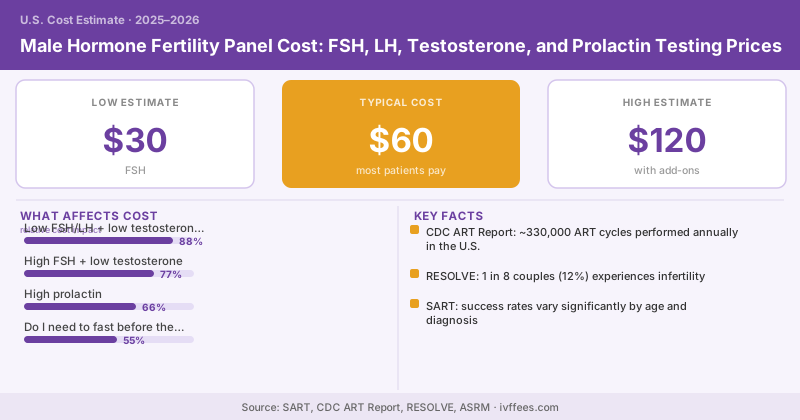
A $250 blood draw can sometimes spare a couple a $20,000 IVF cycle. That’s the case for a male hormone fertility panel — one of the highest-value tests in the entire male workup, and one that’s still skipped far too often.
Here’s why it matters: male factor contributes to about 40–50% of infertility cases per the American Urological Association, and a meaningful share of those cases trace to a hormonal imbalance that medication can fix. But you can’t treat what you haven’t measured.
What the Panel Costs
A male hormone fertility panel is a single blood draw, usually done in the morning when testosterone peaks. The exact hormones measured vary by clinic, but a thorough panel includes the ones below.
| Hormone tested | What it reveals | Low | Typical | High |
|---|---|---|---|---|
| FSH | Sperm production signal from brain | $30 | $60 | $120 |
| LH | Testosterone production signal | $30 | $60 | $120 |
| Total testosterone | Overall androgen level | $30 | $70 | $150 |
| Free testosterone | Bioavailable testosterone | $40 | $80 | $180 |
| Prolactin | Pituitary tumor screen | $30 | $60 | $130 |
| Estradiol | Estrogen balance | $40 | $80 | $160 |
| Full panel (bundled) | All of the above | $100 | $250 | $600 |
A male hormone fertility panel costs $100–$600 and can uncover a treatable cause of infertility — like low gonadotropins, high prolactin, or testosterone suppression. It’s a tiny fraction of IVF cost and belongs at the very start of a male fertility evaluation.
What Each Result Tells Your Doctor
The power of the panel is in the pattern, not any single number.
Low FSH/LH + low testosterone points to hypogonadotropic hypogonadism — the brain isn’t sending the signal. This is highly treatable with clomiphene or hCG, often restoring sperm production for $30–$300 a month.
High FSH + low testosterone suggests the testicles themselves aren’t responding (primary testicular failure). This is harder to treat and may point toward sperm retrieval.
High prolactin can indicate a pituitary tumor (usually benign) and is treatable with medication.
High estradiol relative to testosterone, common in obesity, may respond to an aromatase inhibitor.
These patterns are why a hormone panel sits alongside the semen analysis as a foundation of any serious workup.
When to Get It
Get the panel if your semen analysis is abnormal, if you have low libido or erectile issues, if you have very low testicular volume, or if you’re being evaluated for azoospermia. Frankly, most reproductive urologists order it for nearly every male fertility patient because it’s cheap and high-yield.
Testosterone should be drawn in the morning (ideally before 10 a.m.) when levels peak, and a single abnormal result should be confirmed with a repeat draw. Don’t make treatment decisions — especially about TRT — off one borderline number. And never start testosterone replacement while trying to conceive; it suppresses sperm production.
Direct-to-Consumer vs Clinic Testing
You’ll see at-home hormone kits and direct-to-consumer lab panels for $50–$150. They can be a reasonable screen, but fertility hormone interpretation is nuanced — the relationships between FSH, LH, testosterone, and estradiol matter more than any one value. If results are abnormal, you’ll want a reproductive urologist or endocrinologist reading them, not an app. For couples already pursuing treatment, bundle the hormone panel into your broader fertility testing so everything’s interpreted together.
Frequently Asked Questions
Is the hormone panel covered by insurance? Often yes, more so than other fertility tests, because it can diagnose a recognized medical condition like hypogonadism or a pituitary disorder. Coverage is better when ordered to investigate symptoms rather than purely for fertility. Confirm with your plan and ask the lab for the cash price if uninsured.
Do I need to fast before the test? Fasting usually isn’t required for the reproductive hormones, but the testosterone draw should be done in the morning. Some clinics ask you to avoid heavy exercise the day before. Follow your provider’s specific instructions.
What if all my hormones are normal but my count is still low? That points away from a hormonal cause and toward other factors — a varicocele, genetic issues, or unexplained reasons. Normal hormones are useful information: they help your doctor rule out the medication-treatable causes and focus on what’s actually driving the problem.