Most patients on an IVF protocol get one injection and think that’s it for the night. Then they read the protocol and realize Menopur is a second injection — on top of whatever FSH they’re already taking. Before you panic about the cost, here’s what Menopur actually runs and why your doctor added it.
What Makes Menopur Different
Gonal-F and Follistim are pure FSH — follicle-stimulating hormone only. Menopur is different. It contains both FSH and LH (luteinizing hormone), derived from the urine of postmenopausal women and purified to pharmaceutical grade.
That LH component matters for some patients. A 2020 review in Reproductive Biology and Endocrinology found that adding LH activity through Menopur may benefit women over 35 and poor responders who have lower endogenous LH levels during stimulation. Your RE’s decision to use Menopur, Gonal-F alone, or a combination depends on your individual hormone profile and history.
Price Per Vial and Full Cycle Cost
| Menopur Unit | Low End | Typical | High End |
|---|---|---|---|
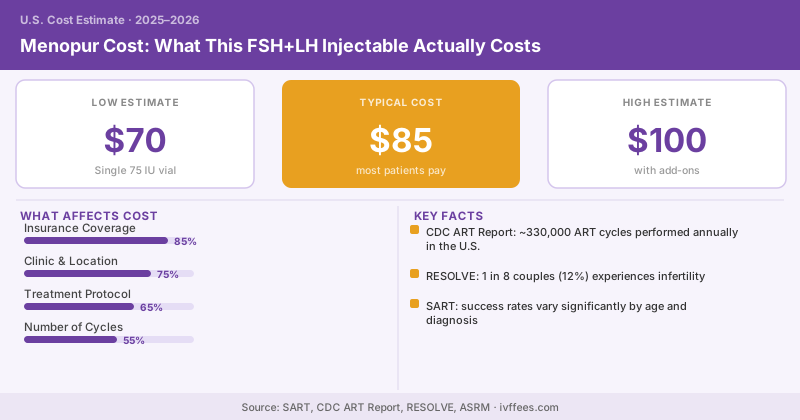
| Single 75 IU vial | $70 | $85 | $100 |
| Box of 5 vials (375 IU) | $340 | $420 | $500 |
| Box of 10 vials (750 IU) | $680 | $850 | $1,000 |
| Full IVF cycle (15–30 vials) | $1,050 | $1,700 | $3,000 |
| Menopur as add-on to FSH (5–10 vials) | $350 | $600 | $1,000 |
Menopur costs slightly more per IU than Gonal-F, primarily because the manufacturing process — purifying urinary gonadotropins — is more complex than recombinant FSH production. A typical protocol might use 1–2 vials per day for 10–12 days.
How Menopur Is Mixed and Dosed
Each Menopur vial contains 75 IU of FSH and 75 IU of LH. Vials come as powder that you reconstitute with a provided sodium chloride diluent. Most protocols involve mixing multiple vials into a single syringe for a single injection — one vial of Menopur typically means 75 IU of each hormone; two vials means 150 IU of each.
The mixing process is more involved than using a prefilled Gonal-F pen, which is why some clinics prefer Gonal-F for patient convenience. Menopur nurses will walk you through the mixing technique; many clinics have YouTube-style videos that help.
Comparing Menopur vs. Gonal-F
These aren’t competing drugs for most patients — they’re often used together. Some protocols use Gonal-F for most of the FSH dose and add a smaller amount of Menopur for LH activity. Others use Menopur alone for all stimulation.
| Factor | Menopur | Gonal-F |
|---|---|---|
| Hormone content | FSH + LH | FSH only |
| Source | Urinary, purified | Recombinant |
| Delivery | Powder + mixing | Prefilled pen available |
| Cost per IU | Slightly higher | Slightly lower |
| Best for | Women needing LH support, poor responders | Most standard protocols |
For younger women with good ovarian reserve, the LH addition from Menopur doesn’t always improve outcomes over pure FSH. For women over 35 or those with diminished reserve, the LH component may make a real difference.
Ferring Pharmaceuticals Compassionate Care
Ferring, Menopur’s manufacturer, offers a patient assistance program called Compassionate Care for US patients. Income eligibility thresholds are similar to other manufacturer programs — up to 400% of federal poverty level for free medication, with partial assistance at higher income levels.
Your reproductive endocrinologist’s office submits the application on your behalf. The financial coordinator at your clinic handles this regularly; just ask. Processing typically takes 2–3 weeks.
Ferring also offers a co-pay assistance card for commercially insured patients — worth asking about even if you’re over the income threshold for free medication.
If you qualify for both Ferring’s Compassionate Care and EMD Serono’s program (because your protocol includes both Menopur and Gonal-F), you can apply to both simultaneously. Your clinic’s financial coordinator can help coordinate applications for multiple drugs at once.
What to Expect in Your Total Medication Budget
Menopur is rarely your only medication cost. A full IVF cycle typically involves:
- Menopur (if used): $1,000–$3,000
- FSH (Gonal-F or Follistim, if used): $1,000–$3,500
- GnRH antagonist (Ganirelix or Cetrotide): $300–$700
- Trigger shot: $100–$300
- Progesterone: $300–$700
Total medication costs for IVF typically run $3,000–$7,000, with Menopur representing a meaningful portion of that if used throughout stimulation.
Insurance and Coverage
Most plans that cover IVF also cover the associated injectable medications, though specialty copays can still leave you with hundreds of dollars in out-of-pocket costs per fill. Menopur, being a brand-name urinary gonadotropin with no US generic equivalent, typically sits on the highest specialty tier.
If your insurance covers fertility medications, confirm the prior authorization requirements before your cycle starts — PA approvals can take 5–10 days, and you don’t want a delay once your protocol begins.
Menopur must be stored at room temperature (up to 77°F / 25°C) until opened, or refrigerated. Once you’ve reconstituted it, use it within 28 days if refrigerated. Check your specific lot’s package insert — temperature excursions can affect potency and won’t always be visually apparent.
Bottom Line
At $70–$100 per vial, Menopur adds up fast across a two-week stimulation. But it’s not interchangeable with pure FSH for every patient — your RE’s protocol choice reflects your individual hormone needs. If cost is a concern, ask your clinic to initiate the Ferring Compassionate Care application early, and verify your insurance coverage before your first fill.