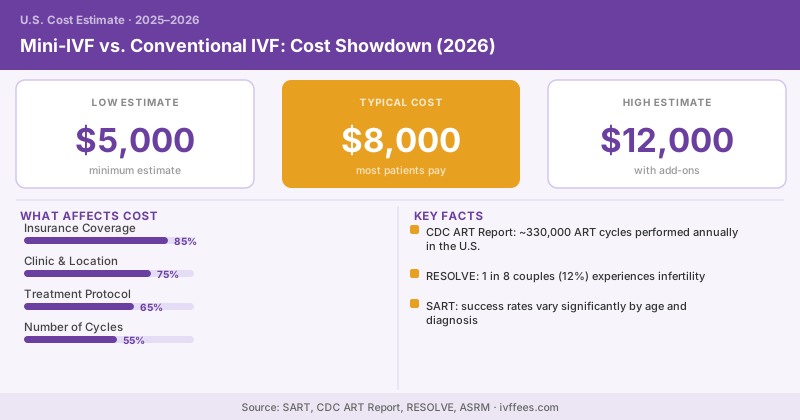
Half the price, but is it half the chance? Mini-IVF cuts the cost of a cycle to roughly $5,000–$10,000 by using low-dose stimulation, compared to $15,000–$25,000 for conventional IVF. The savings come almost entirely from cheaper medications. The question is whether fewer eggs per cycle means more cycles—and a higher total bill. Let’s run the comparison so you can decide which actually saves you money.
What “Mini” Means
Mini-IVF (also called minimal stimulation IVF) uses oral medications like clomid or letrozole, sometimes with low-dose injectables, instead of the high-dose injectable protocol of conventional IVF. The goal is to gently coax out a handful of quality eggs rather than maximizing quantity. Less medication is the headline savings.
| Factor | Mini-IVF | Conventional IVF |
|---|---|---|
| Cost per cycle | $5,000–$10,000 | $15,000–$25,000 |
| Medication cost | $500–$2,000 | $4,000–$8,000 |
| Eggs retrieved | 2–6 typical | 8–15 typical |
| Side effects | Milder | More pronounced |
Our mini IVF cost guide details the protocol, and the main IVF cost breakdown covers the conventional route line by line.
The Eggs-Per-Cycle Question
This is the whole debate. Conventional IVF’s high egg yield gives you more embryos per cycle, which means more chances per retrieval and embryos to bank for siblings or repeat transfers. Mini-IVF’s lower yield means you may need more cycles to bank the same number of embryos—potentially eroding the per-cycle savings.
Mini-IVF is cheaper per cycle but may need more cycles to reach the same number of viable embryos, so it isn’t always cheaper per baby. It shines for younger patients who respond well to low doses, poor responders who don’t benefit from heavy stimulation anyway, and anyone prioritizing milder side effects. For patients wanting maximum embryos in one go—especially for PGT testing or banking—conventional usually wins on efficiency.
Who Comes Out Ahead With Mini-IVF
Mini-IVF tends to favor two groups. First, younger patients with good egg quality who can get viable embryos from just a few eggs. Second, poor responders whose ovaries won’t produce many eggs even on high doses—so they’re paying for stimulation drugs that don’t help. For both, the lower medication bill is real savings with little odds penalty.
If you need PGT genetic testing or want to bank multiple embryos, mini-IVF’s low egg yield can be a disadvantage. With only 2–6 eggs, you may not get enough tested, normal embryos in a single cycle—forcing repeat cycles that cancel out the savings. Match the protocol to your goal, not just the sticker price.
Who Should Stick With Conventional
If you’re banking embryos for several children, doing PGT-A testing, or you’re older and want to maximize embryos per retrieval, conventional IVF’s high yield is more efficient. Getting 10 eggs in one $20,000 cycle can beat getting 4 eggs across two $8,000 mini cycles. Our IVF success rates by age guide helps you estimate yield by age, and IVF financing options covers paying for either.
Frequently Asked Questions
Is mini-IVF really cheaper than conventional IVF? Per cycle, yes—usually $5,000–$10,000 versus $15,000–$25,000, mostly from lower medication costs. Whether it’s cheaper overall depends on how many cycles you need. If mini-IVF gets you a viable embryo in one or two cycles, you save; if it takes several, the savings shrink.
Will mini-IVF lower my chances of getting pregnant? It produces fewer eggs per cycle, so per-cycle odds can be lower, especially if you’d respond well to full stimulation. But for poor responders who won’t make many eggs regardless, mini-IVF often delivers similar results at lower cost. Your response to stimulation is the deciding factor.
Can I do PGT genetic testing with mini-IVF? You can, but the low egg yield is a limitation. Testing requires enough embryos to find chromosomally normal ones, and 2–6 eggs may not produce enough. If PGT-A is central to your plan, conventional IVF’s higher yield is usually the more efficient choice despite the higher cycle cost.