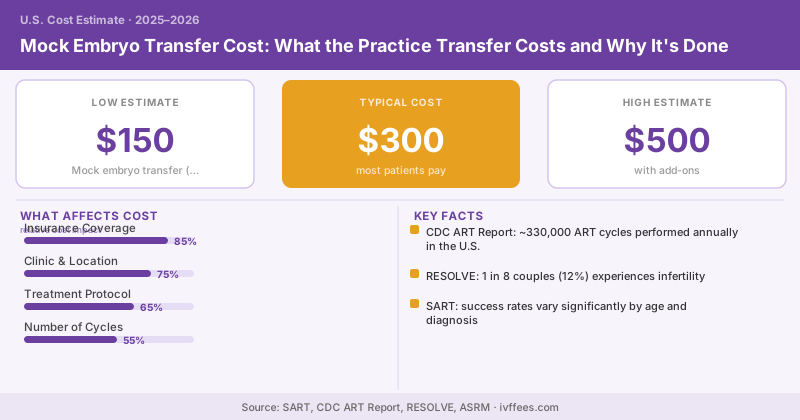
A few hundred dollars for a “practice run” with no embryo involved. To a patient watching every IVF charge, the mock embryo transfer can look like the easiest line item to question. But this one is different from most add-ons — it’s not about boosting your odds with shaky science. It’s about not wasting a precious embryo on a transfer that was always going to go wrong.
Here’s what a mock transfer is, what it costs, and why most reproductive endocrinologists actually like it.
What a Mock Embryo Transfer Is
A mock embryo transfer — also called a trial transfer or dummy transfer — is a rehearsal of the real thing. The doctor passes a soft, empty catheter through your cervix into the uterus, exactly as they would during an actual transfer, but with no embryo loaded.
The goal is to map your anatomy in advance: the angle and length of your cervical canal, any tricky bends, and which catheter works best for you. It’s usually done before your transfer cycle, sometimes during the initial workup.
What It Costs
| Mock Transfer Scenario | Low | Typical | High |
|---|---|---|---|
| Mock embryo transfer (standalone) | $150 | $300 | $500 |
| Bundled into IVF cycle package | $0 | $0 | $0 |
| With ultrasound mapping / uterine measurement | $250 | $450 | $700 |
Many clinics fold the mock transfer into the base IVF cost, so check whether yours bills it separately.
A mock embryo transfer costs $150–$500 and is often included in your cycle. Unlike many add-ons, it has a clear practical purpose: it helps your doctor plan a smooth real transfer so a difficult or unexpected anatomy doesn’t compromise the day your actual embryo goes in.
Why This One Is Worth It
Most of this site’s add-on guides urge caution — and for good reason, since the ASRM has warned that many IVF extras are marketed ahead of the evidence. The mock transfer is the rare extra with a straightforward, practical justification.
The catheter passage during the real transfer matters. Studies have linked difficult or traumatic embryo transfers — ones where the catheter struggles to pass or causes bleeding — with lower pregnancy rates. A mock transfer lets the doctor discover a difficult cervix or unusual uterine angle ahead of time, when there’s no embryo at stake, and plan accordingly.
Think of it as the difference between a pilot reviewing the runway before landing versus improvising on approach. On the day your frozen embryo transfer happens, you want the path already mapped.
When It Especially Helps
A mock transfer is most valuable if:
- You have a history of difficult pelvic exams or a tilted uterus
- You’ve had a prior failed transfer where the catheter was hard to place
- You’ve had cervical surgery or scarring
- This is your first transfer and the team wants a clean plan
For straightforward anatomy, some clinics do a “trial” pass at the start of the real transfer instead of a separate appointment, which can save the standalone fee.
How It Fits Your Budget
Because the mock transfer is inexpensive and practical, it’s one of the easier extras to accept. The bigger budget questions usually involve the high-cost items — egg retrieval, PGT genetic testing, and storage. Knowing what’s included in IVF cost helps you tell which extras, like this one, are sensible and which are speculative.
Frequently Asked Questions
Is a mock embryo transfer really necessary? It’s not mandatory, but most reproductive endocrinologists value it. It maps your anatomy before the real transfer, so a difficult cervix or unusual uterine angle is discovered when no embryo is at stake. Difficult transfers have been linked to lower pregnancy rates, so the planning can matter.
Does a mock transfer hurt? It feels similar to a pap smear or IUD placement — a brief cramp as the soft catheter passes through the cervix. No embryo is involved, and it’s typically done without sedation. Most patients find it mildly uncomfortable rather than painful.
Is a mock transfer always a separate charge? No. Many clinics bundle it into your IVF cycle package at no extra cost, and some do a quick trial pass at the start of the real transfer instead of a separate visit. If it’s billed standalone, expect $150–$500. Ask your clinic how they handle it.
While the mock transfer itself is low-cost and useful, watch for clinics that bill it as a standalone $500 visit when a simple trial pass during the real transfer would do. Ask whether a separate appointment is truly needed for your anatomy.