No shots. No hormone injections. Just the single egg your body naturally matures each month — retrieved, fertilized, and transferred. That’s natural cycle IVF, and yes, it’s real. But is it actually cheaper?
Natural cycle IVF eliminates fertility medications entirely. No gonadotropin injections, no ovarian stimulation protocol. The physician simply monitors your natural menstrual cycle, retrieves the single dominant follicle that your body has already selected, and proceeds with fertilization and transfer.
The appeal is obvious: no expensive medications, no OHSS risk, minimal intervention. The limitation is equally obvious: one egg per cycle.
Natural Cycle IVF Cost Breakdown
| Cost Component | Low | Typical | High |
|---|---|---|---|
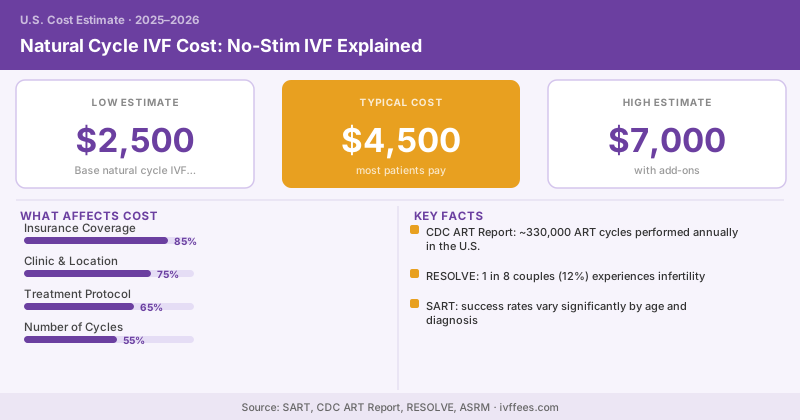
| Base natural cycle IVF procedure | $2,500 | $4,500 | $7,000 |
| Monitoring (4–6 ultrasounds/blood draws) | $400 | $800 | $1,500 |
| Trigger shot (hCG, if used) | $50 | $100 | $200 |
| Lab and embryology fees | $500 | $1,000 | $2,000 |
| Total per attempt | $3,000 | $6,000 | $10,000 |
| 3 consecutive natural cycles | $9,000 | $16,000 | $25,000 |
The base procedure is significantly cheaper than conventional IVF ($10,000–$17,000 base). But the math changes when you account for needing multiple attempts.
The Success Rate Reality
Natural cycle IVF has substantially lower success rates than conventional IVF — not because the procedure is worse, but because you’re working with one egg instead of 10–20. With one egg per cycle:
- There’s a real chance of cycle cancellation if the follicle doesn’t mature properly
- Only ~60–70% of retrieved eggs fertilize successfully
- Embryo quality may be excellent — but you only have one shot per cycle
Live birth rates per natural cycle IVF attempt range from 5–15% depending on age and clinic. Compare that to 35–50% for conventional IVF in patients under 38.
For a 35-year-old with a 10% natural cycle success rate: $5,500 × 10 expected cycles = $55,000 expected cost per live birth. Conventional IVF at $20,000 per cycle and 40% success rate: $50,000 expected cost. The math often favors conventional.
Natural cycle IVF works best for: women who cannot tolerate fertility medications due to medical conditions, patients with strong philosophical objections to hormonal stimulation, women who reliably produce high-quality eggs naturally and can afford multiple attempts, and certain poor responders who produce only 1–2 eggs even with full stimulation (and thus gain little from medications).
Modified Natural Cycle IVF
A middle path between fully natural and conventional IVF is “modified natural cycle IVF,” which adds a small dose of gonadotropins in the final days before retrieval and uses a trigger shot. This aims to:
- Reduce the risk of premature ovulation (a common natural cycle problem)
- Optimize the maturation of the single dominant follicle
- Allow more precise retrieval timing
Modified natural cycles typically cost $4,000–$7,000 per attempt — more than pure natural, less than full stimulation. Some reproductive endocrinologists find this the most clinically useful middle ground.
Cycle Cancellation Risk
One underappreciated aspect of natural cycle IVF: the risk of cycle cancellation before retrieval. In conventional IVF, monitoring catches problems early and dose adjustments are made. In natural IVF, if the follicle doesn’t develop correctly, or if ovulation occurs prematurely before retrieval can happen, the cycle is cancelled — and the monitoring costs are still owed.
Cancellation rates for natural cycle IVF run 15–30% depending on the patient and clinic. This adds to the effective per-attempt cost. Ask your clinic about their cancellation rate and whether monitoring fees are refunded or credited if the cycle doesn’t reach retrieval.
Natural cycle IVF is only offered by a subset of fertility clinics. Not all REs have experience with the precise monitoring required to time a natural-cycle retrieval accurately. If this approach interests you, specifically look for clinics with documented experience and ask for their per-cycle live birth rate data — not just retrieval rates.
Natural Cycle IVF and Medications
“No medications” isn’t entirely accurate in most natural cycle protocols. Patients typically use:
- A trigger shot (hCG or leuprolide) to precisely time ovulation before retrieval
- Luteal phase support (progesterone) after transfer
- Sometimes a GnRH antagonist to prevent premature ovulation
These “minimal medications” cost $50–$300 per cycle — far less than full stimulation at $3,000–$7,000, but not zero.
The Bottom Line
Natural cycle IVF is a legitimate option for specific patients, not a universal cost-saver. Per attempt it’s cheaper; per live birth it’s often similar or higher-cost than conventional IVF, especially for patients under 40 who would respond well to stimulation. If you’re considering it for medical or personal reasons, find a clinic with actual experience and get their specific success rates for your age group before committing to multiple cycles.