The oncologist gives you a treatment start date. Then someone — sometimes the oncologist, sometimes a nurse, sometimes a pamphlet — mentions that chemotherapy can affect your fertility. And suddenly there’s a second urgent decision sitting inside the first one: do you try to preserve your fertility before treatment begins?
The National Cancer Institute estimates that approximately 70,000 women of reproductive age are diagnosed with cancer each year in the United States. Since 2013, the American Society of Clinical Oncology (ASCO) has included fertility preservation discussion as a standard of care before cancer treatment begins. That means this conversation should be happening in your oncology office — but it doesn’t always. If it hasn’t, you may need to advocate for yourself.
Here’s what fertility preservation actually costs, what programs exist to help, and how to make a decision quickly when time is the one thing you don’t have.
The Window Is Short — But It Usually Exists
Most fertility preservation is done in the 2–6 weeks before chemotherapy or radiation begins. That’s enough time for an egg or embryo freezing cycle in most cases. If your treatment start date is sooner than that, ask your oncologist whether a brief delay is medically safe. For many cancers — particularly early-stage breast cancer, thyroid cancer, and early gynecologic cancers — a short delay for egg retrieval doesn’t affect oncologic outcomes. Your care team can advise on your specific situation.
The first call you make, alongside your oncologist, should be to a fertility clinic that has experience with oncofertility patients. Many academic medical centers have dedicated oncofertility programs staffed by reproductive endocrinologists familiar with accelerated protocols.
Egg Freezing and Embryo Freezing Before Chemotherapy
Egg freezing is the most common fertility preservation method for women who don’t have a male partner. If you have a partner or are open to using donor sperm, embryo freezing achieves the same result with slightly better post-thaw survival rates.
| Service | Cost Range |
|---|---|
| Egg freezing cycle (monitoring + retrieval) | $5,000 – $12,000 |
| Fertility medications (stimulation) | $3,000 – $6,000 |
| Embryo freezing cycle (with partner/donor sperm) | $6,000 – $15,000 |
| Egg or embryo storage (per year) | $500 – $1,000 |
| Ovarian tissue cryopreservation (select centers) | $10,000 – $20,000 |
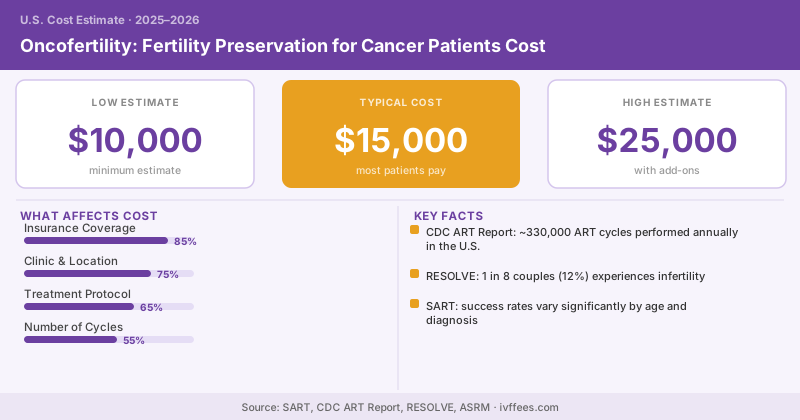
Total cost for one egg freezing cycle including medications: roughly $8,000–$18,000. That’s the unassisted sticker price. As a cancer patient, you likely qualify for reduced-cost access through programs specifically designed for this population.
Livestrong Fertility: The Program Most Patients Don’t Know About
Livestrong Fertility partners with fertility clinics across the US to offer substantially discounted egg freezing, embryo freezing, and sperm banking to cancer patients. Discounts vary by clinic but typically range from 25–50% off standard cycle costs. Some partnered clinics offer medication assistance as well.
To qualify, you need a cancer diagnosis and a referral to a participating clinic. The process is fast — Livestrong Fertility is experienced at expediting cases for patients with tight timelines. If you’re a cancer patient reading this, this should be one of your first phone calls.
Beyond Livestrong, several programs offer financial assistance for cancer patients pursuing fertility preservation. Fertile Hope (now integrated into Livestrong) pioneered the model. Walgreens Fertility Savings and some specialty pharmacies offer medication discounts for oncofertility cases. The Alliance for Fertility Preservation maintains a clinic directory with oncofertility specialists. Some clinics — especially at NCI-designated cancer centers — offer in-house fee reduction for cancer patients. Ask your fertility clinic’s financial coordinator explicitly: “Do you have an oncofertility rate?”
Sperm Banking Before Chemotherapy
For male cancer patients, sperm banking is straightforward and inexpensive relative to what’s at stake. It should happen before any chemotherapy, radiation to the pelvic area, or surgery that might affect reproductive function.
| Service | Cost Range |
|---|---|
| Sperm analysis and cryopreservation (first specimen) | $200 – $500 |
| Additional specimens (recommended: 2–3 total) | $150 – $400 each |
| Annual storage fee | $200 – $500/year |
Budget $400–$900 upfront for collection and first year of storage. Some cancer centers handle sperm banking on-site or have a standing arrangement with a local andrology lab — ask your oncologist’s office before you start calling around separately.
One sample isn’t always enough. Semen quality can vary cycle to cycle, and having multiple samples maximizes the chance of having viable sperm available years later. If time allows, two or three separate collection sessions (48–72 hours apart) is the standard recommendation.
Ovarian Tissue Cryopreservation: When There’s No Time for a Full Cycle
In rare situations — particularly prepubertal girls, patients who can’t delay treatment at all, or hormone-sensitive cancers where ovarian stimulation may be contraindicated — ovarian tissue freezing offers an alternative. A portion of ovarian tissue is surgically removed, frozen, and later reimplanted after cancer treatment concludes.
This procedure is offered at a small number of specialized centers and runs $10,000–$20,000 for the surgical removal and tissue processing, separate from later reimplantation. As of 2019, ASRM reclassified ovarian tissue cryopreservation from experimental to established practice — meaning most major centers can offer it and some insurers will now consider coverage.
Insurance and State Mandate Coverage
This is where cancer patients may have a meaningful advantage depending on where they live. More than 10 states now have laws requiring insurance coverage for fertility preservation before cancer treatment. States with these mandates include Connecticut, Delaware, Hawaii, Illinois, Maryland, New York, Rhode Island, Utah, and others — and the list has been expanding.
Even if your state has a fertility preservation mandate for cancer patients, your specific plan may be exempt if it’s a self-funded employer plan (ERISA-exempt). Call your insurer before assuming coverage. Ask: “Does my plan cover fertility preservation services for cancer patients?” and “Does my state’s mandate apply to my plan type?” Get names and reference numbers — don’t rely on a single phone call.
If coverage is denied, your oncologist’s office can often submit a letter of medical necessity that strengthens an appeal. Many denials are overturned on appeal when documentation is complete.
Making the Decision When Time Is Short
The hardest part of oncofertility isn’t the cost — it’s making a decision while you’re scared, newly diagnosed, and processing an enormous amount of information. There’s no wrong answer. Some patients choose not to pursue preservation, whether for cost reasons, timeline reasons, or because it doesn’t align with their family-building goals. Others find that having embryos or eggs stored gives them meaningful peace of mind through treatment.
What matters is that you have the conversation before treatment begins — not after. ASCO’s guidance is clear: oncologists should raise this topic, refer to fertility specialists promptly, and ensure patients have the information to decide. If that conversation hasn’t happened yet, you can initiate it. Reaching out to a fertility clinic that works with cancer patients is a reasonable first step even before your oncology team makes a formal referral.