Two miscarriages. Then a third. You want answers — and you want to know what those answers will cost.
Recurrent pregnancy loss (RPL) is defined by ASRM as two or more pregnancy losses before 20 weeks gestation. Approximately 1% of couples experience RPL, and despite thorough evaluation, a cause is identified in only 50–60% of cases. That last number is important: even an expensive, comprehensive workup often comes back inconclusive.
Here’s what the RPL testing panel costs, what it typically finds, and what to prioritize if you’re working with a limited budget.
What an RPL Workup Includes
ASRM and ACOG publish guidelines for RPL evaluation. The standard workup covers four main categories:
1. Chromosomal analysis of the couple A karyotype (chromosomal analysis) of both partners to identify structural chromosomal abnormalities that could cause recurring chromosomally abnormal pregnancies. About 2–5% of RPL couples have a chromosomal carrier state.
2. Uterine anatomy evaluation A saline infusion sonogram, 3D ultrasound, or hysteroscopy to identify polyps, fibroids, uterine septum, or Asherman’s syndrome. Uterine abnormalities are found in approximately 10–15% of RPL patients.
3. Antiphospholipid syndrome (APS) testing Blood tests for lupus anticoagulant, anticardiolipin antibodies (IgG and IgM), and anti-beta2-glycoprotein I antibodies. APS is treatable (with low-dose aspirin and heparin) and is found in about 15% of RPL patients — making this one of the highest-yield tests in the workup.
4. Hormonal and metabolic testing Thyroid function (TSH, sometimes T3/T4), prolactin, fasting glucose or HbA1c. Correctable hormonal disorders are found in a meaningful subset of patients.
| RPL Test Category | Low | Typical | High |
|---|---|---|---|
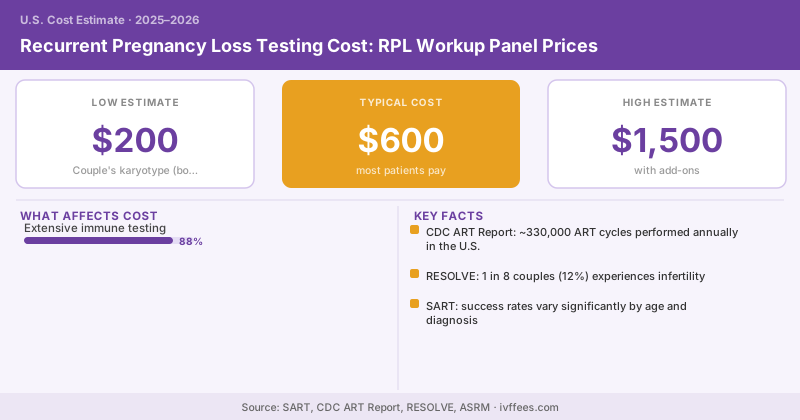
| Couple’s karyotype (both partners) | $200 | $600 | $1,500 |
| Antiphospholipid syndrome panel | $100 | $300 | $800 |
| Uterine evaluation (SIS or HSG) | $100 | $350 | $800 |
| Hormonal panel (TSH, prolactin, etc.) | $50 | $150 | $400 |
| Full RPL workup (standard) | $500 | $2,000 | $6,000 |
Testing That’s Often Ordered But Weakly Supported
The RPL field suffers from significant testing “mission creep.” Many providers order tests with poor evidence bases that add cost without meaningfully changing management:
Natural killer cell testing / immune panels. Blood NK cell levels or uterine NK cell biopsies are frequently ordered at reproductive immunology practices but are NOT part of ASRM’s evidence-based RPL guidelines. There’s no proven treatment based on these results that has been shown to improve outcomes in randomized trials.
Thrombophilia panels (Factor V Leiden, MTHFR, prothrombin mutation). ASRM’s current guidance explicitly does not recommend routine thrombophilia testing in RPL patients, as treatment with anticoagulation has not been shown to improve outcomes in the absence of clinical thrombophilia.
Extensive immune testing. HLA typing, cytokine profiles, and similar immune testing panels run $500 to $3,000 and are not recommended by ASRM for routine RPL evaluation.
If you’re cost-conscious, focus on antiphospholipid syndrome testing, uterine anatomy evaluation, and thyroid function. These tests are guideline-recommended, have the highest yield for finding a treatable cause, and have the best evidence for management impact. Extensive immune panels add thousands of dollars with limited evidence of benefit.
Chromosomal Analysis of Pregnancy Tissue
If you’ve had a miscarriage recently, chromosomal analysis of the pregnancy tissue itself (POC — products of conception — testing) can be enormously informative. Most first-trimester miscarriages are caused by chromosomal abnormalities in the embryo, not by a problem with you or your partner.
POC testing costs $200 to $800 and can tell you whether the loss was due to a chromosomal problem (which may be random rather than recurring) versus a chromosomally normal embryo that failed for another reason. This information changes both the clinical picture and the urgency of further workup.
When to Start the RPL Workup
ASRM now recommends offering an RPL evaluation after two consecutive losses, not three. The old threshold of three losses was based on statistical calculations about “when recurrence becomes non-random” — but it’s ethically and practically reasonable to start evaluating after two.
Your OB/GYN, maternal-fetal medicine specialist, or reproductive endocrinologist can order the workup. Many RPL evaluations are covered under general medical insurance (not IVF insurance) because the diagnoses being tested — antiphospholipid syndrome, thyroid disease, uterine anomalies — are medical conditions, not fertility treatments.
Up to 50% of RPL cases have no identified cause even after a complete evaluation. This is frustrating, but it doesn’t mean the next pregnancy will fail. Studies show that couples with unexplained RPL have a 60–70% chance of a successful subsequent pregnancy with supportive care alone, without any specific intervention.
Bottom Line
A standard RPL workup costs $500 to $6,000 depending on which tests are ordered and how testing is covered by insurance. Focus on the four guideline-recommended categories: chromosomal analysis, antiphospholipid syndrome, uterine evaluation, and thyroid function. Be skeptical of immune panels not recommended by ASRM — they add cost without clear clinical benefit for most patients.