What does it mean when a man’s semen analysis shows low volume — say, 0.2 mL instead of the normal 1.5+ mL — but the other parameters look normal? One answer is retrograde ejaculation: sperm are being produced fine, but instead of exiting the body during orgasm, they travel backward into the bladder.
It’s more common than most people realize. Retrograde ejaculation accounts for roughly 0.3–2% of male infertility cases and is a well-recognized but often-missed cause. The good news is that it’s treatable — and sperm retrieved from the bladder can be used successfully for IVF/ICSI.
How Retrograde Ejaculation Is Diagnosed
The diagnosis is straightforward: a post-ejaculatory urine sample examined under microscope. If sperm are present in significant numbers in urine collected immediately after orgasm, retrograde ejaculation is confirmed. The test is inexpensive — typically $50–$150 as part of a broader male fertility evaluation.
Common causes include:
- Bladder neck surgery (prostate surgery, TURP)
- Diabetes (autonomic neuropathy affecting bladder neck closure)
- Multiple sclerosis or spinal cord injury
- Prior pelvic or retroperitoneal surgery
- Alpha-blocker medications (tamsulosin, doxazosin) prescribed for prostate conditions
- Some antidepressants and antipsychotics (thioridazine, TCAs)
If a medication is causing retrograde ejaculation, stopping or switching it — with your doctor’s guidance — is the first and cheapest step.
Treatment Options and Costs
Option 1: Alpha-Sympathomimetic Medications
The bladder neck closes during ejaculation via alpha-adrenergic stimulation. When that mechanism fails, medications that enhance sympathetic tone can restore antegrade ejaculation (forward flow) in some men.
Pseudoephedrine (Sudafed): OTC, $5–$15/month. Taken 1–2 hours before intercourse or at regular intervals. Works best for neurogenic and idiopathic cases. Not suitable for men with cardiovascular conditions, hypertension, or glaucoma.
Imipramine (tricyclic antidepressant with sympathomimetic effects): Prescription, $10–$30/month generic. Used off-label. Has a modest evidence base for retrograde ejaculation; more commonly used in neurological cases.
Phenylephrine: Sometimes prescribed for short-term antegrade ejaculation restoration.
Success rates with medication are variable — roughly 30–50% in appropriate candidates for pseudoephedrine. Neurogenic cases (spinal cord injury, diabetes with severe neuropathy) have lower response rates.
| Medication Approach | Monthly Cost | Effectiveness |
|---|---|---|
| Pseudoephedrine | $5 – $15 (OTC) | 30–50% antegrade conversion |
| Imipramine | $10 – $30 | Moderate, varies by cause |
| Combination therapy | $20 – $60 | Slightly higher in select patients |
Option 2: Sperm Retrieval from Post-Ejaculatory Urine
When medication doesn’t work — or when the man’s goal is IVF rather than natural conception — sperm can be harvested from the bladder and used for insemination or IVF/ICSI.
The process requires bladder alkalinization and the right urine collection protocol to keep sperm viable. Acidic urine kills sperm rapidly, so the man is given sodium bicarbonate orally or via IV the evening before and morning of collection to raise urinary pH above 7.5.
After collection, the urine sample is centrifuged to concentrate and wash the sperm. The resulting sperm preparation can be used for:
- Intrauterine insemination (IUI): $300–$800 per cycle for sperm processing, plus $500–$1,500 for the IUI itself
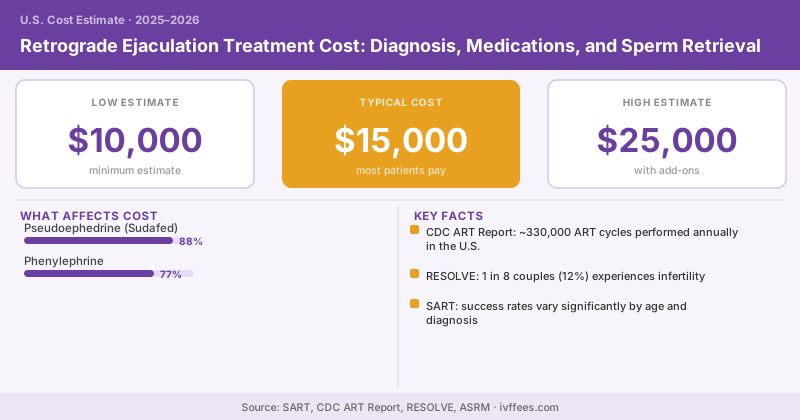
- IVF/ICSI: Sperm processing adds $500–$1,500 to cycle cost; the IVF cycle itself runs $12,000–$20,000
Bladder-retrieved sperm are often usable but may have reduced motility compared to ejaculated sperm, due to contact with urine despite alkalinization. Most clinics freeze a portion of the sample as backup. ICSI is standard practice with bladder-retrieved sperm, since motility may be impaired, and ICSI bypasses the need for sperm to penetrate an egg independently.
Option 3: Electroejaculation (for Neurological Cases)
Men with spinal cord injury or severe neurological retrograde ejaculation who can’t respond to medications may need electroejaculation under anesthesia. A probe delivers a controlled electrical stimulus to the prostate and seminal vesicles, triggering ejaculation.
- Electroejaculation procedure: $1,500–$4,000 per session
- Anesthesia (general): $500–$1,200
- Often combined with sperm cryopreservation
Success rates for sperm retrieval with electroejaculation are 70–90% in spinal cord injury patients.
Option 4: Surgical Correction (Rare)
For bladder neck incompetence from prior surgery, surgical reconstruction is occasionally possible but rarely performed. Success rates are modest and costs are high ($8,000–$20,000+). Most men with surgical-cause retrograde ejaculation are better served by sperm retrieval for IVF/ICSI.
Total Cost Scenarios
| Scenario | Estimated Cost |
|---|---|
| Medication trial for natural conception | $50 – $300/month for 3–6 months |
| Sperm harvest + IUI (3 cycles) | $4,000 – $9,000 |
| Sperm harvest + IVF/ICSI (1 cycle) | $13,000 – $23,000 |
| Electroejaculation + IVF/ICSI | $15,000 – $27,000 |
Insurance Coverage
The diagnostic post-ejaculatory urinalysis is typically covered under standard fertility or urology workup when coded correctly. Medication trials with pseudoephedrine or imipramine are inexpensive regardless.
Sperm processing and IUI/IVF costs follow the same coverage patterns as male factor IVF insurance coverage. In states with fertility insurance mandates, some portion of IVF treatment may be covered even when retrograde ejaculation is the primary diagnosis.
Don’t delay the evaluation. If you have a consistently low-volume semen analysis, ask specifically about post-ejaculatory urine analysis at your next urology or fertility appointment. Retrograde ejaculation is easily diagnosed and has a clear treatment path — it’s one of the more straightforward causes of male factor infertility to address.