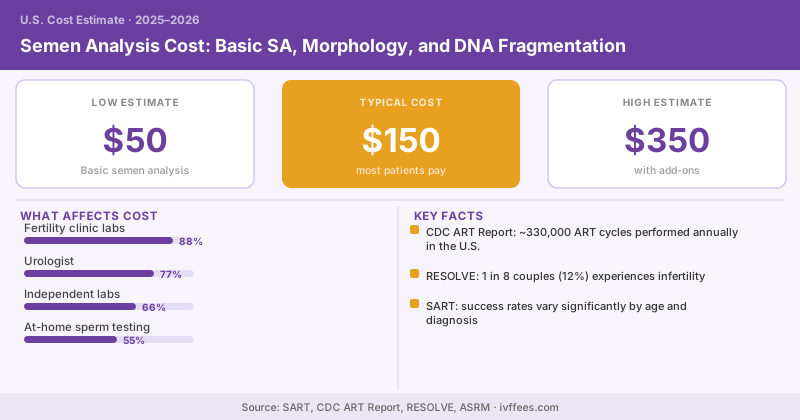
Male factor infertility contributes to roughly half of all infertility cases — yet men’s testing is often the last thing couples think about. The good news: a basic semen analysis is one of the most affordable and actionable tests in fertility medicine.
Knowing your numbers before starting expensive female-side treatments can save thousands of dollars and months of wasted cycles. Here’s what each test costs, what it measures, and when you actually need the advanced ones.
Basic Semen Analysis Cost
A standard semen analysis examines three core parameters: sperm count (concentration), motility (how many are swimming), and volume. This is the foundational male fertility test, and it’s inexpensive.
| Test Type | Low | Typical | High |
|---|---|---|---|
| Basic semen analysis | $50 | $150 | $350 |
| Strict morphology (Kruger) | $75 | $175 | $400 |
| DNA fragmentation index (DFI) | $150 | $300 | $600 |
| Anti-sperm antibodies | $100 | $200 | $400 |
| Sperm function testing (CASA) | $100 | $250 | $500 |
| Full male panel (all tests) | $300 | $700 | $1,500 |
What a Basic SA Measures
According to WHO 5th Edition reference values (2021), normal semen analysis results are:
- Concentration: ≥16 million sperm per mL
- Total motility: ≥42% moving
- Progressive motility: ≥30% moving forward
- Volume: ≥1.4 mL
- Total sperm count: ≥39 million per ejaculate
Results below these thresholds don’t mean infertility — they mean reduced fertility potential. Many men with below-normal counts have fathered children naturally. Context matters enormously.
Strict Morphology (Kruger Criteria)
Morphology testing evaluates sperm shape — the percentage that look “normal” under microscopic examination. The WHO threshold is ≥4% normal forms using Kruger strict criteria, which sounds shockingly low (96% can be “abnormal” and you still pass).
This test adds $75–$250 to the basic SA and is often bundled together. It’s particularly relevant for couples pursuing IVF, since morphology affects fertilization rates in conventional IVF (though ICSI largely overcomes poor morphology).
DNA Fragmentation Testing: When Is It Worth It?
DNA fragmentation index (DFI) measures damage to the genetic material inside sperm. You can have normal count, motility, and morphology — and still have high DNA fragmentation that causes repeated implantation failure or miscarriage.
According to ASRM guidelines, DFI testing is recommended when:
- There have been two or more unexplained IVF failures
- Recurrent pregnancy loss has occurred (2+ miscarriages)
- The basic SA is normal but pregnancy hasn’t happened after 12+ months of trying
- ICSI is being considered
The most common DFI test is the SCSA (Sperm Chromatin Structure Assay). A DFI under 15% is considered low risk; 15–25% moderate risk; above 25% high risk for treatment failure.
DFI testing costs $150–$500 depending on the lab and test method. It’s not routinely needed for every couple — but for those with unexplained infertility or IVF failures, it’s often the missing puzzle piece.
Start with the basic SA. If all parameters are normal and the female workup is also normal (unexplained infertility), add morphology and DFI. If the SA shows problems (low count, low motility), see a urologist before adding more tests — there may be a treatable underlying cause like a varicocele.
Where to Get a Semen Analysis
Fertility clinic labs: Most fertility clinics run their own andrology labs. Convenient for couples already in treatment, but often priced at the high end ($150–$300).
Urologist: A urologist specializing in male fertility can order the full panel and, importantly, interpret results and identify underlying causes. Often the best choice if the SA shows problems.
Independent labs: Quest Diagnostics and LabCorp both offer basic semen analysis. Quest’s pricing is typically $50–$100 without insurance. Results may take 2–3 days.
At-home sperm testing: Devices like YO Home Sperm Test ($50–$100 kit) and SpermCheck ($30–$60) measure sperm count and basic motility using a smartphone. They’re FDA-cleared for screening but don’t replace a full clinical analysis. Good for an initial gut-check before seeing a doctor.
Proper sample collection matters enormously. A basic SA requires 2–5 days of abstinence, collection by masturbation (not condom), delivery to the lab within 30–60 minutes, and avoidance of heat exposure during transport. Deviation from any of these can make normal results look abnormal. If your first SA is abnormal, always repeat it before acting on the results — natural variability is high.
Insurance Coverage
A basic semen analysis is typically covered by insurance as a diagnostic procedure, especially when coded for “infertility workup” or “male reproductive evaluation.” The CPT code is 89300 (with sperm count and motility).
Advanced tests like DNA fragmentation may or may not be covered. Call your insurer before ordering and ask about CPT code 89259 (DNA fragmentation). Some plans cover it; many don’t.
The Bottom Line
A basic semen analysis is the single most cost-effective first step in any fertility workup for couples. At $50–$150, it screens for the male factor that causes half of all infertility — and it’s available without a specialist referral. Don’t spend tens of thousands of dollars on female fertility treatment without knowing your partner’s numbers first. The SA is fast, cheap, and genuinely actionable.