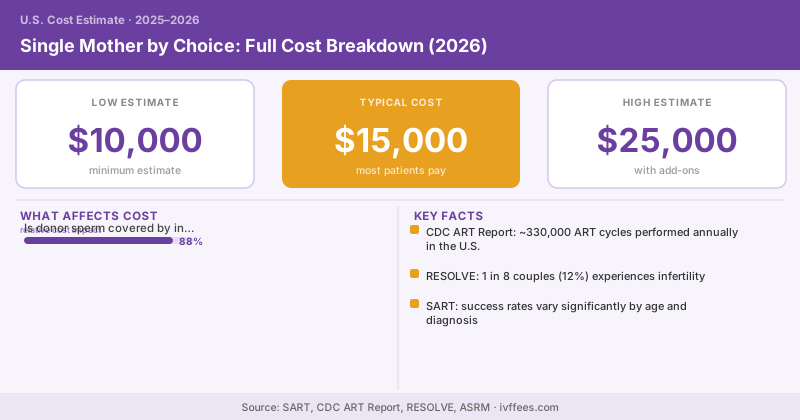
You don’t need a partner to start a family, but you do need a budget. If you’re a single woman deciding to have a baby on your own, your first big question is usually money: how much does this actually cost? The honest answer ranges from about $4,000 for a few rounds of donor-sperm insemination to north of $25,000 if you end up needing IVF. Let’s break down where every dollar goes.
The path you choose matters most. Most single mothers by choice start with intrauterine insemination because it’s cheaper and less invasive. Only if that fails after a few tries do they move to in vitro. RESOLVE, the National Infertility Association, notes that single women and LGBTQ+ individuals make up a growing share of fertility patients, and many clinics now have dedicated “third-party reproduction” coordinators just for this.
What You’re Actually Paying For
Two big buckets: the donor sperm and the procedure itself. Donor sperm from a licensed bank typically runs $900–$1,500 per vial, and you may need more than one vial per cycle or across cycles. Then there’s the insemination or IVF procedure on top.
| Item | Typical Cost |
|---|---|
| Donor sperm (per vial) | $900–$1,500 |
| Medicated IUI cycle | $1,000–$4,000 |
| IVF cycle (if needed) | $12,000–$20,000 |
| Fertility workup & bloodwork | $250–$1,000 |
| Sperm storage (annual) | $300–$600 |
If you go the insemination route, your all-in cost for a single medicated cycle including sperm might land around $2,500–$5,000. Budget for two or three attempts, because per-cycle IUI success rates sit in the low teens to low twenties percent for most age groups. You can dig deeper into pricing in our full guides to IUI cost and donor sperm IUI cost.
When IVF Enters the Picture
Age is the deciding factor. SART data consistently shows IVF success rates drop sharply after 37, so women starting this journey in their late 30s or 40s often skip straight to IVF rather than burning months on IUI. A single IVF cycle with your own eggs runs $12,000–$20,000 before medications, which add another $3,000–$6,000.
If you’re under 35, starting with IUI usually makes financial sense — it’s a fraction of IVF’s price. If you’re 38 or older, many doctors recommend going straight to IVF to avoid spending money on lower-odds cycles. Get a fertility workup first so you’re choosing based on your numbers, not guesswork.
Want the deeper dive on either route? See our breakdowns of IVF cost and how odds shift in IVF success rates by age.
Hidden Costs Single Parents Forget
Sperm storage fees recur every year. Legal consultation, while optional with bank donors, gives some single moms peace of mind around parental rights — budget $300–$800. And don’t forget the workup: AMH testing, an antral follicle count, and infectious disease screening are required before any clinic will treat you.
Known-donor arrangements (a friend donating sperm) can look cheaper but carry real legal risk. Without a proper donor agreement and clinic-mediated quarantine, you could face custody or child-support disputes later. Spend the money on a reproductive attorney — it’s far cheaper than a court fight.
Stretching the Budget
Multi-cycle IVF packages and refund programs can soften the blow if you anticipate needing more than one round. Some clinics bundle three retrievals for a discounted flat fee. Financing through medical lenders is also common. Our guide to IVF financing options walks through loans, grants, and payment plans built for exactly this situation.
Frequently Asked Questions
How many IUI cycles should I try before switching to IVF? Most clinics suggest three to four medicated IUI cycles for women under 38 before recommending IVF. If you’re older or have a low ovarian reserve, your doctor may suggest fewer attempts — or starting with IVF — to make the most of your time and money.
Do I need to buy multiple vials of donor sperm at once? Many single mothers buy two to three vials upfront and store them, so they can use the same donor if they want a sibling later or need repeat cycles. Vials sell out, so storing a few protects your option to keep the same biological father for future children.
Is donor sperm covered by insurance? Almost never. Insurance occasionally covers diagnostic testing or part of a procedure, but the donor sperm itself is an out-of-pocket cost. A handful of state mandates are expanding to include single people, so check your state’s current rules.