Most people assume donor sperm is the simple part of fertility treatment. It often isn’t — at least not from a cost perspective.
Between selecting a donor, buying the right vial type, paying shipping and storage, and then using those vials in a clinical procedure, the total can reach $3,000–$8,000 before you’ve even started an IUI or IVF cycle. Here’s what the real breakdown looks like.
How Sperm Bank Pricing Works
Sperm banks charge per vial (also called a “unit” or “straw”). One vial typically contains 0.5–1.0 mL of washed or unwashed sperm, enough for a single insemination or fertilization attempt. Most patients purchase 2–4 vials per conception attempt to have backups.
| Cost Component | Low End | Typical | High End |
|---|---|---|---|
| Sperm vial (ICI/IUI/IVF-ready) | $500 | $1,000 | $2,000 |
| Vial preparation/processing fee | $0 | $200 | $500 |
| Shipping to clinic (per shipment) | $150 | $275 | $500 |
| Annual storage (at bank) | $200 | $400 | $700 |
| Donor profile/access fee | $0 | $100 | $300 |
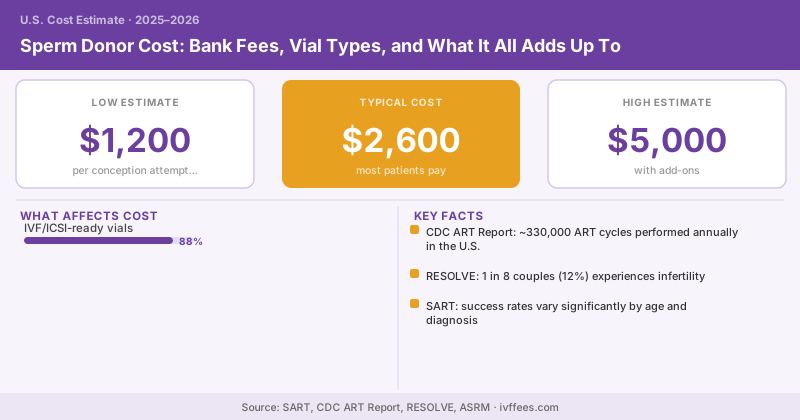
| Total per conception attempt (2 vials) | $1,200 | $2,600 | $5,000 |
ICI vs. IUI vs. IVF-Ready Vials — What’s the Difference?
Sperm banks sell multiple vial types, and buying the wrong one costs you money.
ICI (Intracervical Insemination) vials are unwashed, meaning they contain the full seminal plasma. These are used for at-home insemination. A licensed provider can also wash them in-office before IUI, but that adds a preparation fee. ICI vials are sometimes slightly cheaper ($50–$200 less per vial).
IUI-ready (Intrauterine Insemination) vials are pre-washed — the seminal plasma has been removed, leaving concentrated motile sperm. These are ready for direct insertion into the uterus and don’t require additional lab prep at the clinic.
IVF/ICSI-ready vials contain an even smaller, highly concentrated aliquot designed for in vitro fertilization or intracytoplasmic sperm injection. You need far fewer sperm for IVF because fertilization happens in the lab.
If you’re doing IUI, order IUI-ready vials. Using ICI vials for IUI requires washing at your clinic — usually an extra $100–$300 fee that wipes out any price savings. For IVF, use IVF-ready or IUI-ready vials; the difference is minimal for lab fertilization.
The Major Sperm Banks and Their Pricing
U.S. sperm banks set their own prices. Major banks include California Cryobank, Fairfax Cryobank, Seattle Sperm Bank, Xytex, and NovaBay. Pricing ranges roughly as follows:
- California Cryobank: $900–$1,300 per IUI-ready vial; identity-release vials run higher
- Fairfax Cryobank: $800–$1,100 per vial
- Seattle Sperm Bank: $700–$1,000 per vial
- Xytex: $650–$1,000 per vial
Identity-release (or “open ID”) donors — those who agree to be contacted by donor-conceived children at age 18 — typically cost $100–$300 more per vial due to higher donor demand.
How Many Vials Do You Need?
The answer depends on your protocol. The American Society for Reproductive Medicine (ASRM) recommends that clinics attempt IUI with at least 5–10 million total motile sperm post-wash. Most IUI-ready vials contain 10–30 million post-wash motile sperm, so one vial per IUI attempt is usually sufficient.
However, it’s smart to buy 2–4 vials and store the extras. If you need multiple IUI cycles or move to IVF, you’ll want vials available from the same donor rather than discovering he’s been retired from the bank.
The American Association of Tissue Banks (AATB), which accredits sperm banks, reports that donors cycle out of banks regularly — buying extra and storing them is a hedge against donor unavailability.
Shipping and Storage Costs
Banks charge a tank deposit plus a shipping fee each time vials are transported. Expect:
- Tank deposit: $100–$300 (refundable)
- Shipping to clinic: $150–$350 per shipment
- Storage at the bank: $200–$500/year if you’re keeping vials in reserve
Some patients save money by shipping all purchased vials in one shipment rather than ordering one at a time. Others store vials at their fertility clinic (fees typically $300–$600/year) for convenience.
Confirm vial availability before selecting a donor. Some donors have only 2–5 vials remaining and may not have enough for multiple attempts or siblings. A bank can place a “hold” on vials for a short period while you decide — but it doesn’t guarantee availability.
Known Donors: A Lower-Cost Alternative
Using a known donor — a friend or family member — can eliminate bank fees entirely. You’ll still need:
- FDA-mandated infectious disease screening (about $500–$1,000)
- A 6-month quarantine period unless the donor is a sexual partner
- Legal agreements (typically $500–$1,500 in attorney fees)
Known donor sperm can still be processed and used for IUI or IVF through a licensed fertility clinic. This route often cuts costs by $2,000–$5,000 compared to anonymous bank donors.
Total Cost in Context
Sperm bank costs don’t exist in a vacuum. Add them to the cost of the procedure itself: IUI runs $300–$1,500 per cycle, while IVF runs considerably more. For patients combining donor sperm with IUI over two or three attempts, total costs including vials, shipping, and procedures typically reach $4,000–$10,000. For donor sperm IVF, expect total costs of $15,000–$25,000+.
Cost data based on published pricing from major U.S. sperm banks, ASRM guidelines, and AATB accreditation standards. Prices vary by bank, vial type, and donor characteristics.