What does sperm freezing actually cost — and is it worth it? For a 29-year-old about to start chemotherapy, the answer is unambiguous. For a healthy 34-year-old “just in case,” the math is different. Here’s the full picture.
Sperm cryopreservation is one of the most affordable fertility preservation options available. Unlike egg freezing — which requires weeks of hormone injections, monitoring, and a surgical retrieval — sperm banking involves a simple semen sample, lab processing, and freezing. That simplicity keeps costs dramatically lower.
Sperm Freezing Cost Breakdown
| Cost Component | Low | Typical | High |
|---|---|---|---|
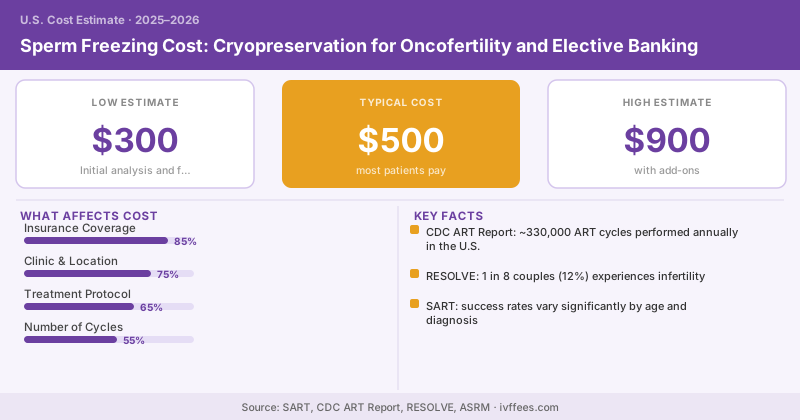
| Initial analysis and freeze (one sample) | $300 | $500 | $900 |
| Additional samples (often recommended) | $150 | $300 | $500 each |
| Annual storage fee | $150 | $350 | $600 |
| Transport to another facility | $200 | $400 | $800 |
| Initial analysis only (no freeze) | $50 | $150 | $300 |
| Total year 1 (2 samples + storage) | $600 | $1,200 | $2,500 |
Why Freeze Multiple Samples?
Most sperm banking facilities recommend freezing 2–3 separate samples collected over 2–5 days. Here’s why:
- Sperm quality varies: A single sample can be atypically good or bad. Multiple samples give a more representative bank.
- Treatment uses multiple vials: A single IUI attempt may use 1–2 vials; IVF/ICSI typically uses fewer, but having extras provides backup.
- Not all vials survive thaw: Sperm survival after freezing and thawing varies by individual. Typically 50–70% of motile sperm survive the freeze-thaw process.
For oncofertility patients (banking before cancer treatment), having at least 2–3 samples is strongly recommended by the American Society of Clinical Oncology (ASCO). For elective bankers, 2 samples is usually sufficient.
Sperm Freezing for Cancer Patients (Oncofertility)
This is where sperm banking is most clearly cost-effective and time-sensitive. Chemotherapy, radiation to the pelvic region, and certain surgeries can permanently or temporarily impair sperm production.
According to the Livestrong Foundation, only about 24% of male cancer patients bank sperm before starting treatment — despite ASCO recommending it as a standard of care. The most common barrier cited is not being told about it in time.
The process takes 1–3 days. Sample collected, analyzed, frozen. Done. And the sperm are available indefinitely — there are documented pregnancies from sperm stored for 20+ years.
Insurance coverage for oncofertility: Many states and insurance plans are moving toward covering oncofertility services. Check your state’s laws and your specific plan. Some cancer treatment centers offer sperm banking at reduced cost or free through affiliated programs.
If you or your partner has been diagnosed with cancer and is starting chemotherapy or radiation, sperm banking should happen before the first treatment session — not after. Even one cycle of chemotherapy can affect sperm quality and quantity. Contact a fertility clinic or sperm bank the same week as the diagnosis, not after treatment planning is complete.
Elective Sperm Banking: Is It Worth It?
Unlike egg freezing, where age significantly affects egg quality, sperm quality decline with age is more gradual. However, studies show that sperm DNA fragmentation increases and morphology decreases with advancing age, particularly after 45–50.
For healthy men in their 20s and 30s who want flexibility — perhaps they haven’t found a partner, or they’re in a job with hazardous exposures, or they simply want reproductive options preserved — elective banking is genuinely affordable.
The 5-year cost of storing 2–3 frozen samples: approximately $2,000–$4,000. Compare that to the $10,000–$30,000+ cost of treatment for male factor infertility discovered years later. From a pure financial planning perspective, it’s cheap insurance.
Where to Get Sperm Frozen
Sperm banks: Major facilities like California Cryobank (CCB), Fairfax Cryobank, New England Cryogenics, and ReproTech offer banking services with collection in-office or via mail-in kit.
Fertility clinics: Most fertility clinics have in-house andrology labs and can freeze sperm for use in their own IVF programs. Convenient if you’re already a patient.
Mail-in kits: Companies like Legacy, Dadi (now Ro Sperm), and Fellow Health offer collection kits sent to your home, with shipping containers to return samples for analysis and freezing. Pricing runs $200–$700 for initial banking. This has expanded access for men who don’t live near major sperm banking facilities.
Mail-In vs. In-Person Banking
Mail-in banking is convenient and private, but there are tradeoffs:
- Sample quality may be slightly affected by the time between collection and analysis (typically 24–48 hours vs. 30–60 minutes for in-person)
- Some labs report lower motility in mail-in samples due to temperature changes during shipping
- In-person banking at an accredited lab gives faster results and more immediate freezing
For initial screening and elective banking, mail-in is reasonable. For high-stakes oncofertility banking before cancer treatment, in-person at an accredited AATB-certified facility is preferred.
Before banking, ask the facility about their AATB (American Association of Tissue Banks) or CAP (College of American Pathologists) accreditation. These accreditations indicate the facility meets rigorous quality and safety standards. Unaccredited facilities may be cheaper but offer less assurance about storage protocols and sample integrity.
Long-Term Storage and What Happens If You Don’t Use It
You’ll pay annual storage fees indefinitely — or until you use the samples, dispose of them, or transfer to another facility. Most facilities require annual consent renewals and payment.
If you complete your family without needing the banked sperm, your options include:
- Continue storage if you want continued backup
- Donate to another family (through regulated donation processes)
- Donate to research
- Discard (facility disposes after signed consent)
Most men who banked electively and completed families report feeling the storage cost was money well spent for the psychological peace of mind — even if they never used the samples.
The Bottom Line
Sperm freezing is the most affordable fertility preservation option available. At $300–$600 to bank and $150–$350/year to store, the first year costs under $1,000 in most cases. For cancer patients, it’s essential and often at least partially covered by insurance. For healthy men banking electively, it’s cheap insurance that deserves more consideration than it typically gets.