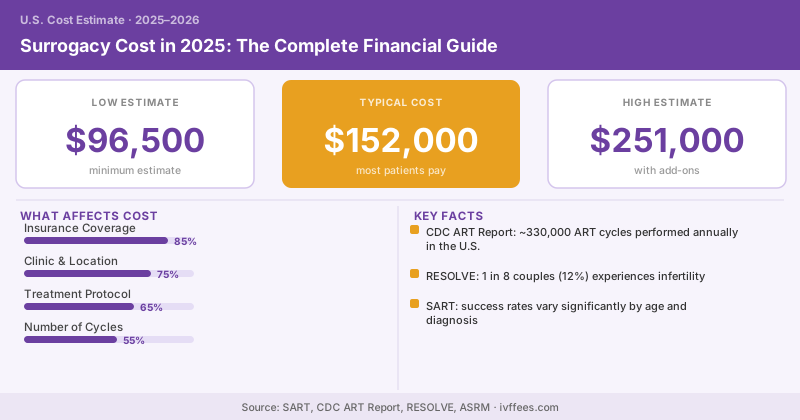
Surrogacy in the U.S. costs more than almost anywhere in the world. That fact shocks people at first. Then they realize why: American surrogates are paid fairly, protections for intended parents are legally robust, and medical standards are high. What looks like sticker shock is often a reflection of a system that actually works.
The honest all-in number for gestational surrogacy in the United States: $110,000 to $200,000, with most journeys landing between $130,000 and $170,000.
Why the Range Is So Wide
Surrogacy costs vary for legitimate reasons: your surrogate’s location and experience, whether you need an IVF cycle to create embryos (and how many attempts), your legal jurisdiction, and whether you work with an agency or match independently.
| Surrogacy Cost Component | Low End | Typical | High End |
|---|---|---|---|
| Surrogate base compensation | $35,000 | $45,000 | $65,000 |
| IVF cycle (embryo creation) | $12,000 | $18,000 | $28,000 |
| Agency fees | $20,000 | $30,000 | $45,000 |
| Legal fees (both parties) | $8,000 | $14,000 | $22,000 |
| Surrogate medical expenses | $5,000 | $10,000 | $20,000 |
| Psychological screening and support | $1,500 | $3,000 | $6,000 |
| Surrogate health insurance | $10,000 | $20,000 | $40,000 |
| Miscellaneous expenses (travel, lost wages, etc.) | $5,000 | $12,000 | $25,000 |
| Total | $96,500 | $152,000 | $251,000 |
Breaking Down Surrogate Compensation
Surrogate base compensation — what the gestational carrier is paid — is typically $35,000 to $55,000 for a first-time surrogate. Experienced surrogates (who have completed a prior successful journey) command $45,000–$65,000.
Compensation varies by state. California and Nevada are among the highest-compensating states; surrogates in the Midwest and South typically earn less. This isn’t exploitation — it reflects cost of living and that states with surrogacy-friendly laws attract more experienced surrogates.
Beyond base pay, surrogates typically receive:
- Monthly allowance: $200–$400/month for incidentals during pregnancy
- Maternity clothing: $500–$1,000 one-time
- Housekeeping allowance (if placed on bed rest): $250–$500/week
- Lost wages for missed work at medical appointments or during recovery
- C-section fee: Additional $2,500–$5,000 if delivery requires surgical birth
- Multiple pregnancy fee: Additional $3,000–$10,000 if carrying twins
The Surrogacy Experience website and RESOLVE both report that average total surrogate-related payments (compensation plus allowances plus medical expenses) often total $60,000–$90,000 when all items are counted.
Agency Fees: What Are You Paying For?
A surrogacy agency manages matching, vetting, and coordination throughout the journey. Fees run $20,000 to $40,000 at most reputable agencies.
That fee typically includes:
- Surrogate screening and background checks
- Matching services
- Case management throughout pregnancy
- Coordination with the fertility clinic, attorneys, and insurance
- 24/7 support for both surrogate and intended parents
- Escrow account management for surrogate payments
Some intended parents attempt “independent matching” — finding a surrogate without an agency through support groups, social media, or mutual connections. This can reduce costs by $15,000–$25,000, but it requires significantly more direct management and carries higher risk if the relationship breaks down.
All surrogate payments should flow through a neutral third-party escrow account managed by a surrogacy attorney or professional escrow service — not directly between you and the surrogate. This protects both parties and provides documentation. Any arrangement that bypasses proper escrow is a red flag.
Legal Fees: Why Both Sides Need Representation
Both intended parents and the surrogate need independent legal counsel. You cannot share an attorney, and no reputable surrogacy program will allow it.
Intended parent legal fees: $5,000–$12,000 for the surrogacy agreement, pre-birth order (establishing parental rights before delivery), and any required court filings.
Surrogate legal fees: Typically paid by intended parents. $2,000–$5,000 for independent review of the contract.
Why this matters: The legal framework varies dramatically by state. California, Nevada, Washington, Oregon, and Colorado have laws that are very favorable to intended parents. Other states may require a post-birth adoption process, adding time and cost. A handful of states remain difficult for surrogacy, with unclear or restrictive laws.
Work with an attorney specializing in reproductive law — not a general family law attorney who “also handles surrogacy.” The RESOLVE and the Academy of Adoption and Assisted Reproduction Attorneys (AAAA) maintain attorney directories.
Surrogate Health Insurance: The Most Underestimated Cost
Surrogate health insurance is one of the most variable and underestimated surrogacy expenses.
If your surrogate has ACA-compliant employer insurance that covers pregnancy and doesn’t exclude surrogacy, you may be in good shape. But many insurance policies now explicitly exclude surrogacy. A surrogate’s employer plan that doesn’t cover the arrangement means you need to purchase a separate policy.
Surrogacy-specific health insurance policies or specialized ACA plans that permit surrogacy cost $15,000–$40,000 for a full pregnancy, including premiums and anticipated out-of-pocket expenses through delivery and recovery.
Work with an insurance specialist who focuses specifically on surrogacy. Reviewing coverage is one of the first things to do after matching with a surrogate — before the IVF cycle begins.
The IVF Component
Unless you already have frozen embryos ready to transfer, you’ll need to go through an IVF cycle to create embryos — either using your own eggs (or a donor’s) and your partner’s or donor sperm. Add the full cost of that cycle to your surrogacy budget.
If you need donor eggs as well, add $25,000–$50,000 more for an egg donor cycle. Many intended mothers pursuing surrogacy — particularly those who’ve experienced repeated pregnancy loss or medical conditions preventing pregnancy — also require donor eggs.
Budget for more than one embryo transfer attempt. A single embryo transfer has a 50–60% success rate for chromosomally normal, PGT-tested embryos. Many surrogacy journeys require 2–3 transfers before a confirmed pregnancy — which means additional FET cycles, more time, and more expense.
International Surrogacy: Is It Cheaper?
Historically, intended parents from the U.S. pursued surrogacy in India, Thailand, or Cambodia — then those countries banned the practice for foreign intended parents. Current legal international options include Colombia, Georgia (the country), Mexico, and a few others.
Costs in these countries range from $50,000 to $90,000 — substantially less than U.S. surrogacy. But the risks are also substantially higher: uncertain legal protections, citizenship and passport complications for the baby, language barriers, and distance from the surrogate during the pregnancy.
For most American intended parents who can manage the full cost, domestic surrogacy offers legal clarity and protections worth the price difference.
Financing Surrogacy
Surrogacy loans are available through specialty lenders including:
- CapexMD — medical financing specific to fertility and surrogacy
- New Life Agency Financing — agency-partnered loan programs
- Personal loans through banks or credit unions
Some intended parents use a combination of home equity, retirement account loans, and personal savings. There’s no single right approach — the key is building a complete budget before beginning and having clarity about what happens financially if the first transfer doesn’t work.
Grants are available through a small number of foundations: Baby Quest Foundation, Pay It Forward Fertility Foundation, and Tinina Q. Cade Foundation all have surrogacy-inclusive programs, though awards are competitive and amounts modest relative to total cost.
Cost ranges based on RESOLVE national surrogacy cost surveys (2023–2024), Center for Responsible Surrogacy data, and agency fee disclosures. Individual journeys vary significantly.