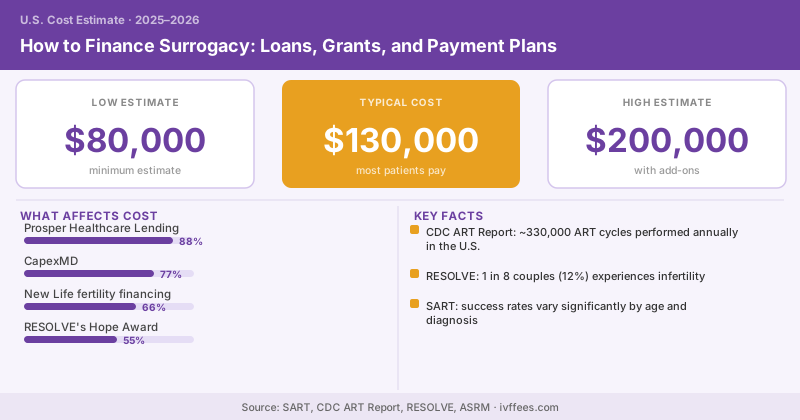
There’s no gentle way to say this: surrogacy costs $100,000 to $200,000. Most people don’t have that sitting in savings. The families who successfully fund their journeys aren’t doing it with a single source of money — they’re layering options.
Specialty loans. Grants. Employer benefits that most people don’t know to ask for. Home equity. Payment plans through the agency. RESOLVE’s grant database. Here’s how each works, what it costs, and how to stack them intelligently.
Financing Options Side by Side
| Financing Option | Typical Amount | Interest Rate | Notes |
|---|---|---|---|
| Prosper Healthcare Lending | $10,000–$65,000 | 6%–28% APR | Fertility-specific; fast approval |
| CapexMD | $15,000–$100,000 | 7%–25% APR | Larger loans available; used by major clinics |
| Personal loan (bank/credit union) | $10,000–$50,000 | 6%–20% APR | Best rates require excellent credit |
| Home equity loan/HELOC | $25,000–$150,000 | 6%–10% APR | Lowest rates; home required |
| Employer fertility benefit | $5,000–$50,000 | 0% (benefit) | Growing availability; ask HR |
| RESOLVE grants | $2,000–$15,000 | N/A (grant) | Competitive; annual cycles |
| Baby Quest Foundation grant | $2,000–$15,000 | N/A (grant) | Surrogacy-inclusive |
| Pay It Forward Fertility | $2,000–$10,000 | N/A (grant) | Annual application |
| Realistic combined stack | $100,000–$160,000 | Mixed | Multiple sources required |
Specialty Fertility Lenders
Prosper Healthcare Lending is one of the most widely used fertility financing options in the U.S., and it’s available for surrogacy. Loans from $10,000 to $65,000, with approval decisions often within 24 hours. Interest rates range from 6% to 28% APR depending on your credit profile — which means excellent credit is worth protecting in the months before you apply.
CapexMD offers larger loan amounts (up to $100,000 per application) and partners directly with many fertility clinics and surrogacy agencies. Some agencies offer CapexMD as an integrated financing option during onboarding. Rates are similar to Prosper; the larger ceiling is useful for families who need to cover agency fees, legal, and IVF all at once.
Both lenders use unsecured personal loan structures — no collateral required. That means higher interest rates than home equity financing, but faster access and no risk to your home.
New Life fertility financing through New Life Surrogacy Agency is an agency-specific option that bundles program fees and financing into one package. Useful if you’re already working with New Life; less relevant otherwise.
Fertility loan approvals are credit-based, and applying doesn’t lock you in. Pull pre-approval offers from Prosper and CapexMD 3–6 months before you plan to start matching. You’ll know your rate, your ceiling, and whether you need to improve your credit before you’re ready. Waiting until you’ve already matched and have upfront fees due is the wrong time to discover your credit isn’t where it needs to be.
Home Equity: The Lowest-Cost Borrowing Option
If you own a home with equity, a home equity loan or HELOC is typically the cheapest way to borrow for surrogacy. Rates run 6%–10% APR — substantially lower than unsecured fertility loans.
A HELOC (home equity line of credit) is particularly useful for surrogacy because costs aren’t paid all at once. Agency fees come first, then escrow deposits, then legal fees, then insurance, then IVF — spread over months. Drawing from a HELOC as needed keeps interest costs down.
The risk: your home is collateral. If your employment situation changes mid-journey, you’re carrying real financial exposure. Don’t use home equity for surrogacy without a stable income cushion.
Employer Fertility Benefits: The Most Underutilized Resource
According to RESOLVE’s 2023 employer benefits survey, approximately 40% of large U.S. employers (500+ employees) now offer some fertility benefit — and a meaningful subset of those benefits explicitly include surrogacy.
Companies like Salesforce, Google, Apple, Amazon, and many others have offered surrogacy reimbursement up to $20,000–$50,000 as a standard employee benefit. The coverage varies significantly by employer and may cover surrogacy agency fees, legal costs, or IVF — but not all categories.
What to do: Contact HR and ask specifically about “family building” or “fertility” benefits. Ask whether the benefit covers surrogacy (not just IVF). Ask about lifetime maximum, qualifying expenses, and whether you need to use specific clinics or agencies.
Don’t assume you know the answer. Benefits change yearly, and many employees simply haven’t asked.
Grants: What’s Actually Available
Fertility grants are competitive and the amounts are modest relative to total surrogacy cost. But $5,000–$15,000 toward a $150,000 journey is still meaningful — and you don’t pay it back.
RESOLVE’s Hope Award: RESOLVE administers grant programs through its network and partners. Awards vary by cycle; visit resolve.org for current opportunities.
Baby Quest Foundation: Awards grants twice yearly for IVF, surrogacy, and adoption. Grants range from $2,000 to $15,000. Applications are open to intended parents regardless of age, sexual orientation, or marital status. Competitive; apply early.
Pay It Forward Fertility Foundation: Annual grant program specifically for fertility treatments including surrogacy. Awards run $2,000–$10,000. Application opens in late summer/early fall each year.
Tinina Q. Cade Foundation: Grants for surrogacy and adoption, focused on families facing infertility. Awards up to $10,000.
Apply for every grant you’re eligible for. The time investment is real, but the odds are better than people think — many grant cycles receive fewer applications than the foundations would like.
Agency Payment Plans
Many surrogacy agencies offer staged payment structures rather than requiring all fees upfront. A common structure:
- 25% at contract signing
- 25% at surrogate medical screening clearance
- 25% at surrogate pregnancy confirmation
- 25% at second trimester milestone
This doesn’t reduce your total cost, but it gives your financing time to catch up with your expenses. Ask every agency you interview about their payment schedule and whether it’s negotiable.
Building Your Stack: A Realistic Example
Here’s how a family might finance a $155,000 surrogacy:
- Home equity loan: $50,000 at 8% APR
- CapexMD loan: $40,000 at 14% APR
- Employer fertility benefit: $20,000 (benefit, no repayment)
- Savings: $30,000
- Baby Quest grant: $5,000 (grant, no repayment)
- Total sourced: $145,000 (remainder from staged payments / monthly income during journey)
That’s a real funding plan. It has real monthly loan payments — probably $1,800–$2,200/month for 3–5 years after the journey concludes. Budget for that before you start, not after.
Do not take a 401(k) loan for surrogacy unless it’s a true last resort. The tax implications and long-term retirement cost of raiding retirement accounts are severe. Specialty fertility loans and home equity are almost always better options even at higher interest rates, because the retirement account hit is permanent. Consult a financial advisor before touching retirement funds.
The Planning Order
- Check your employer’s fertility benefits first — it’s free money if available
- Apply for grants (Baby Quest, RESOLVE, Pay It Forward) — also free money
- Assess home equity — cheapest borrowing if available
- Get pre-approval from Prosper and CapexMD — know your ceiling
- Build a complete budget with all surrogacy cost components before committing
- Confirm monthly payment capacity before signing any agency agreement
Surrogacy is fundable. It requires planning, multiple sources, and realistic cash-flow analysis. Families who succeed financially start the money conversation at the same time they start the matching conversation — not after.
Rates and program details based on lender disclosures, RESOLVE employer benefits survey (2023), and Baby Quest Foundation grant cycle data (2024).