Most people look up surrogate pay expecting a single number. There isn’t one — and that’s not a dodge. Surrogate compensation in the U.S. is structured like a detailed employment contract: base pay plus a list of allowances, reimbursements, and contingency fees that add up to something meaningfully higher than the headline figure.
The base: $35,000 to $55,000 for a first-time surrogate. Total compensation including all allowances and contingency items: $50,000 to $80,000 or more. Here’s exactly what’s in that number.
Complete Surrogate Compensation Table
| Compensation Component | Low End | Typical | High End |
|---|---|---|---|
| Base compensation (first-time) | $35,000 | $45,000 | $55,000 |
| Base compensation (experienced) | $40,000 | $50,000 | $65,000 |
| Monthly allowance (10 months) | $2,000 | $3,500 | $5,000 |
| Maternity clothing allowance | $500 | $750 | $1,000 |
| Lost wages reimbursement | $0 | $2,000 | $10,000+ |
| C-section fee (if required) | $2,500 | $3,500 | $5,000 |
| Invasive procedure fee (each) | $500 | $750 | $1,500 |
| Multiple pregnancy supplement | $3,000 | $6,000 | $10,000 |
| Mock cycle or embryo transfer fee | $500 | $750 | $1,000 |
| Post-delivery recovery allowance | $500 | $1,000 | $2,500 |
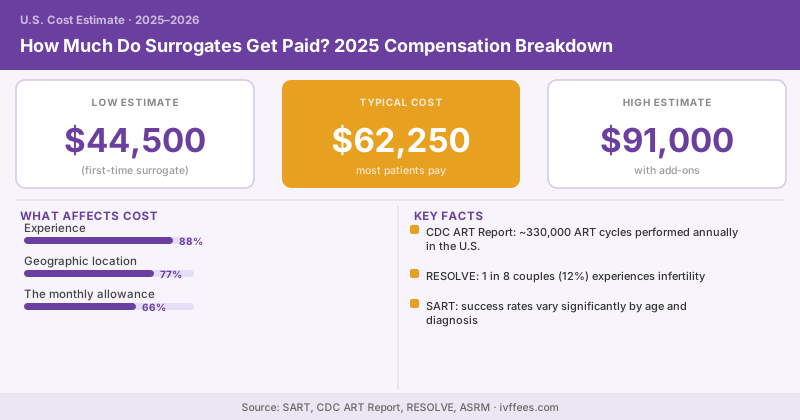
| Total (first-time surrogate) | $44,500 | $62,250 | $91,000 |
What Drives Surrogate Pay
Experience is the single biggest factor. First-time surrogates — women who’ve carried a pregnancy but never served as a surrogate before — are compensated at the lower end of the range. Once they complete a journey successfully, they become “experienced” or “proven” surrogates and their rates increase by $5,000 to $15,000. Agencies and intended parents pay more because the track record removes uncertainty.
Geographic location is the second major variable. California consistently has the highest surrogate compensation in the country. A first-time surrogate in the San Francisco Bay Area might be compensated $55,000 base; the same profile in rural Ohio might command $38,000. This isn’t arbitrary — it reflects cost of living, the concentration of surrogacy-friendly legal infrastructure, and the density of experienced surrogates in high-demand markets.
RESOLVE: The National Infertility Association surveys show that California-based surrogates earn on average 25–35% more than surrogates in Midwestern states for comparable profiles.
The monthly allowance is often misunderstood. It’s not “extra pay” — it covers real costs: mileage to appointments, over-the-counter medications, parking, childcare during monitoring appointments. Most agencies set this at $250–$500 per month and pay it from the start of medications through six weeks post-delivery.
First-Time vs. Experienced Surrogates
Here’s the practical difference beyond just base pay:
- First-time surrogates have never been through the process, so there’s a learning curve. They’re still demonstrating they can handle the physical, emotional, and relational demands of carrying for another family.
- Experienced surrogates know exactly what they’re signing up for. They’ve already built a relationship with intended parents, navigated the emotional complexity, and their medical suitability is proven. Less guesswork for everyone.
For intended parents: experienced surrogates cost more but often mean smoother journeys. If your budget allows it, the premium is often worth it.
What Surrogates Are Not Paid For
Surrogacy is compensation-based, not fee-for-service. Surrogates aren’t paid for carrying the pregnancy — they’re compensated for their time, commitment, physical experience, and the profound disruption to their lives. The distinction matters legally in most states. Payments classified as “baby-selling” are illegal; compensation for services rendered is not.
The IRS treats surrogate compensation as taxable income in most cases. Intended parents should confirm tax treatment with their attorney, and surrogates should plan accordingly.
Intended parents pay all surrogate compensation, all allowances, all medical expenses not covered by insurance, and the surrogate’s independent legal fees. The surrogate pays nothing out-of-pocket in a properly structured arrangement. She should never be asked to front costs that get reimbursed later — that’s a red flag.
Geographic Variation: A Realistic Look
If you’re choosing a surrogate from a different state than where you live, here’s how compensation typically compares:
- California: $48,000–$65,000 base (first-time); highest in the country
- Nevada: $42,000–$58,000 base; strong legal framework, slightly lower COL than CA
- Washington state: $42,000–$55,000 base
- Midwest (IL, OH, MN): $35,000–$45,000 base
- South (TX, FL, GA): $33,000–$45,000 base (state-specific legal complexity varies)
Note: matching with a lower-compensation surrogate doesn’t automatically save money. If her state has unfavorable surrogacy laws, your legal fees will be higher. Total cost — not just base compensation — is what matters.
What Surrogates Think About Pay
According to survey data from RESOLVE’s advocacy reports, most surrogates say compensation isn’t their primary motivation — they’re primarily motivated by helping intended families. But they’re also clear that fair compensation matters. Underpaid surrogates face financial stress mid-pregnancy, which strains the relationship. Overpromising on allowances and then disputing reimbursements is one of the most common sources of conflict.
Never structure surrogate compensation informally or on a handshake. Every line item — base pay, monthly allowance, contingency fees, lost wages — must be spelled out in the surrogacy agreement before any medical procedures begin. Trying to negotiate compensation terms after a positive pregnancy test creates conflict and legal exposure.
Planning Your Budget
When building your total surrogacy budget, use $60,000 as the working estimate for surrogate-related costs on a first-time, first-attempt journey in a non-California state. If you’re matching with an experienced surrogate in California, budget $75,000–$85,000 for the compensation side alone.
Then add agency fees, legal fees, IVF costs, and insurance on top. Surrogacy’s price is real. But it’s also predictable — when you know all the components.
Compensation ranges based on RESOLVE national surveys (2023–2024), agency compensation disclosures from 15+ U.S. surrogacy agencies, and reproductive attorney guidance.