Service members and their families face some of the highest rates of infertility in the country — and historically, some of the worst insurance coverage for treating it. Deployments, stress, chemical exposures, and blast injuries all affect reproductive health. Yet for most of TRICARE’s history, IVF was either excluded or extremely limited.
That’s changed, but with significant caveats. Here’s what military families actually get in 2025.
TRICARE and IVF: The Current Rule
TRICARE covers IVF, but only under specific circumstances:
Covered: IVF for active duty service members (and in some cases their spouses) when infertility is directly connected to a military service injury or illness. This is called service-connected infertility.
The National Defense Authorization Act (NDAA) of 2017 — later expanded — directed the Department of Defense to provide IVF coverage for service members whose infertility resulted from a service-related condition. This was a significant policy change driven largely by advocacy for combat-injured veterans, particularly those who sustained injuries affecting reproductive organs.
What “service-connected” means in practice: The infertility must be traceable to a documented injury, illness, or medical condition that occurred during or as a result of military service. This includes:
- Injuries from combat or training accidents affecting reproductive organs
- Conditions caused by exposure to radiation, certain chemicals, or other service-related hazards
- Medical conditions diagnosed and treated during active service that affected fertility
Not covered by default: Infertility that isn’t connected to service — the same kind of unexplained infertility, PCOS, male factor infertility, or other conditions that affect the general population.
DoD IVF Program for Service-Connected Infertility
The DoD operates a specific assisted reproductive technology (ART) program for service members with service-connected infertility. Key details:
Authorized Military Treatment Facilities (MTFs): IVF under the DoD program is performed at designated military hospitals with reproductive endocrinology capabilities. Not all MTFs offer the service; patients may need to travel to a facility that does.
Coverage details: The program covers the core IVF procedure, including stimulation medications, egg retrieval, fertilization, and embryo transfer. Coverage for additional services like preimplantation genetic testing varies.
Prior authorization required: Patients must work through their MTF’s fertility clinic and obtain authorization before beginning a cycle. The documentation requirement includes establishing the service connection.
Spouses covered: The coverage extends to the couple, not just the service member. The spouse’s fertility treatment (egg retrieval, embryo transfer) is covered when infertility is service-connected.
The most important administrative step is getting infertility formally documented as service-connected through the appropriate military medical channels. Work with your military physician and, if needed, the VA disability claims process to establish this documentation. Without it, the TRICARE IVF benefit doesn’t apply.
TRICARE Coverage for Non-Service-Connected Infertility
For TRICARE beneficiaries whose infertility isn’t service-connected — which is most people — coverage is limited:
Covered under standard TRICARE:
- Infertility diagnostic services (bloodwork, imaging, semen analysis)
- Some medications prescribed for conditions associated with infertility
- Surgical treatments for underlying conditions (endometriosis, varicocele repair)
- IUI (intrauterine insemination) in some circumstances
Not covered under standard TRICARE:
- IVF unless service-connected
- Most fertility medications used for IVF stimulation
- Egg freezing (elective)
- Gestational carrier services
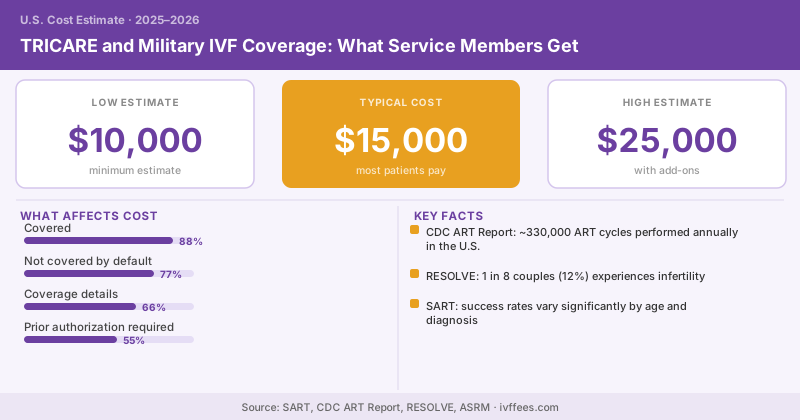
This means most military families dealing with infertility face the same out-of-pocket costs as civilian families — roughly $15,000–$25,000 or more per IVF cycle.
| Military Patient Situation | TRICARE Coverage | Typical Out-of-Pocket |
|---|---|---|
| Service-connected infertility (active duty) | IVF covered | $0–$3,000 (copays, travel) |
| Non-service-connected (active duty) | Diagnostics only | $15,000–$25,000 per cycle |
| Reserve/National Guard | Very limited | $15,000–$25,000 per cycle |
| Veterans (VA) | Limited, specific conditions | Varies |
VA Benefits for Veterans
The Department of Veterans Affairs provides fertility services for veterans, with an important restriction:
VA fertility benefits are available to veterans with service-connected conditions affecting reproductive ability. This includes veterans who:
- Sustained injuries affecting reproductive organs during service
- Have spinal cord injuries or other neurological conditions from service that cause reproductive dysfunction
The VA covers:
- IVF at VA medical centers for eligible veterans
- Fertility counseling and evaluation
- Some fertility medications
The VA does not routinely cover IVF for veterans whose infertility isn’t connected to a service-related disability rating. For veterans without a service-connected fertility impairment, the VA can provide referrals but not treatment funding.
Fisher House Foundation Fertility Grants
For military families who don’t qualify for covered IVF or who need supplemental support, the Fisher House Foundation Hero Miles and other assistance programs — and specifically, programs run through the Uniformed Services Benefit Association (USBA) and Fisher House — provide grants for fertility treatment.
The most direct resource: Operation Compassion and similar military fertility grant programs specifically target service members and veterans facing fertility costs. These aren’t Fisher House programs specifically, but Fisher House has partnered with fertility organizations.
Organizations providing fertility grants to military families:
- Baby Quest Foundation — provides grants to military families, no service-connection requirement
- RESOLVE Military Outreach — patient navigation and grant referrals
- The Gift of Parenthood — grant program open to military applicants
- Semper Fi Fund — for Marines and Navy Corpsmen with combat injuries
The SCRA and Financial Considerations
The Servicemembers Civil Relief Act (SCRA) provides certain financial protections for active duty service members, including interest rate caps on loans. If you’re financing IVF, SCRA can limit the interest rate charged on existing debt during active service. It doesn’t directly fund fertility treatment, but it can reduce the cost of financing a cycle.
Practical Steps for Military Families
Active duty with potential service connection:
- Speak with your military physician about documenting infertility as service-connected
- Contact the reproductive endocrinology service at your nearest MTF
- Request a referral to a designated DoD ART facility if your MTF doesn’t have the service
- Submit prior authorization through your TRICARE plan
Active duty without service connection or veterans:
- Use TRICARE for diagnostic testing — this is covered
- Explore grant programs through Baby Quest, RESOLVE, and military-specific foundations
- Check whether you’re stationed in or near a state with a fertility insurance mandate that might cover a civilian plan option
- Investigate FSA/HSA options through FEDVIP or other benefits programs
- Ask your clinic about military discounts — many fertility clinics offer reduced rates for active duty families
Military families dealing with infertility are dealing with a system that has improved but still has significant gaps. The coverage that exists tends to be specifically tied to service connection — which means if your infertility isn’t on a disability rating, you’re largely on your own. The grant and financing landscape can help, but it requires active effort to navigate.
TRICARE coverage information based on DoD/TRICARE policy documentation and NDAA provisions as of 2025. VA fertility benefit information from VA.gov. Coverage policies change; verify current coverage with your TRICARE regional contractor or VA primary care provider before beginning treatment.