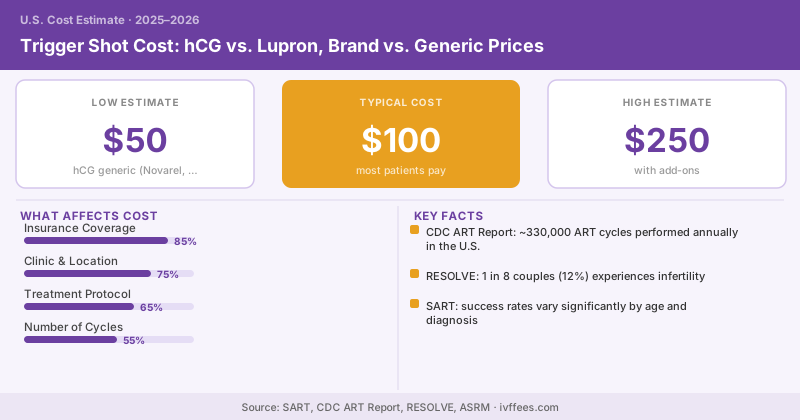
Most IVF medication guides spend pages on FSH injections and skip the trigger shot entirely. That’s a mistake — because the trigger shot you get, and where you get it, can vary by $750.
The trigger shot is the final injection of an IVF or IUI cycle. It’s administered 34–36 hours before egg retrieval and causes the final maturation of eggs. Without it, the cycle doesn’t proceed. With it, the timing of retrieval can be scheduled precisely. There are two main types, and the cost difference between them is significant.
hCG Triggers vs. Lupron Triggers
hCG (human chorionic gonadotropin) triggers are the most commonly used. They mimic the natural LH surge that triggers ovulation. Available in intramuscular (IM) or subcutaneous (SQ) formulations.
Lupron (leuprolide acetate) triggers are used primarily in patients at risk for ovarian hyperstimulation syndrome (OHSS). Lupron triggers cause a shorter, more physiologic LH surge and significantly reduce OHSS risk — but they’re less effective for patients who will do a fresh embryo transfer (which is why they’re almost always used in “freeze-all” cycles).
| Trigger Shot Type | Low | Typical | High |
|---|---|---|---|
| hCG generic (Novarel, Pregnyl) | $50 | $100 | $250 |
| hCG brand (Ovidrel prefilled syringe) | $100 | $250 | $500 |
| Lupron trigger (leuprolide 1mg dose) | $50 | $200 | $400 |
| Dual trigger (hCG + Lupron combined) | $100 | $300 | $800 |
Why Brand hCG Costs So Much More Than Generic
Ovidrel is a prefilled, subcutaneous 250mcg syringe of recombinant hCG. It’s more convenient — no mixing required — but it costs significantly more than Novarel or Pregnyl, which are urinary-derived hCG that come as a powder and require mixing with bacteriostatic water.
Pharmacologically, they work the same way. Both trigger the same final maturation response. The difference is convenience and cost. If your clinic gives you a choice, ask about generic hCG — the price difference is real.
According to GoodRx data, Ovidrel 250mcg runs $80–$180 at major pharmacy chains with a coupon. Novarel 10,000 IU (which covers 1–2 trigger doses) runs $60–$120 with the same discounts. Ask your clinic whether they have a preference, and if not, choose the option that saves you money.
The Dual Trigger Protocol
Some REs use a “dual trigger” — a combination of hCG and Lupron — particularly for patients with prior poor oocyte maturation or patients doing a donor egg cycle where maximum egg maturity is critical. The dual trigger costs more (you’re buying both medications) but has shown improved maturation rates in some studies.
A 2020 study published in Fertility and Sterility found that dual trigger protocols increased the proportion of mature MII oocytes retrieved compared to hCG-alone trigger in certain patient populations. It’s not for everyone, but it’s worth asking about if you’ve had maturation problems in prior cycles.
Many fertility clinics have a preferred pharmacy they work with, and that pharmacy may default to brand-name products unless you ask. Before your trigger prescription is sent, ask your clinic: “Is there a generic version available, and is it appropriate for my protocol?” You could save $100 to $300 on a single injection.
Where to Buy Your Trigger Shot
Specialty fertility pharmacies (Freedom Fertility, MDR Pharmacy, Walgreens Specialty, Foundation Care) handle most IVF medications and often have lower prices than retail chain pharmacies. Many offer price-matching and direct-ship.
Retail pharmacies with GoodRx/coupon codes. Costco, Mark Cuban’s Cost Plus Drugs, and GoodRx can significantly reduce out-of-pocket costs on trigger medications — sometimes below specialty pharmacy pricing.
International pharmacies. Some patients purchase trigger shots from Canadian or European pharmacies at significantly reduced cost. The FDA technically prohibits importing prescription drugs, but enforcement against personal-quantity importation for self-administration is essentially zero. This is a legal gray area; discuss with your RE.
Insurance and Trigger Shots
If you have pharmacy coverage for fertility medications, the trigger shot is almost always covered as part of your fertility drug benefit — subject to your formulary. hCG is on most major formularies; the branded Ovidrel may require prior authorization or a step therapy (try generic first).
If you’re paying out-of-pocket, use an FSA or HSA — trigger shots are qualified medical expenses and the pre-tax savings are real.
Timing is everything with the trigger shot. It must be given within a 30-minute window of the exact time your RE specifies — usually between 9 PM and 11 PM — so that retrieval can be scheduled for 34–36 hours later. Don’t let cost-shopping delay ordering this medication. Have it in hand at least 2–3 days before your anticipated trigger night.
Bottom Line on Trigger Shot Cost
You’re spending $50 to $800 depending on which trigger your protocol requires and where you buy it. The actual medication cost is a small fraction of your overall IVF cycle cost — but it’s worth a few minutes of comparison shopping. The pharmacological difference between a $100 generic hCG and a $400 brand-name prefilled syringe is mostly convenience. Ask your RE, compare prices, and pick the option that fits your budget without compromising your protocol.