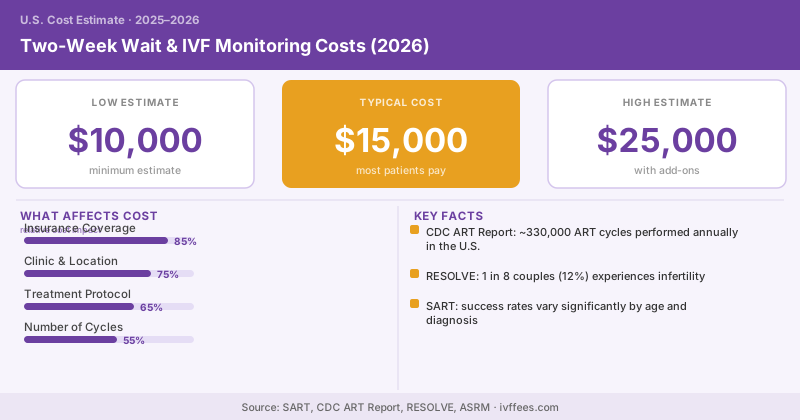
Nobody warns you about the monitoring bill. Between your stimulation start and that nerve-wracking two-week wait for a pregnancy test, IVF involves a steady stream of blood draws and ultrasounds—and they can add $1,500 to $4,000 to a cycle that you thought you’d already paid for. Some clinics bundle monitoring into the base price; many don’t. This guide explains exactly what monitoring costs, when it’s billed separately, and what to expect during the two-week wait.
What Monitoring Actually Involves
During an IVF cycle, your clinic tracks how your ovaries respond to stimulation through repeated bloodwork (estradiol, LH, progesterone) and transvaginal ultrasounds to count and measure follicles. After the transfer, the two-week wait includes progesterone monitoring and the beta hCG blood test that confirms pregnancy.
| Monitoring Item | Typical Cost |
|---|---|
| Baseline ultrasound + bloodwork | $300–$600 |
| Each monitoring visit (5–8 per cycle) | $200–$500 |
| Beta hCG pregnancy test | $50–$200 |
| Progesterone/estradiol bloodwork | $50–$150 each |
A typical stimulation phase involves five to eight monitoring visits packed into about two weeks. Our main IVF cost guide covers how monitoring fits into the overall cycle price, and whether your clinic bundles it.
Bundled vs. Unbundled Clinics
This is where surprise bills happen. Some clinics quote an all-inclusive cycle price with monitoring built in. Others quote a lower “base” price and bill each ultrasound and blood draw separately. The second model looks cheaper upfront but can add thousands.
Always ask whether your clinic’s cycle price includes monitoring. An “unbundled” $12,000 cycle with $3,000 in separate monitoring fees costs the same as a “bundled” $15,000 cycle—but only one of them surprises you. Get the monitoring policy in writing before signing, and confirm whether outside monitoring at a local lab is allowed if you’d travel for the retrieval.
The Two-Week Wait
After embryo transfer comes the two-week wait until your beta hCG test. Monitoring during this stretch is lighter—usually progesterone support and the pregnancy blood test—but it’s still billable. Some patients also pay for repeat beta draws to confirm rising hCG levels in early pregnancy.
Resist the urge to add unnecessary extra bloodwork during the two-week wait. Anxiety drives many patients to request daily draws, but most clinics only need one or two beta tests to confirm a viable pregnancy. Extra tests rarely change the outcome and add cost. Trust your clinic’s monitoring schedule unless symptoms warrant more.
Saving on Monitoring
If you live far from your clinic, “satellite” or local monitoring lets you do bloodwork and ultrasounds at a closer facility, sometimes at lower cost. Insurance occasionally covers diagnostic monitoring even when it doesn’t cover the IVF procedure itself—worth checking. For the broader picture on trimming cycle costs, see IVF financing options, and note how monitoring differs in lower-medication protocols like natural cycle IVF, which often needs less.
Frequently Asked Questions
How many monitoring appointments will I have per IVF cycle? Most stimulation cycles involve five to eight monitoring visits over about two weeks, each with bloodwork and often an ultrasound. The exact number depends on how your ovaries respond—slower responders may need a few extra visits to time the trigger shot and retrieval correctly.
Is monitoring included in my IVF cycle price? It depends entirely on the clinic. Some bundle it into the quoted cycle cost; others bill each blood draw and ultrasound separately, which can add $1,500–$4,000. Always confirm the policy in writing before committing, so a low base price doesn’t hide thousands in monitoring fees.
Does insurance ever cover IVF monitoring? Sometimes. Even plans that exclude the IVF procedure occasionally cover diagnostic bloodwork and ultrasounds as standard lab services. Check your benefits and ask your clinic to bill monitoring under diagnostic codes where appropriate—it can recover a meaningful chunk of the cycle’s monitoring expense.