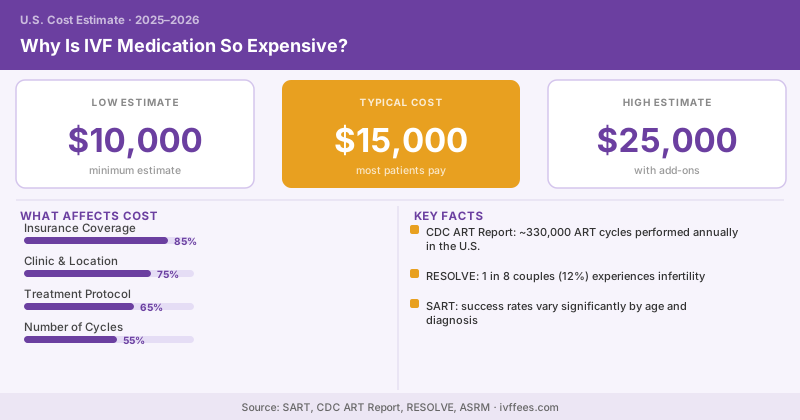
In 2010, a typical injectable stimulation cycle cost a patient maybe $2,500 in drugs. Today the same protocol routinely tops $5,000, and complex cases push past $8,000. That’s not just inflation — it’s the strange economics of a tiny, specialized drug market colliding with a population that mostly pays cash. Here’s why those little vials cost what they do.
What You’re Actually Buying
A single IVF cycle’s medication list is longer than people expect. You’re not buying one pill — you’re buying weeks of injectable hormones plus support drugs.
| Medication | Purpose | Typical Cycle Cost |
|---|---|---|
| Gonadotropins (Gonal-F, Follistim, Menopur) | Stimulate egg growth | $2,000–$5,000 |
| GnRH antagonist (Ganirelix, Cetrotide) | Prevent early ovulation | $400–$1,200 |
| Trigger shot (hCG or Lupron) | Mature eggs before retrieval | $80–$300 |
| Progesterone support | Prepare/maintain uterine lining | $200–$800 |
| Estrogen / add-ons | Lining and protocol support | $100–$500 |
| Typical total | $3,000–$7,000 |
Most of that cost lives in the gonadotropins — and there’s a real reason for it.
Reason 1: These Are Biologics, Not Simple Pills
Drugs like follitropin alfa (the active ingredient in Gonal-F) aren’t chemically synthesized in a vat. They’re proteins produced in living cell cultures, then purified under tight controls. That manufacturing process is expensive, slow, and hard to copy. Unlike a generic statin that costs pennies to make, recombinant fertility hormones carry genuinely high production costs.
Reason 2: A Tiny Market With Few Competitors
The fertility drug market is small compared to, say, blood pressure or diabetes medications. According to ASRM, only a handful of manufacturers make the gonadotropins used in U.S. IVF. Fewer competitors means less price pressure. And because true generics for biologic fertility drugs have been slow to arrive in the U.S., the brand-name versions hold pricing power year after year.
The same vial of Gonal-F can cost $75–$90 at a discount specialty pharmacy, $150–$200 at a retail chain, or $200–$300 through a clinic’s in-house pharmacy. Over a 10–12 day stimulation, that spread adds up to $1,000–$2,500. You are not required to fill at your clinic’s pharmacy — ask for a paper prescription and price-shop.
Reason 3: Almost Nobody Has Coverage
This is the quiet driver. Because only about 21 states have any fertility insurance law — and many of those exempt medications or self-funded employer plans — most U.S. patients buy these drugs entirely out of pocket. When sellers know the buyer has no insurer negotiating the price down, list prices stay high. In countries with national health systems negotiating bulk pricing, the identical drugs cost a fraction.
Reason 4: Your Dose Is Personalized (and Often High)
Medication cost scales with how much you need. A 28-year-old with strong ovarian reserve might stimulate beautifully on a modest dose. A 41-year-old, or someone with diminished ovarian reserve, often needs maximum doses for more days — sometimes doubling the drug bill. Age and biology, not just price tags, shape your total.
Be cautious about buying fertility medications from overseas or unverified online sellers to save money. Injectable hormones require cold-chain storage and proper handling, and counterfeit or degraded product can quietly sabotage an entire cycle you’ve already paid thousands for. Stick to licensed U.S. specialty pharmacies.
How to Bring the Cost Down
You have more leverage than you’d think:
- Price-shop specialty pharmacies — Freedom Fertility, MDR, and Mandell’s often beat clinic pricing.
- Ask about manufacturer savings programs — many gonadotropin makers offer rebates and discount cards. See our fertility drug assistance programs guide.
- Consider a milder protocol — mini-IVF uses far less medication, though it isn’t right for everyone.
- Use leftover meds carefully — never share, but ask your nurse how to handle unopened vials between cycles.
For the bigger picture on cutting your total bill, read how to reduce IVF cost and our full fertility medications cost breakdown.
Frequently Asked Questions
Why are IVF drugs so much more expensive than my other prescriptions? Because they’re biologics — proteins grown in cell cultures — not simple chemical compounds. They cost far more to manufacture, and the small market has few competitors to drive prices down.
Are there generic versions of IVF medications? Some biosimilar and generic options exist, but the U.S. market has been slow to adopt them compared to Europe. Ask your clinic whether a biosimilar gonadotropin is appropriate for your protocol — it can save money.
Will my insurance ever cover the medications even without covering IVF? Sometimes. Drugs are often handled under a separate pharmacy benefit, so it’s worth checking even if your medical plan excludes the procedure. Coverage rules differ between your medical and pharmacy administrators.
Why did my friend’s medication bill differ so much from mine? Dose and protocol. Age, ovarian reserve, and your doctor’s chosen protocol determine how many vials you use and for how many days. A high-responder on a short protocol pays far less than someone needing max doses for two weeks.
Can I save money by using leftover medication from a previous cycle? Possibly, if it’s unopened and properly stored. Talk to your nurse — never improvise dosing on your own. Reusing valid leftover vials is a legitimate, common way patients trim a few hundred dollars.
Is it cheaper to buy IVF medications abroad? The drugs themselves are often cheaper in other countries, but importing injectables risks storage and authenticity problems that can ruin a cycle. Most experts strongly recommend licensed U.S. pharmacies despite the higher price.
Cost ranges based on ASRM published medication estimates and RESOLVE patient cost surveys, 2023–2024. Pricing varies by protocol, dose, and pharmacy.